Nieuw Apostolische Kerk Leeuwarden
| Kategorie | Projekte von öffentlichem Interesse |
|---|---|
| Jahr | 2026 |
| Land | Benelux |
| Organisation | Goed Verblijven |
| Projektpartner | Ontwerpstudio Ruizendaal Veldhuizen |
| Verfasser | De Bouwtekenaar |
| Mitverfasser | VeldhuizenEnergie, Techwood, Pol Staalbouw BV, Isokern Prefab Bouwsystemen |
| Ort des Bauwerkes | Leeuwarden |
| Tags | PrefabConcreteTekla StructuresTrimble ConnectTimberSteel |
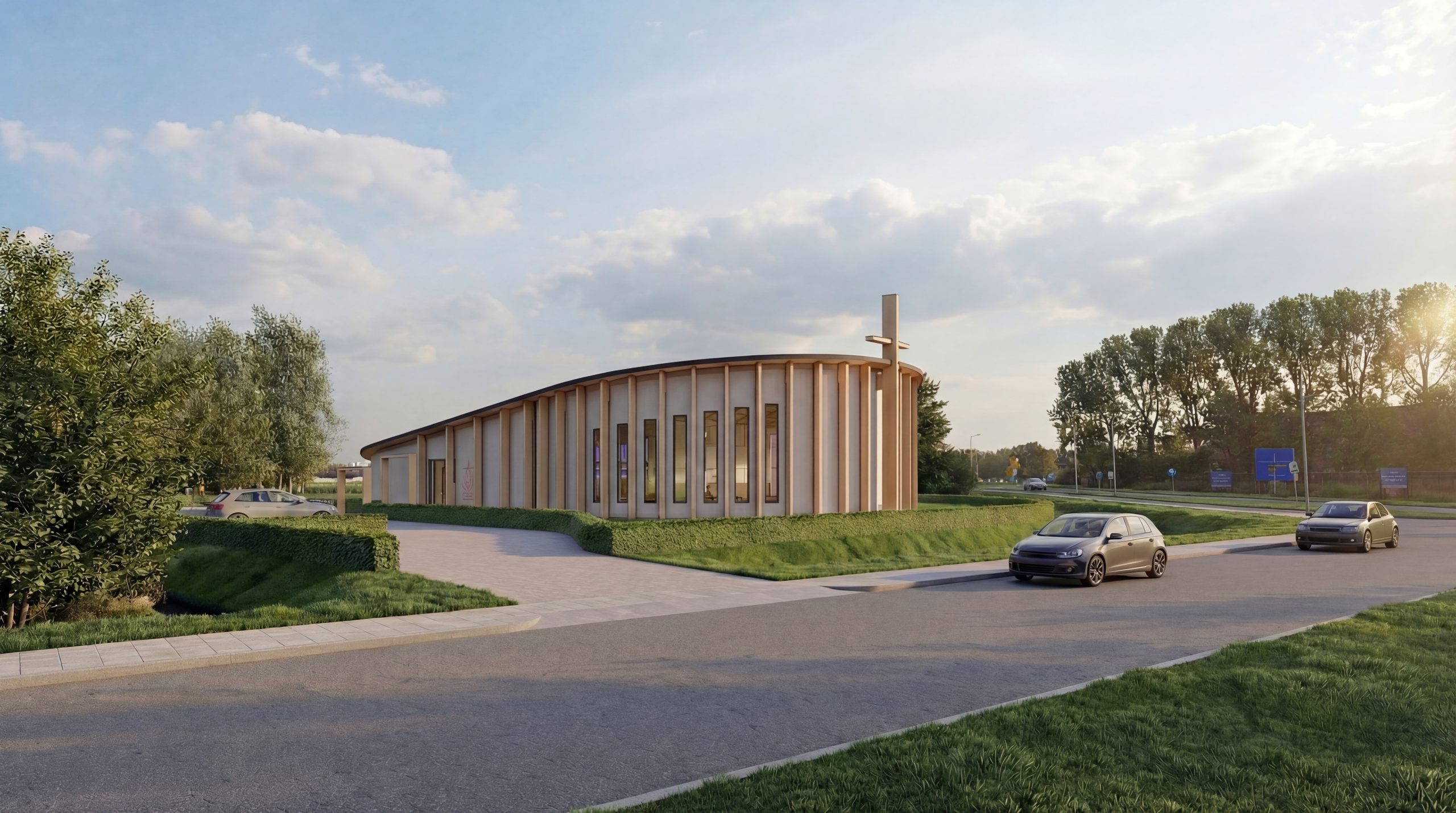
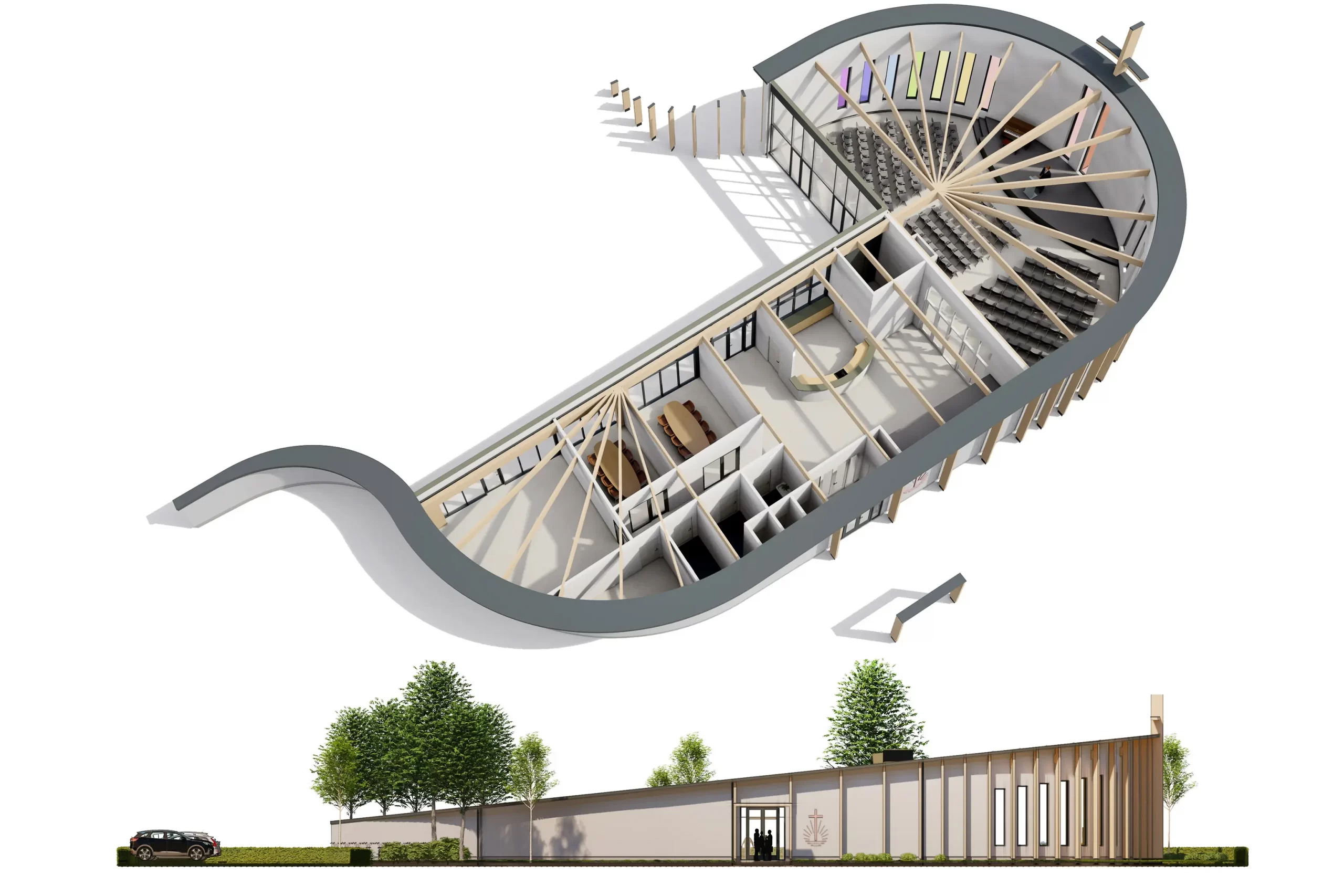
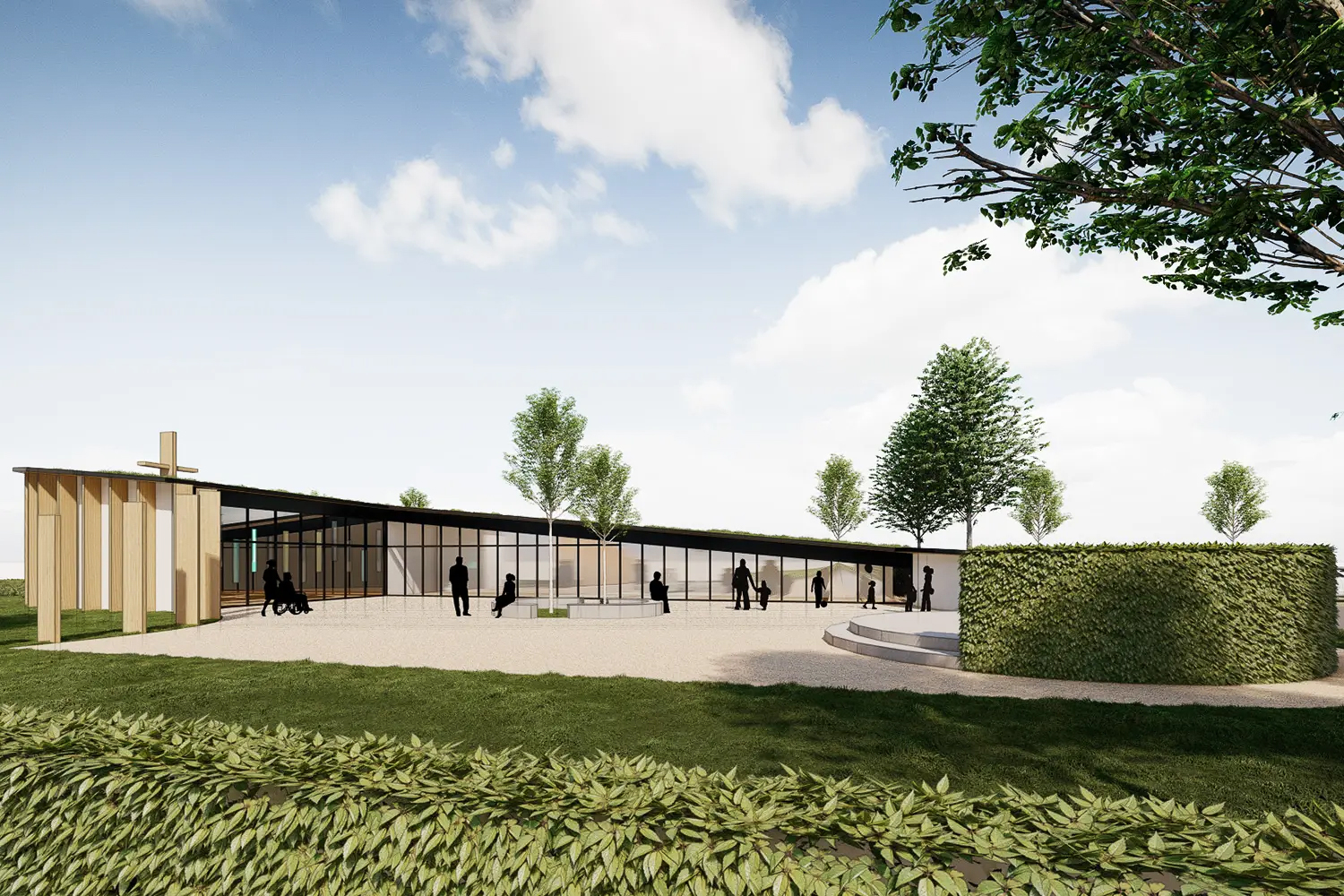
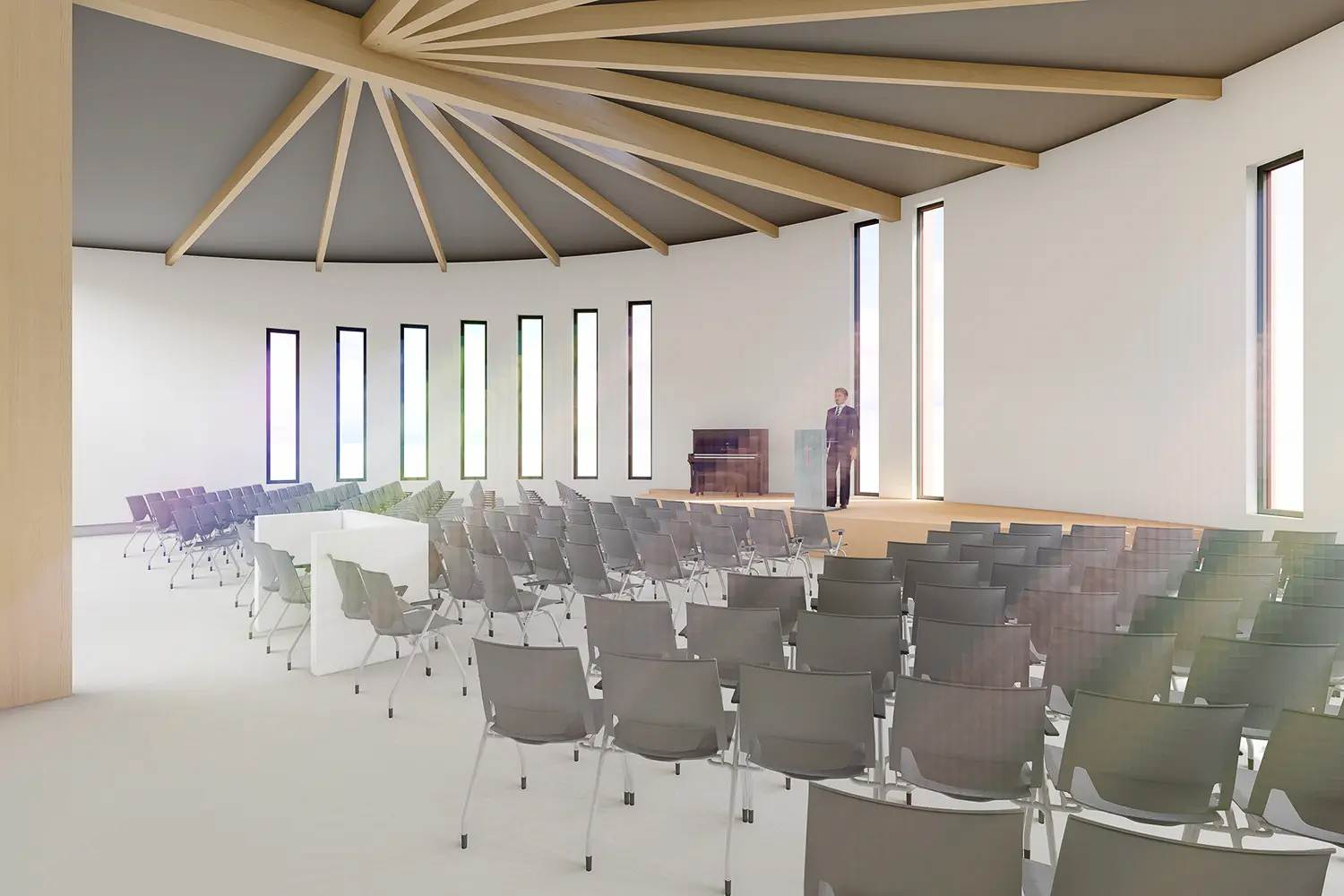
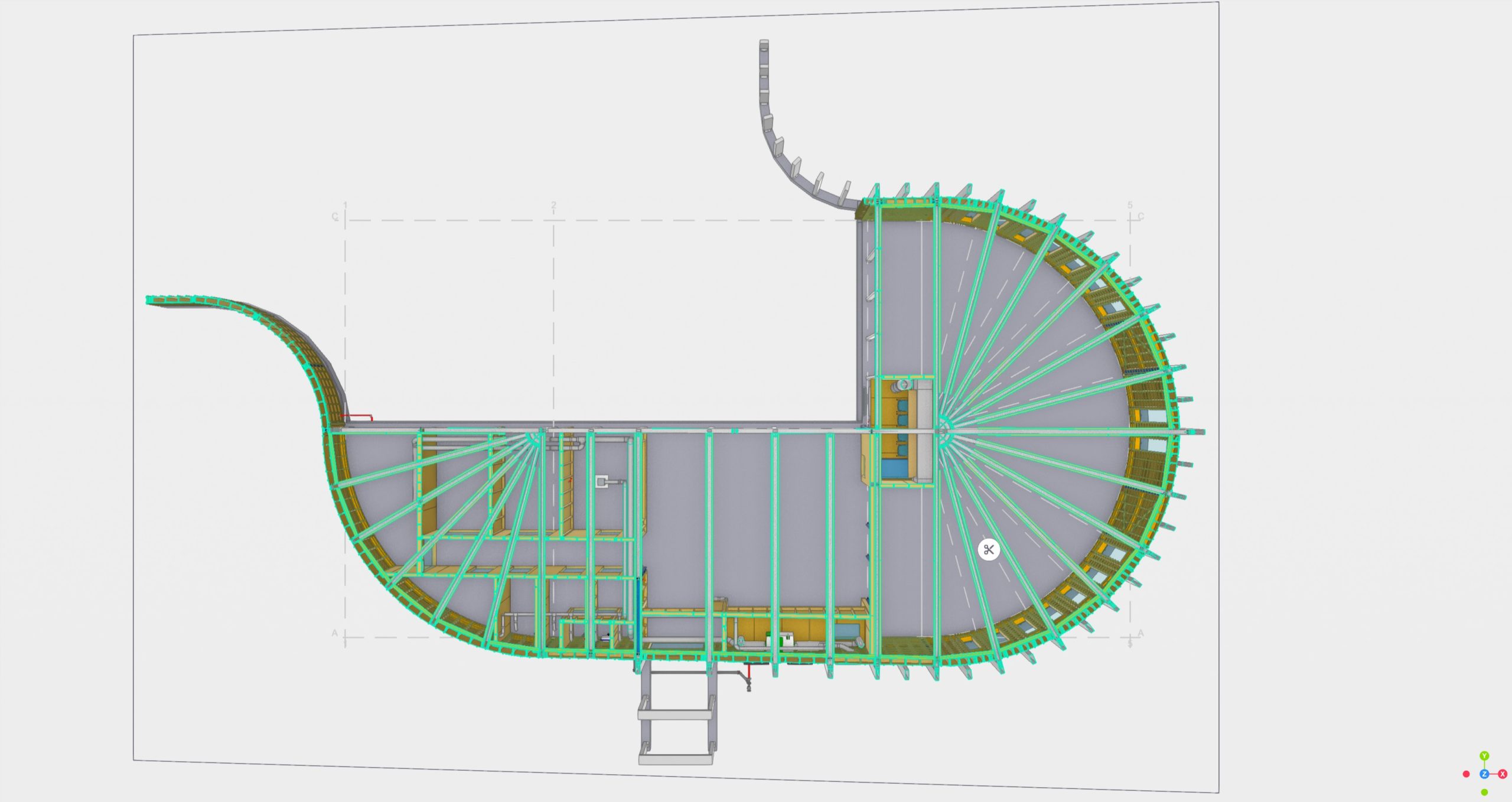
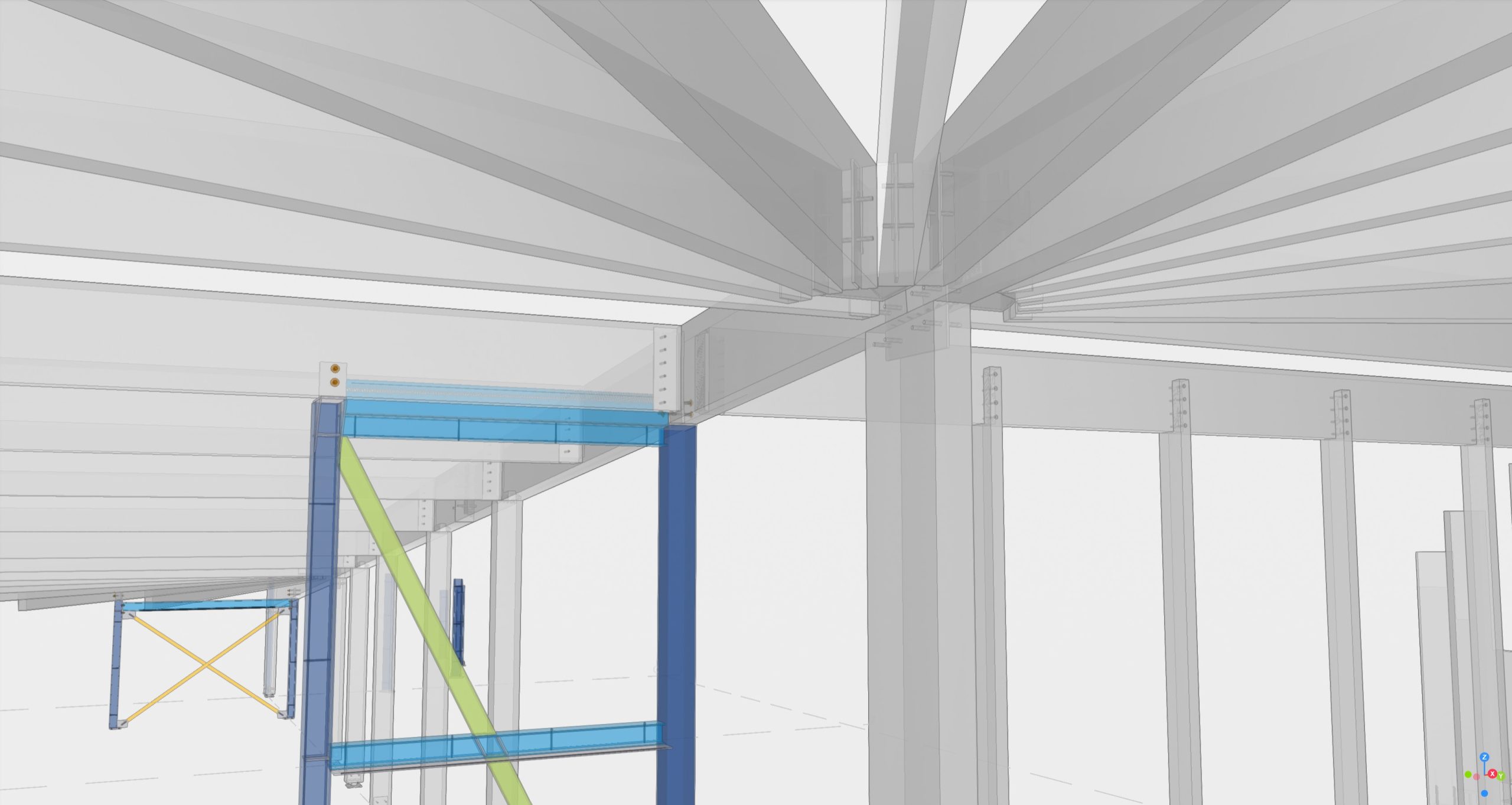
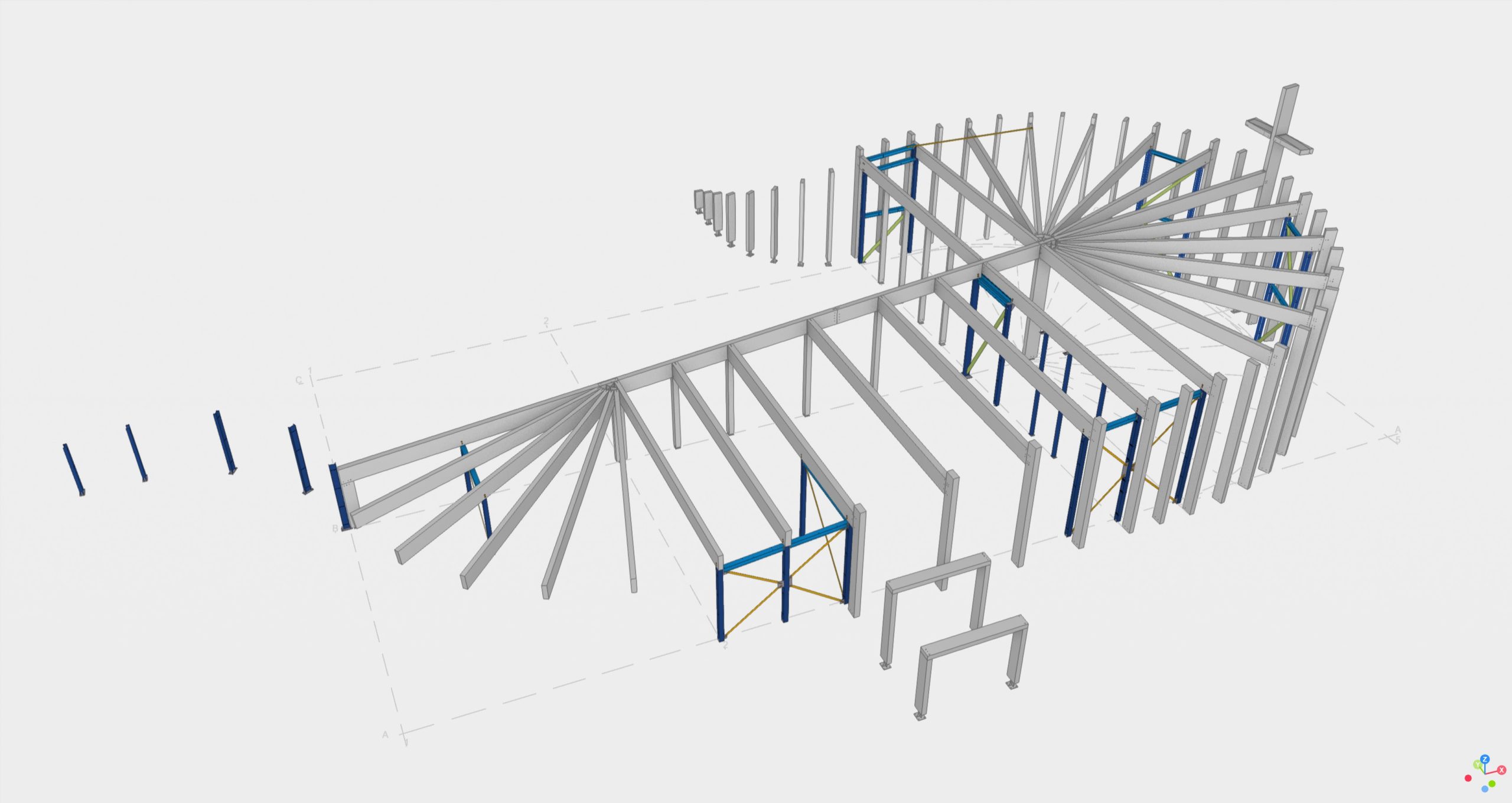
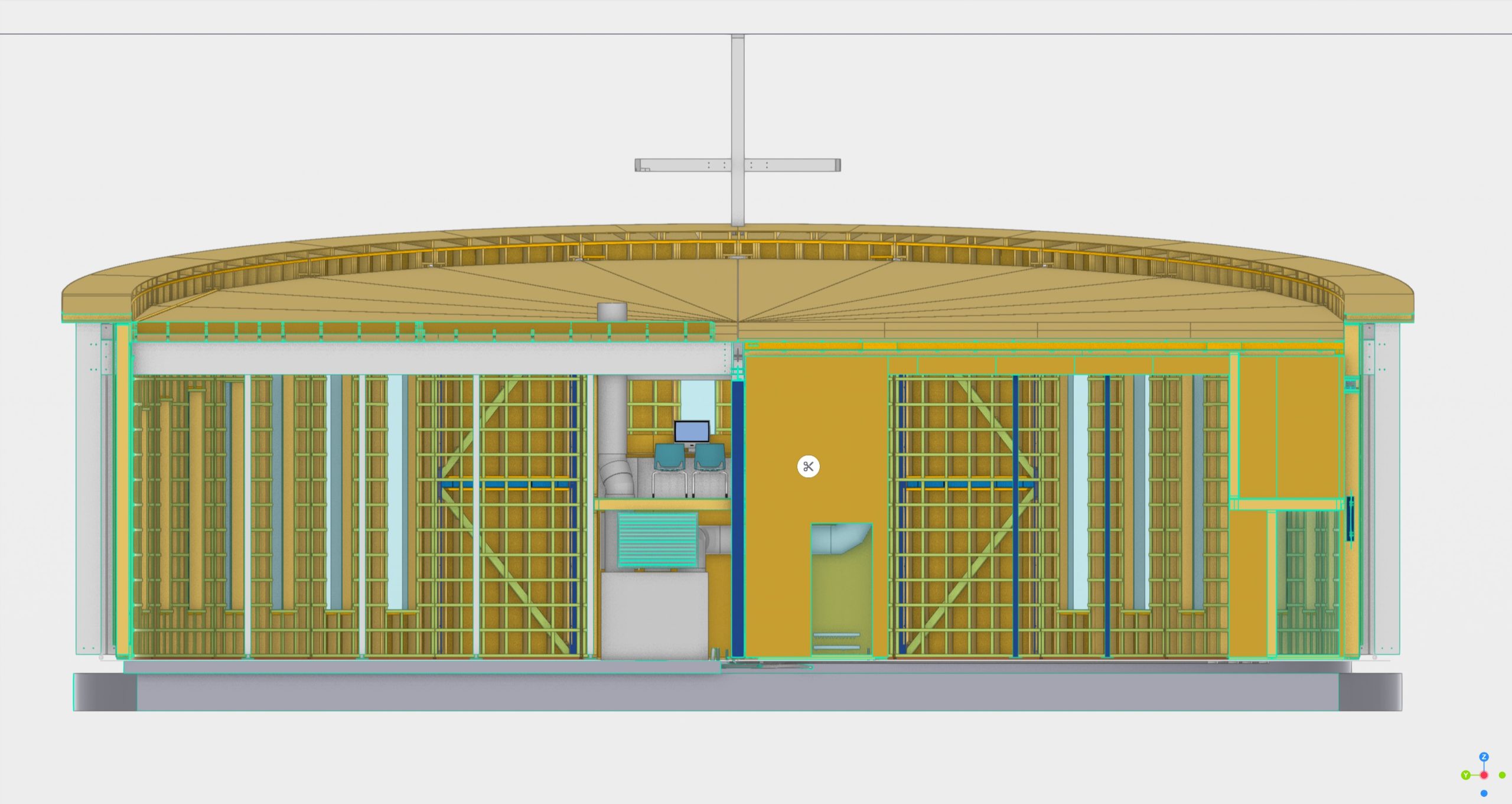
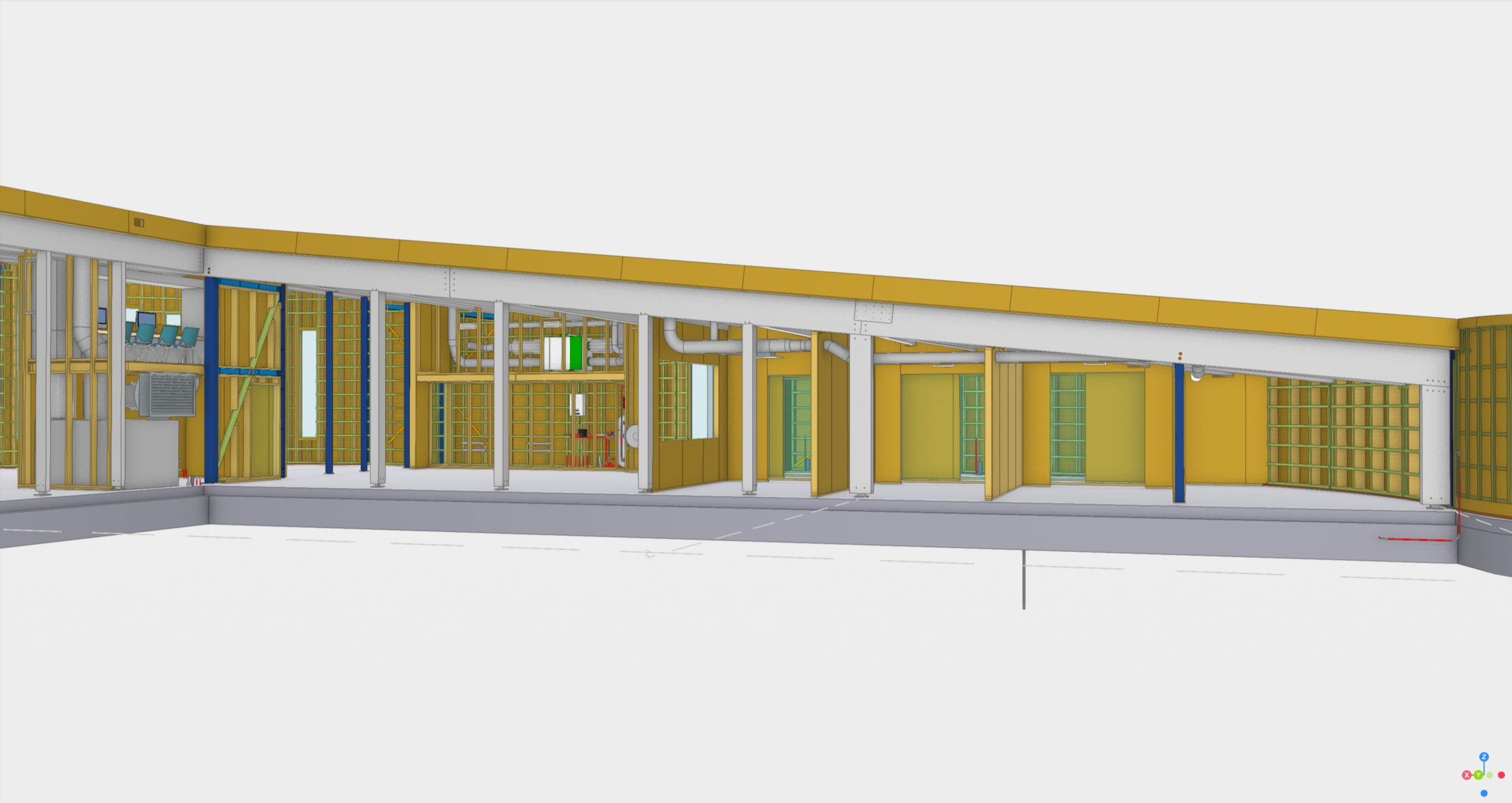
Aan de rand van Leeuwarden wordt momenteel een opmerkelijk kerkgebouw gebouwd. Het gebouw zal dienstdoen als een veelzijdige gemeenschapsruimte voor de hele stad. De nieuwbouw wordt gekenmerkt door organische, ronde vormen en een unieke binnentuin voor bijeenkomsten in de open lucht. Het ontwerp heeft veel symbolische aspecten. De ronde vormen verwijzen naar oneindigheid en verbondenheid. De hoofddraagconstructie in de kerkzaal verdiept die betekenis: de grote ligger, verbonden aan het kruis, symboliseert Christus als drager van Zijn Kerk. De twaalf kleinere liggers, in een waaier daaraan bevestigd, verwijzen naar de twaalf apostelen.
BIM en samenwerking
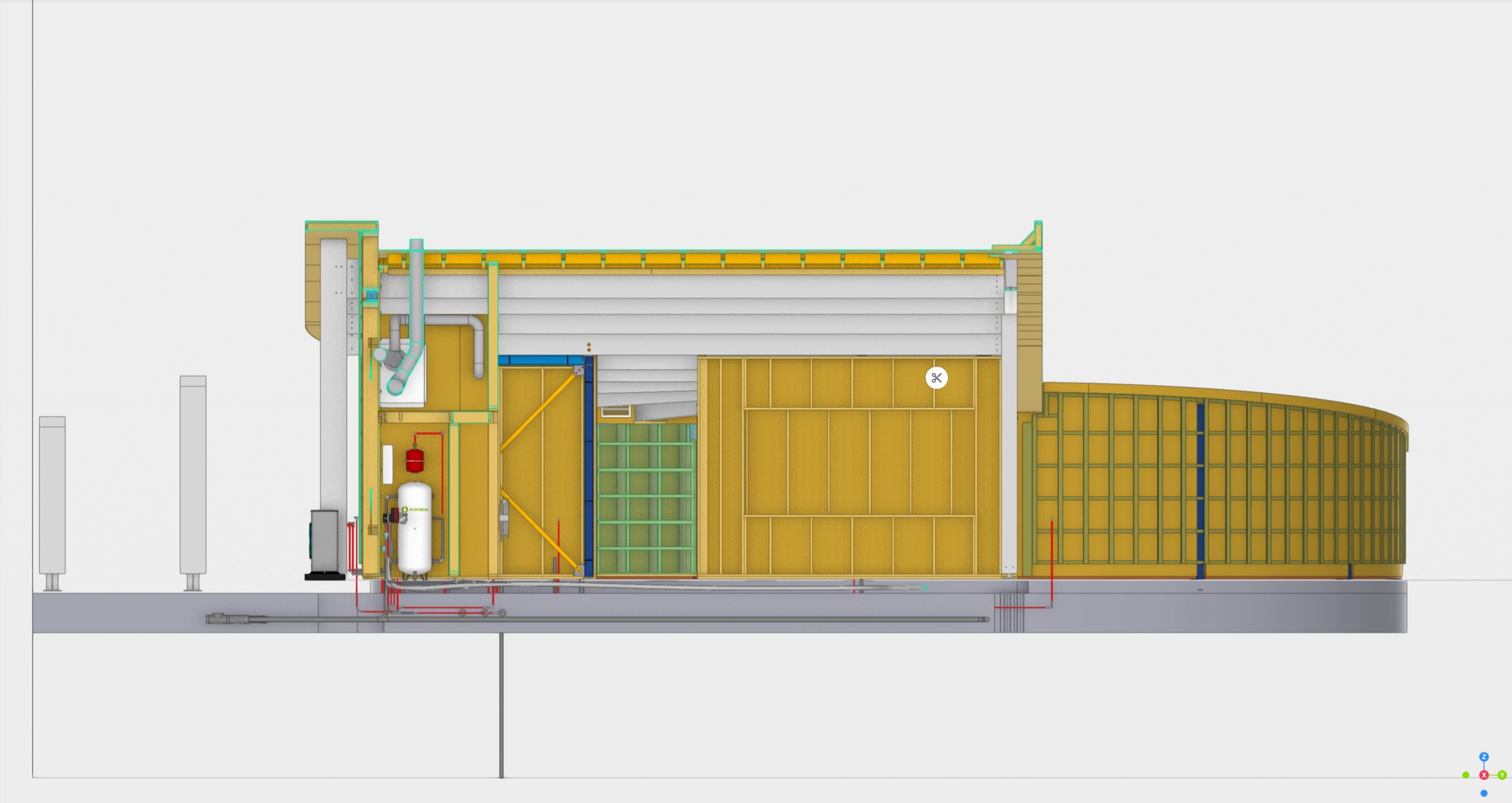
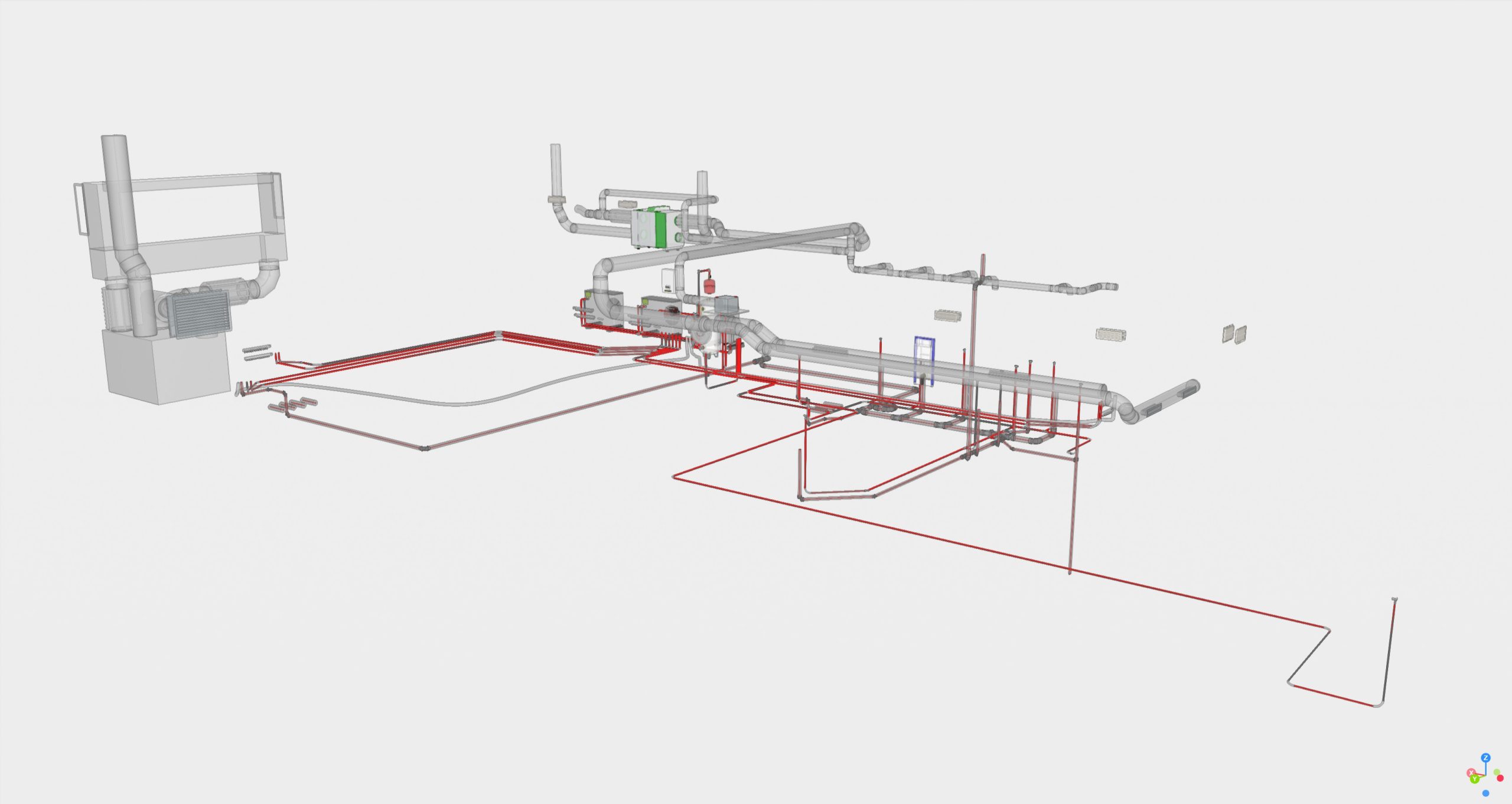
Het project is volledig opgezet vanuit een integraal BIM-proces waarin alle disciplines nauw samenwerken. Constructeur, tekenaar, installateurs, staalleverancier en gebintenleverancier werken gezamenlijk binnen Trimble Connect als centrale dataomgeving. Door deze multidisciplinaire aanpak worden clashes al vroeg in het ontwerpproces geïdentificeerd en opgelost. Het BIM-model fungeert als centrale bron (CDE), waardoor alle partijen altijd met dezelfde actuele gegevens werken en interpretatieverschillen op de bouwplaats worden voorkomen.
Innovatief gebruik van Trimble software
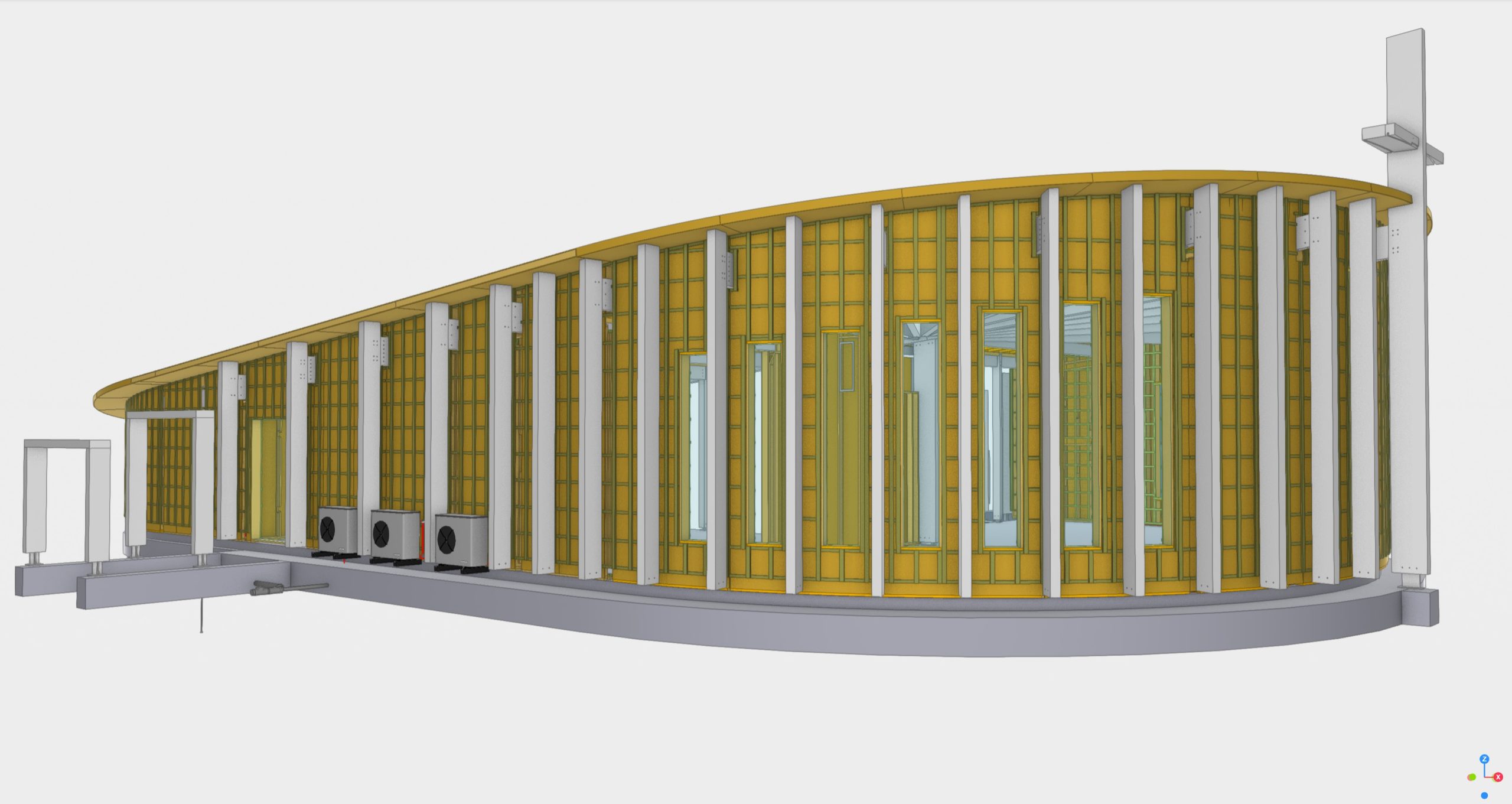
Voor dit project is intensief gebruikgemaakt van de Trimble-softwareomgeving. Trimble Connect vormt de centrale dataomgeving voor het delen van modellen, tekeningen en projectinformatie met alle onderaannemers. Het beheer ligt bij Goed Verblijven, waardoor wijzigingen direct worden doorgevoerd en gecommuniceerd naar alle betrokken partijen. Tekla Structures wordt ingezet voor de gedetailleerde constructieve uitwerking, waarbij het model direct wordt gekoppeld aan productieprocessen via CNC-bewerking op de Hundegger. De digitale workflow zorgt zo voor een naadloze overdracht van ontwerp naar uitvoering.
Maakbaarheid
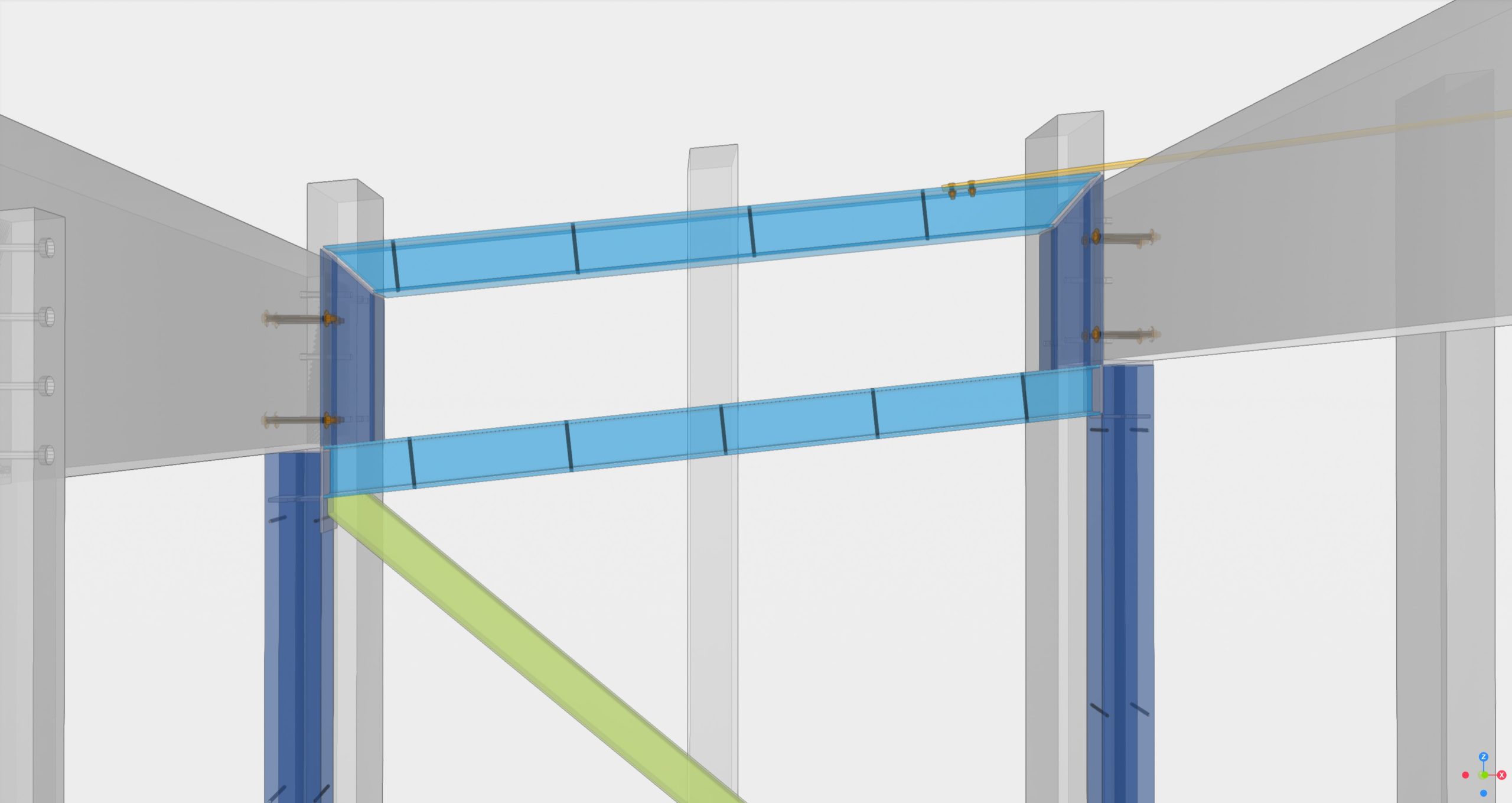
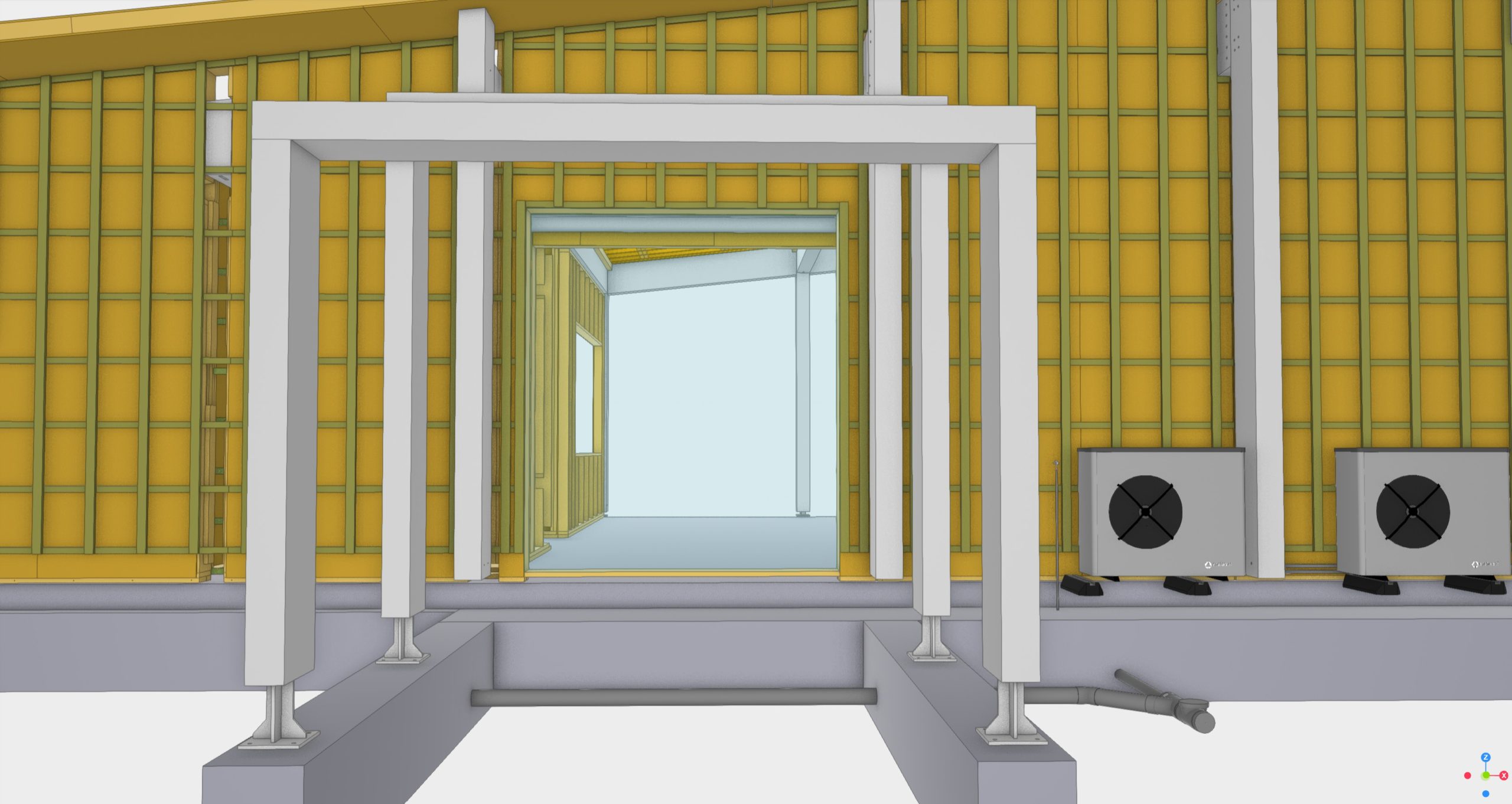
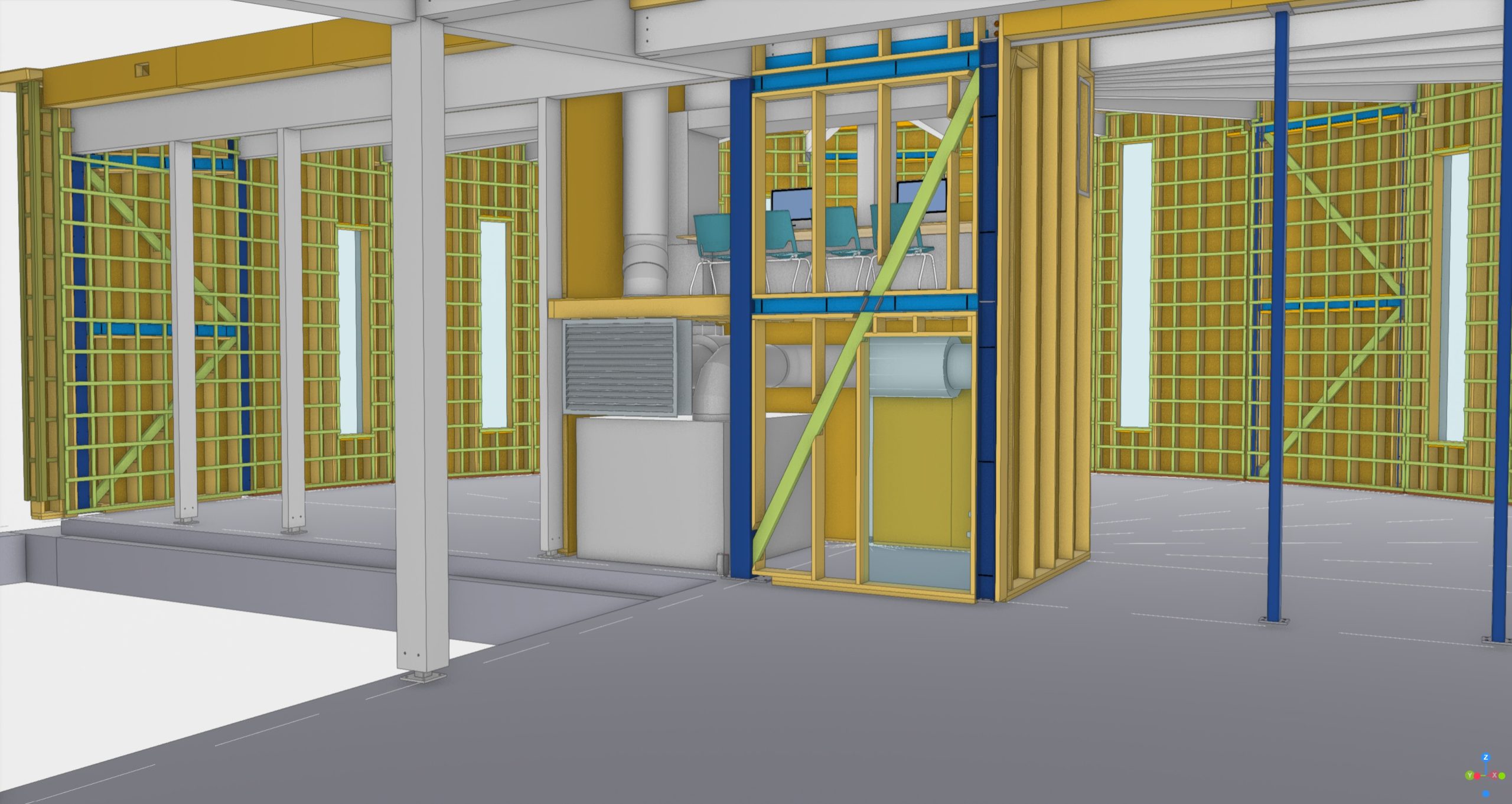
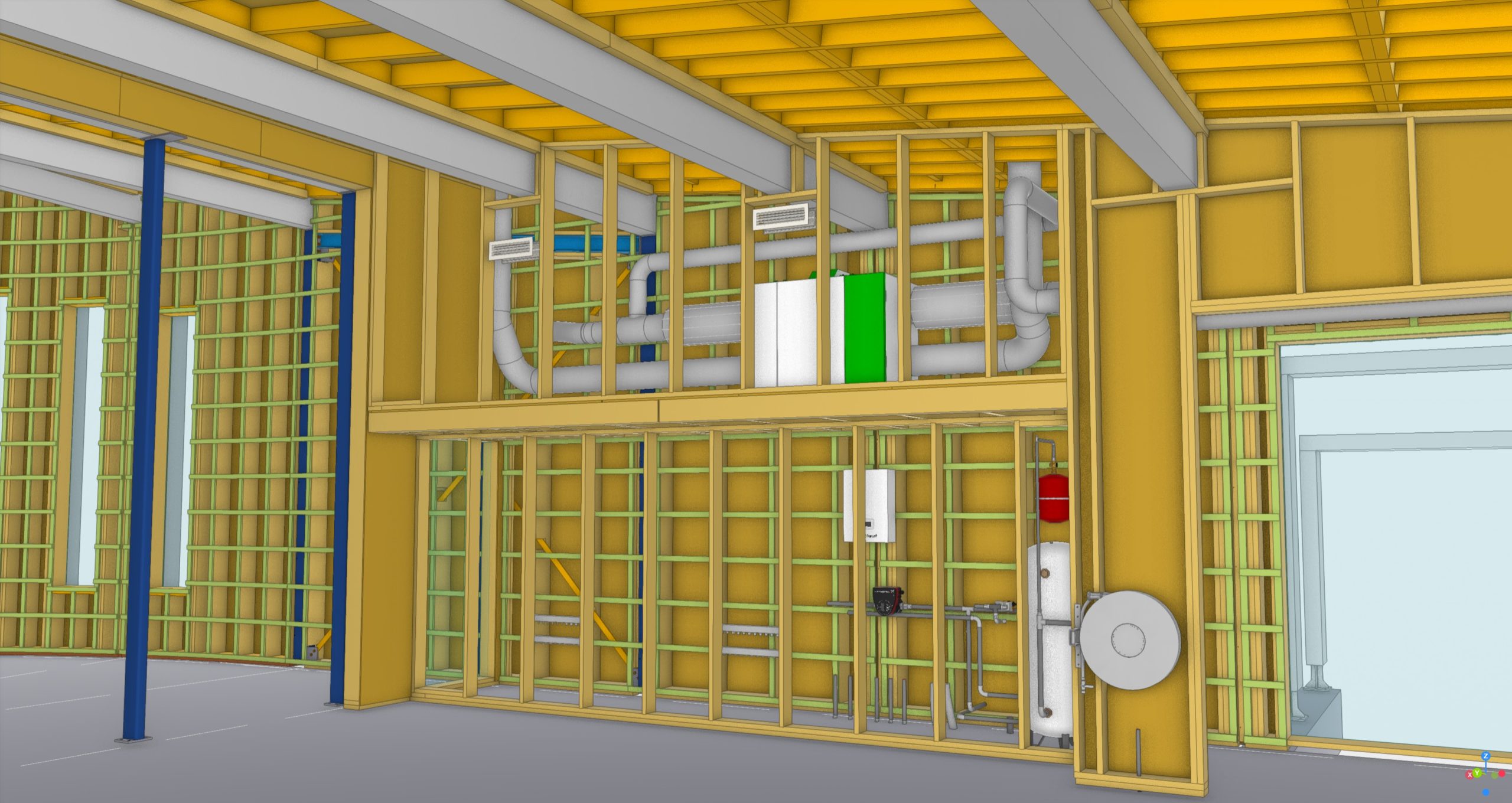
De maakbaarheid van dit project is hoog, ondanks de complexe geometrie. Alle houten elementen van de vloeiende, ronde vorm zijn tot op hoog detailniveau uitgewerkt in het 3D-model en worden direct geëxporteerd naar de Hundegger CNC-machine voor het zagen en schaven op maat. Prefabricage en efficiënte montage op de bouwplaats zijn hierdoor goed mogelijk. Doordat alles digitaal is voorbereid, worden faalkosten geminimaliseerd en is de uitvoering voorspelbaar en beheersbaar. Zo is ook een architectonisch uitdagend gebouw als deze heel maakbaar.
Duurzaamheid
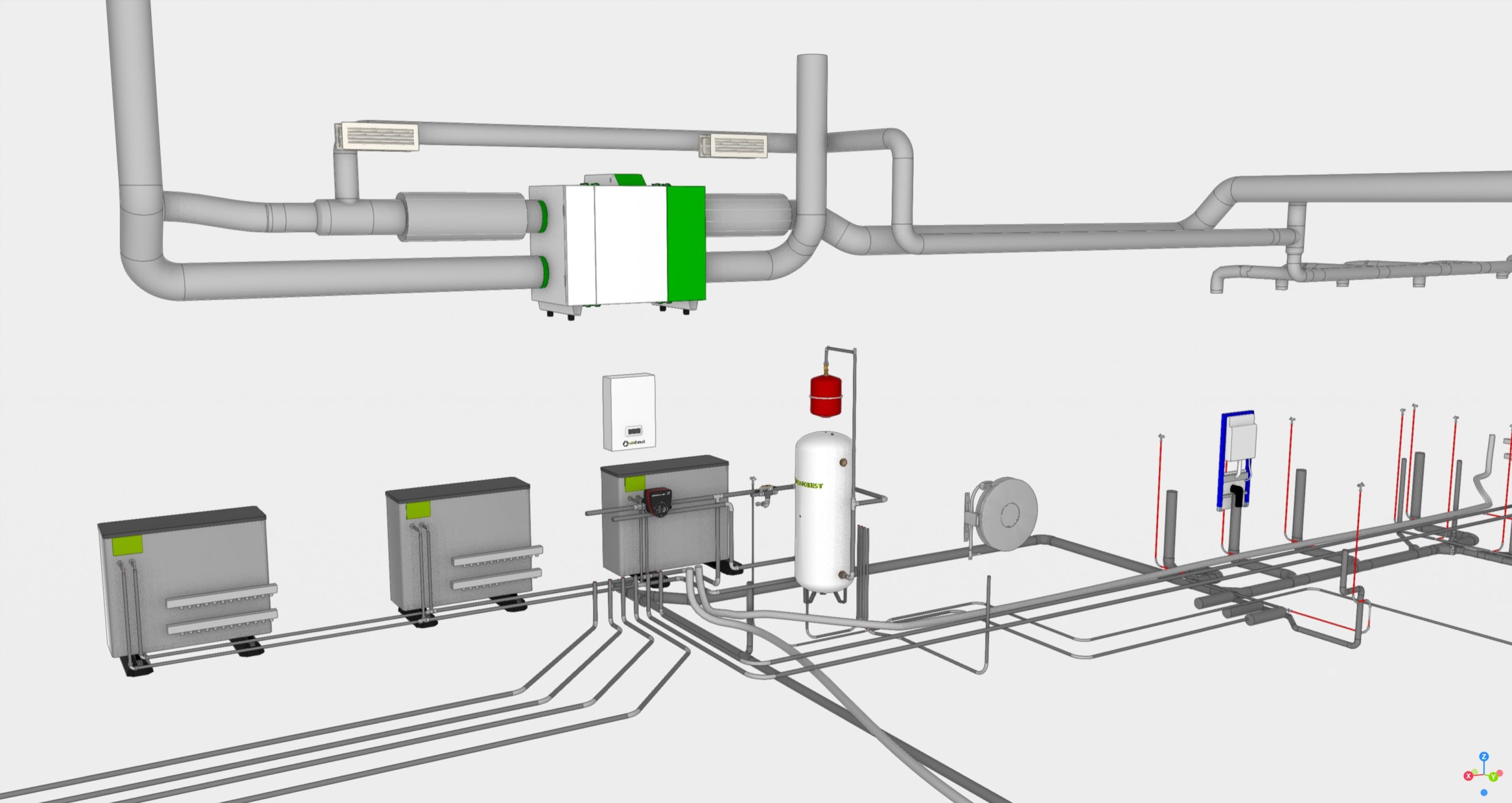
Duurzaamheid is een fundamenteel uitgangspunt van het project. Hout is het hoofdmateriaal: een hernieuwbare grondstof met een lage CO₂-voetafdruk die tegelijk de architectonische uitstraling maakt. De combinatie van BIM en prefabricage zorgt voor een efficiënt materiaalgebruik met minimale verspilling. Ook de installaties zijn gekozen met oog voor energie-efficiëntie en toekomstbestendigheid. De nauwkeurige digitale voorbereiding vermindert bovendien de totale milieu-impact van het bouwproces zelf.
Wauw-factor
Dit kerkgebouw trekt direct de aandacht door zijn vloeiende, organische ronde vorm en de zichtbare houten constructie met strakke afwerkingen. Wat het project extra bijzonder maakt, is dat deze architectonische complexiteit volledig gerealiseerd wordt dankzij BIM. Elke gebogen lijn, elke houten kolom en elke verbinding is digitaal uitgedacht en gecoördineerd voordat er ook maar één schroef is gedraaid. De symboliek van het ontwerp, de constructieve precisie en de esthetische kwaliteit komen samen in een gebouw dat zowel inhoudelijk als visueel indruk maakt. Een sprekend voorbeeld van wat er mogelijk is wanneer architectuur, constructie en digitale productie volledig op elkaar zijn afgestemd.
On the outskirts of Leeuwarden, a remarkable church is currently under construction. The building will serve as a versatile community hub for the entire city. The new build is defined by its organic, rounded forms and a unique inner courtyard for outdoor gatherings. The design incorporates many symbolic elements. The circular forms reference infinity and togetherness. The main load-bearing structure in the nave deepens this meaning: the large beam, connected to the cross, symbolises Christ bearing His Church. The twelve smaller beams, fanning outward from it, represent the twelve apostles.
BIM and collaboration
The project is built on a fully integrated BIM process with close collaboration across all disciplines. Structural engineer, drafter, mechanical and electrical installers, steel supplier and timber frame supplier all work together within Trimble Connect as the central data environment. This multidisciplinary approach allows clashes to be identified and resolved early in the design process. The BIM model serves as the single source of truth (CDE), ensuring all parties always work with the same up-to-date information and preventing misinterpretation on site.
Innovative use of Trimble software
The Trimble software environment is used intensively throughout this project. Trimble Connect serves as the central platform for sharing models, drawings and project information with all subcontractors. Management sits with Goed Verblijven, ensuring changes are immediately communicated to all parties. Tekla Structures is used for the detailed structural modelling, with the model directly linked to production processes via CNC machining on the Hundegger. This digital workflow creates a seamless transfer from design to fabrication.
Constructability
The constructability of this project is high, despite the complex geometry. All timber elements of the flowing, curved form are fully detailed in the 3D model and exported directly to the Hundegger CNC machine for precision cutting and planing. This enables prefabrication and efficient on-site assembly. Because everything is digitally prepared in advance, failure costs are minimised and execution is predictable and controlled. Even a building as architecturally challenging as this one becomes highly buildable as a result.
Sustainability
Sustainability is a core principle of the project. Timber is the primary material: a renewable resource with a low carbon footprint that simultaneously defines the architectural character of the building. The combination of BIM and prefabrication ensures efficient material use with minimal waste. The building systems have been selected with energy efficiency and future-proofing in mind. The precise digital preparation also reduces the overall environmental impact of the construction process itself.
Wow factor
This church immediately commands attention through its flowing, organic curved form and expressive exposed timber construction with refined detailing. What makes the project truly special is that this architectural complexity is fully achievable thanks to BIM. Every curve, every timber column and every connection is digitally coordinated before a single screw is turned on site. The symbolism of the design, the structural precision and the aesthetic quality converge in a building that impresses both intellectually and visually. This church is a compelling example of what becomes possible when architecture, engineering and digital fabrication are perfectly aligned.
Hinterlasse ein Kommentar


Construsoft is an authorized Tekla Structures vendor and provides training, technical support, and other services to its customers.
For more information, please visit our website:
construsoft.comTekla is a Trimble Company © Copyright 2026 Tekla