The Cubehouse – Breath spaces
| Categoria | Projectos Comerciais |
|---|---|
| Ano | 2026 |
| País | Benelux |
| Organização | Vic Obdam Staalbouw B.V. |
| Parceiros do Projeto | Visser en Smit Bouw, Seldenthuis Engineering |
| Autor | Lucas van der Heide |
| Cliente | Visser en Smit Bouw |
| Local de construção | Amsterdam |
| Tags | Parametric designPrefabInterfaceTekla StructuresTrimble ConnectSteel |
Project The Cubehouse – Breathspaces: een samenwerking tussen Visser & Smit Bouw, Vic Obdam Staalbouw B.V. en Seldenthuis Engineering
Wat maakt dit project zo bijzonder?
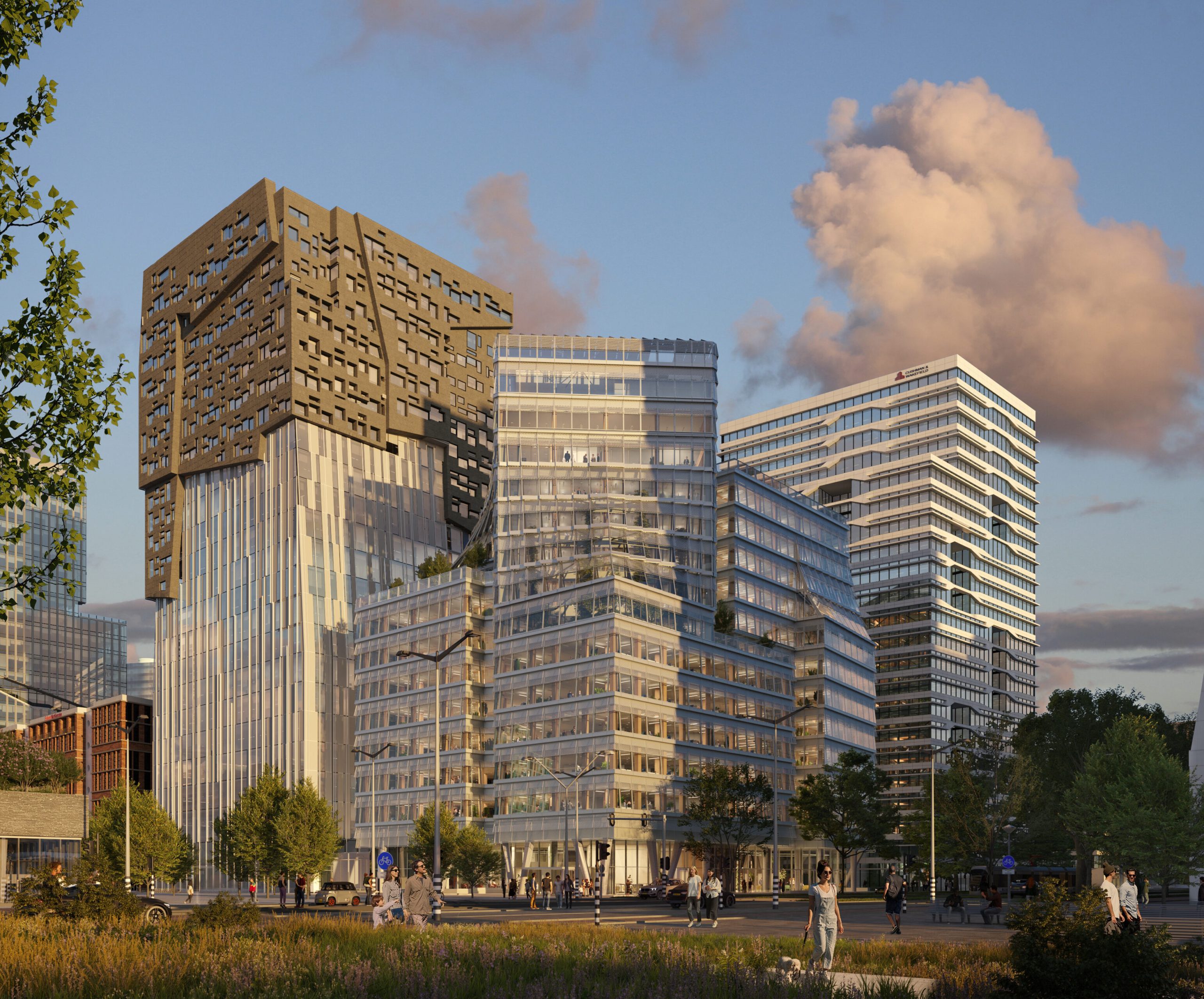
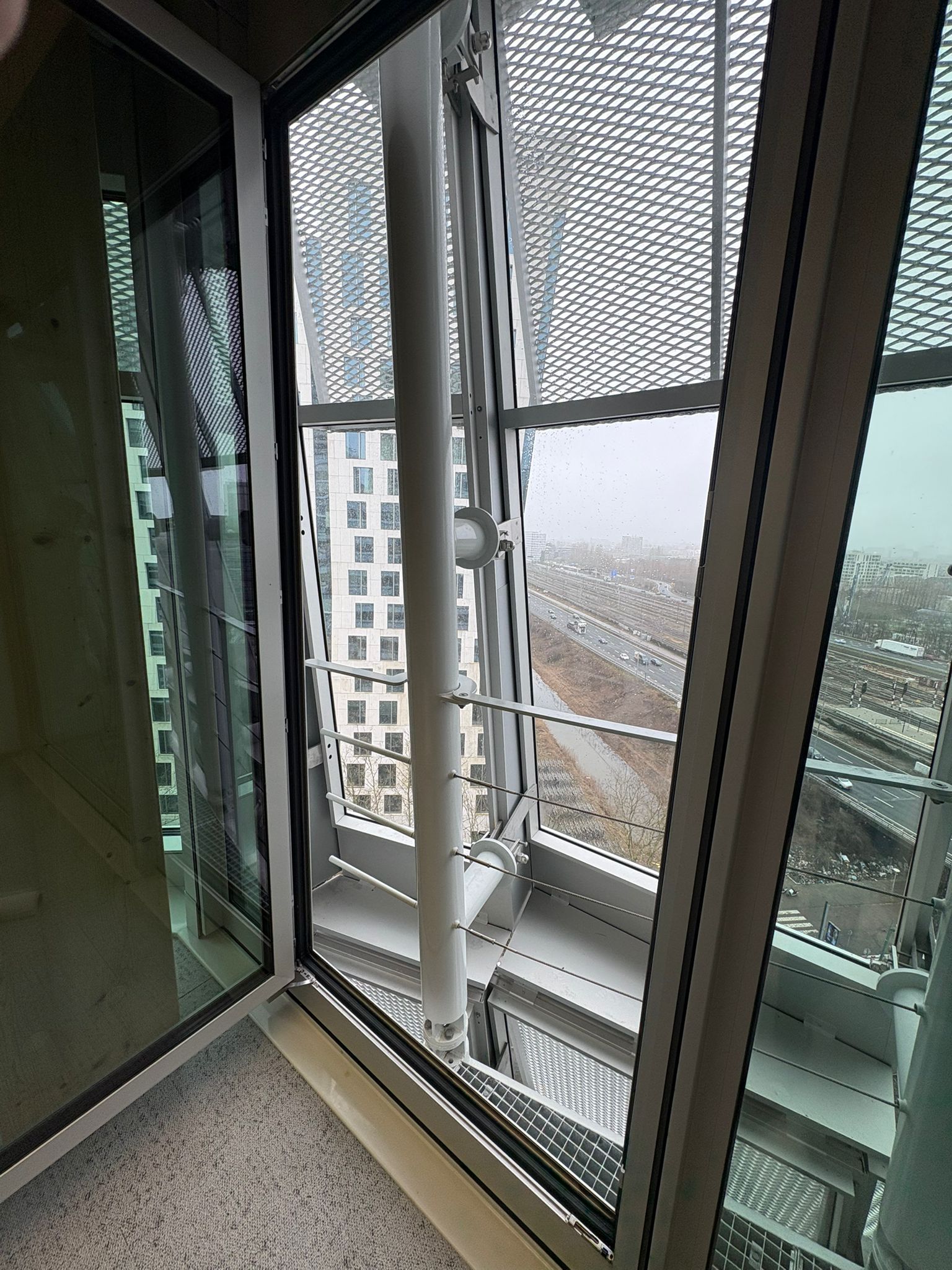
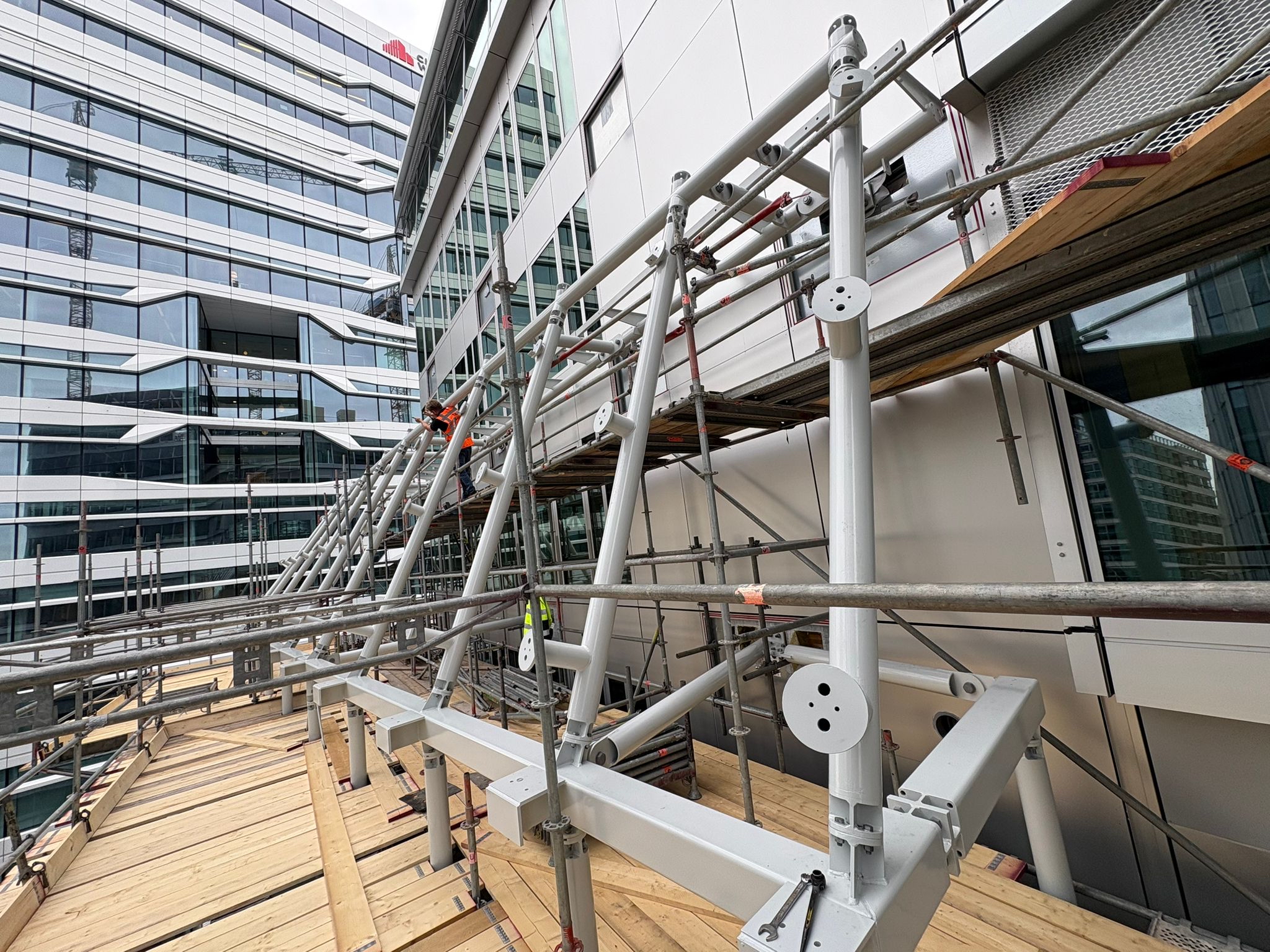
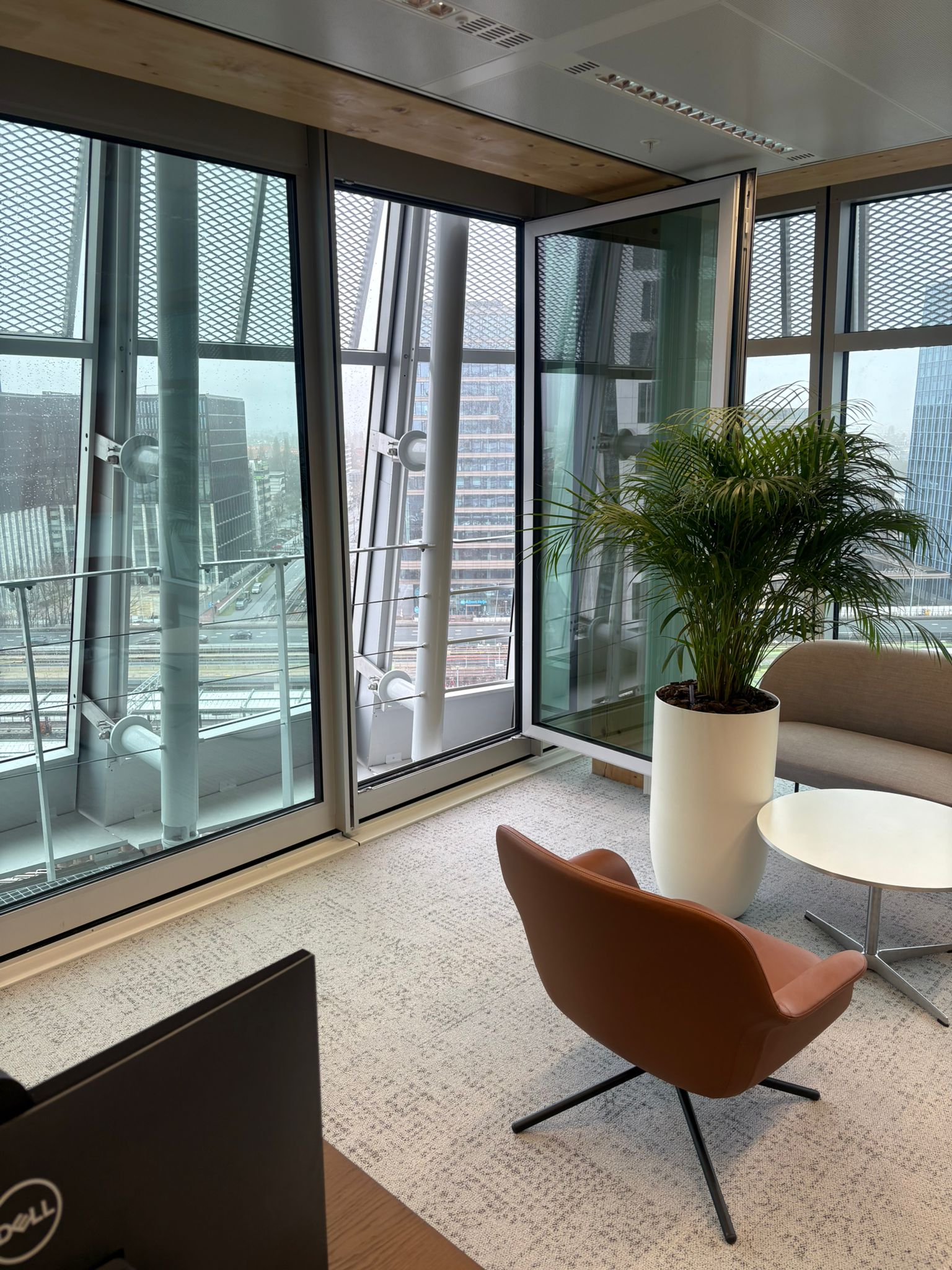
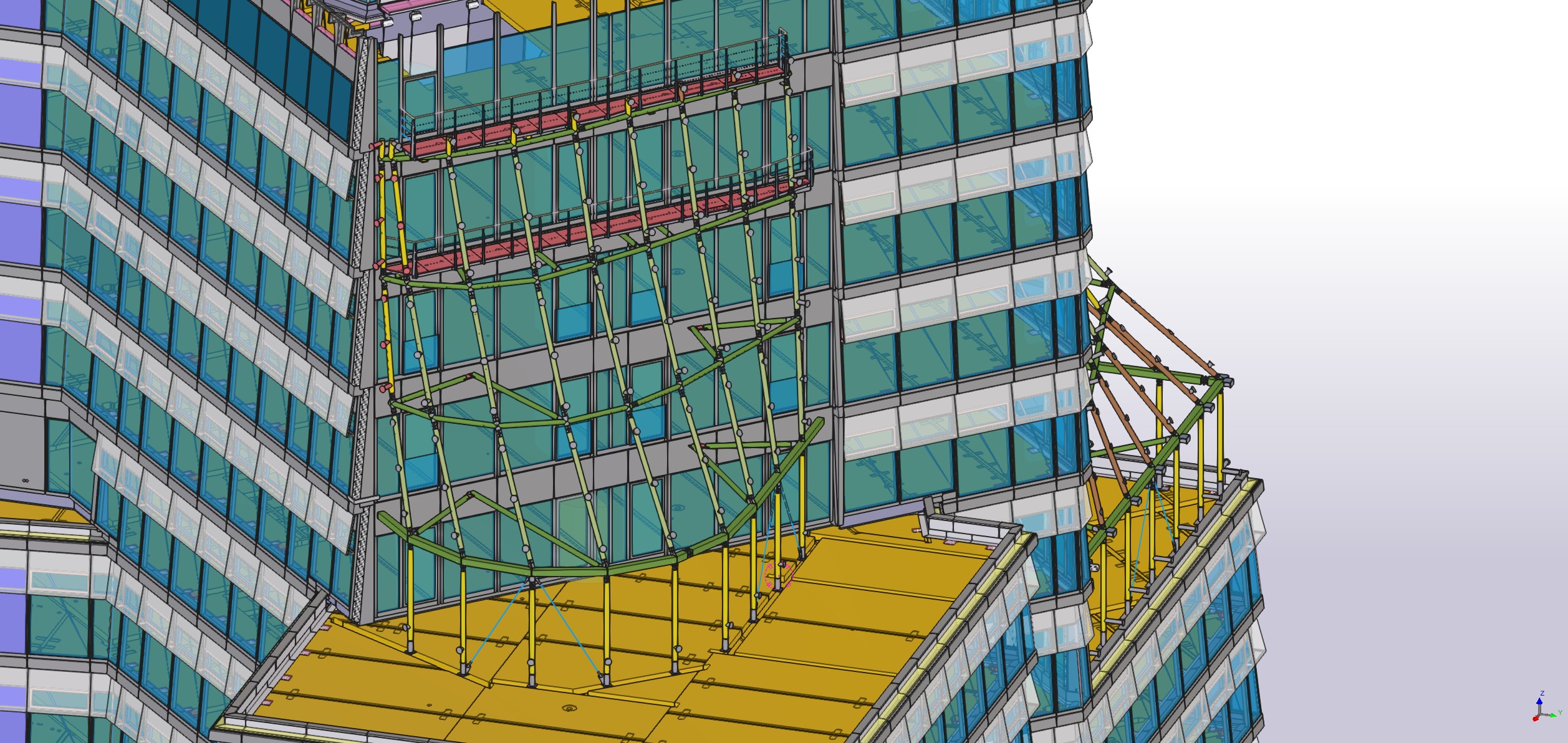
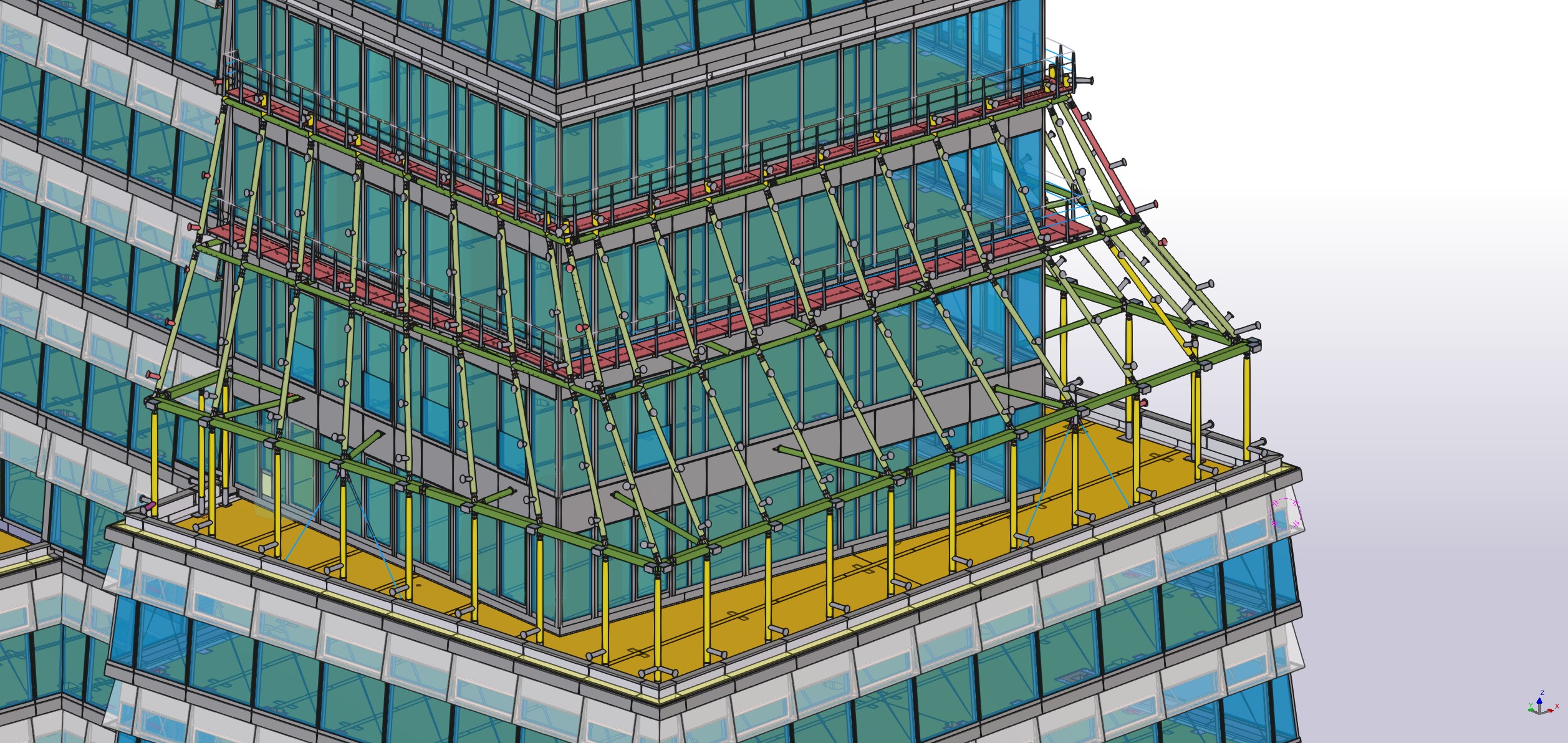
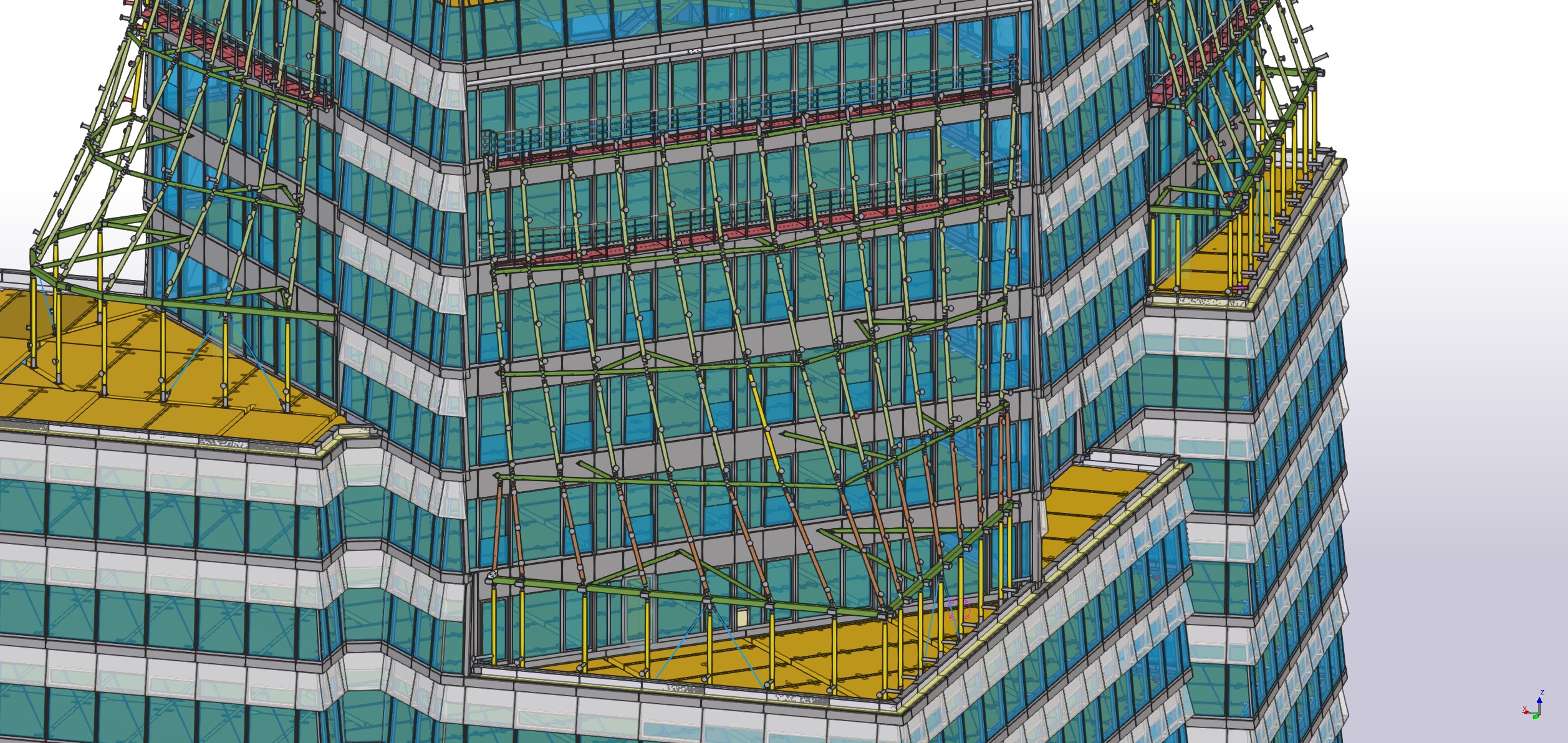
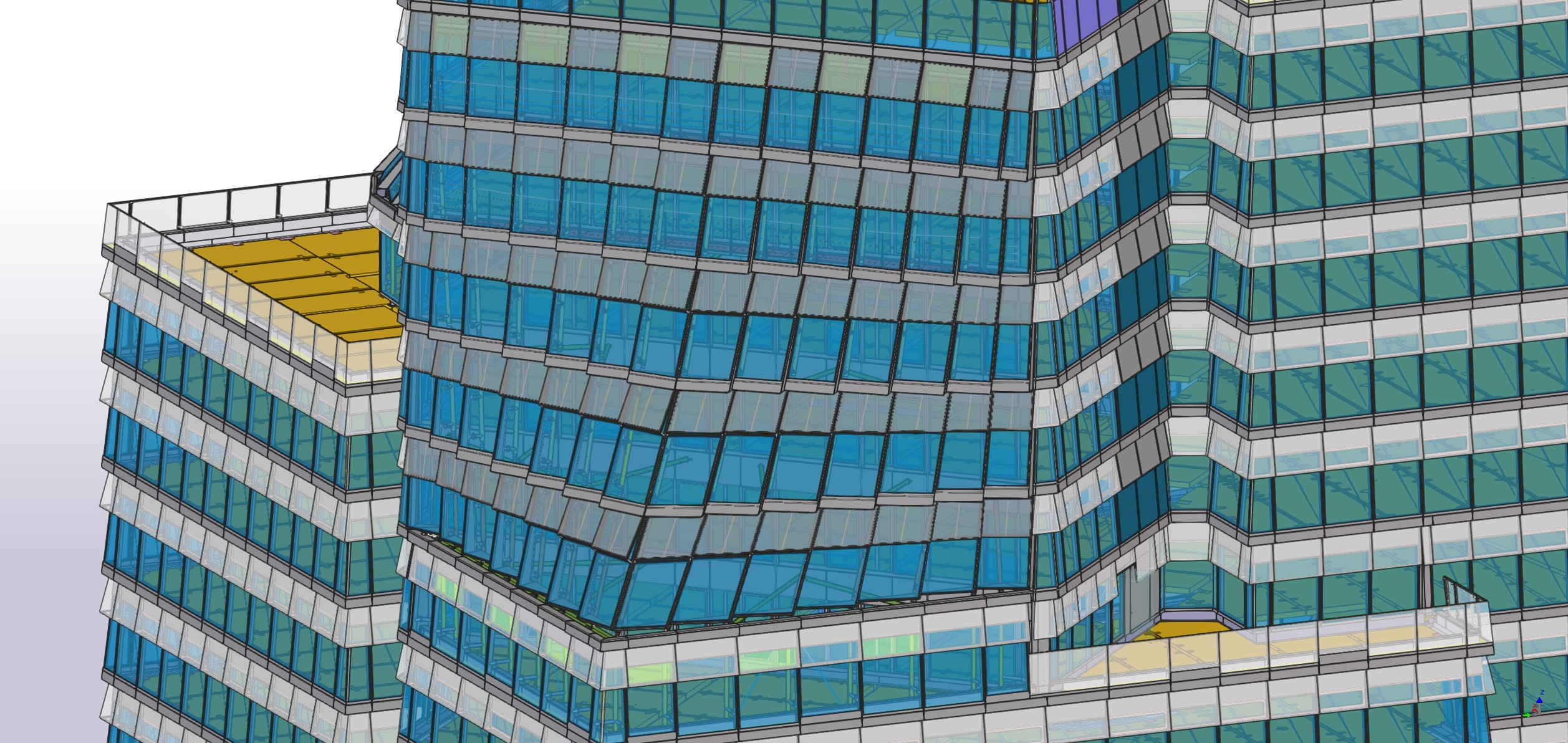
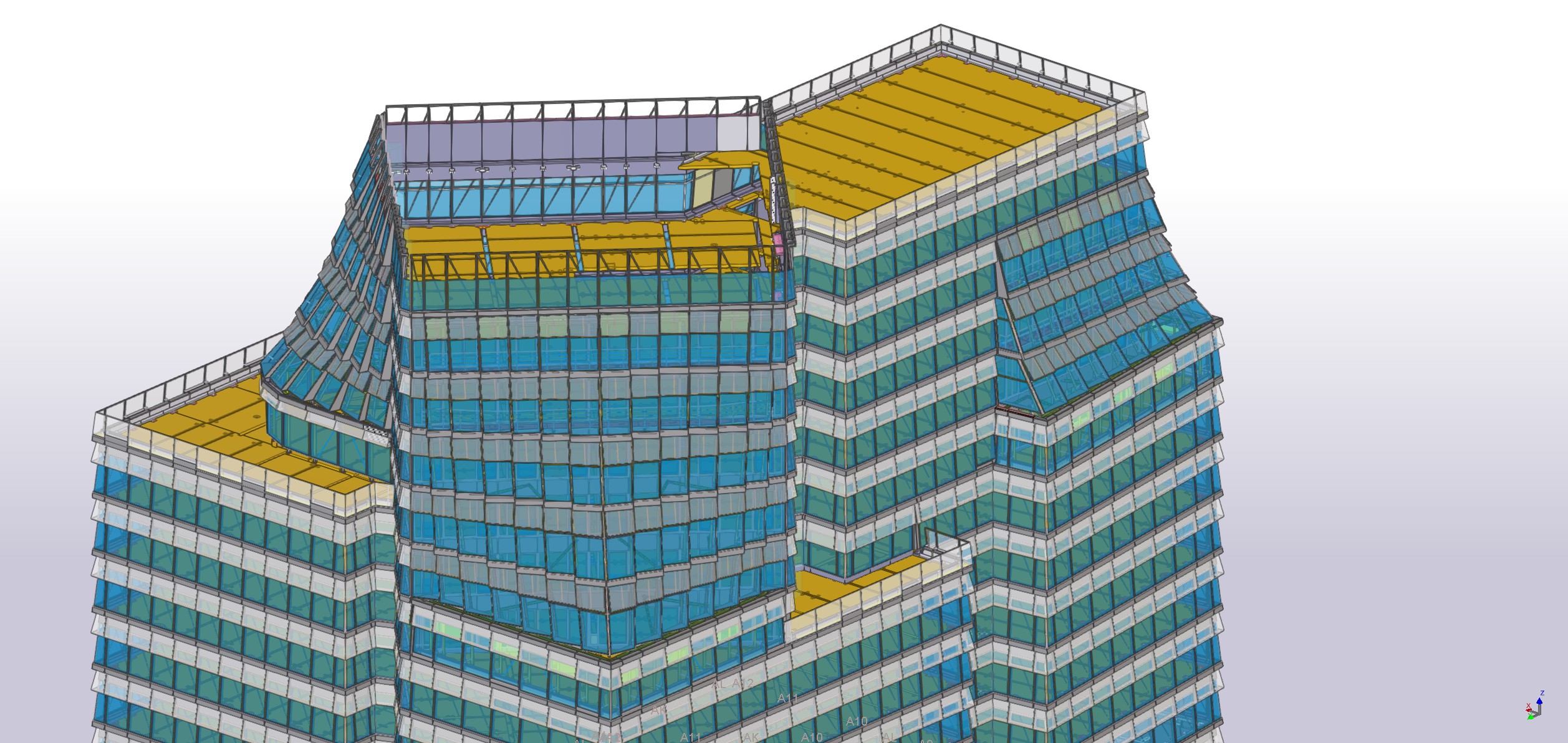
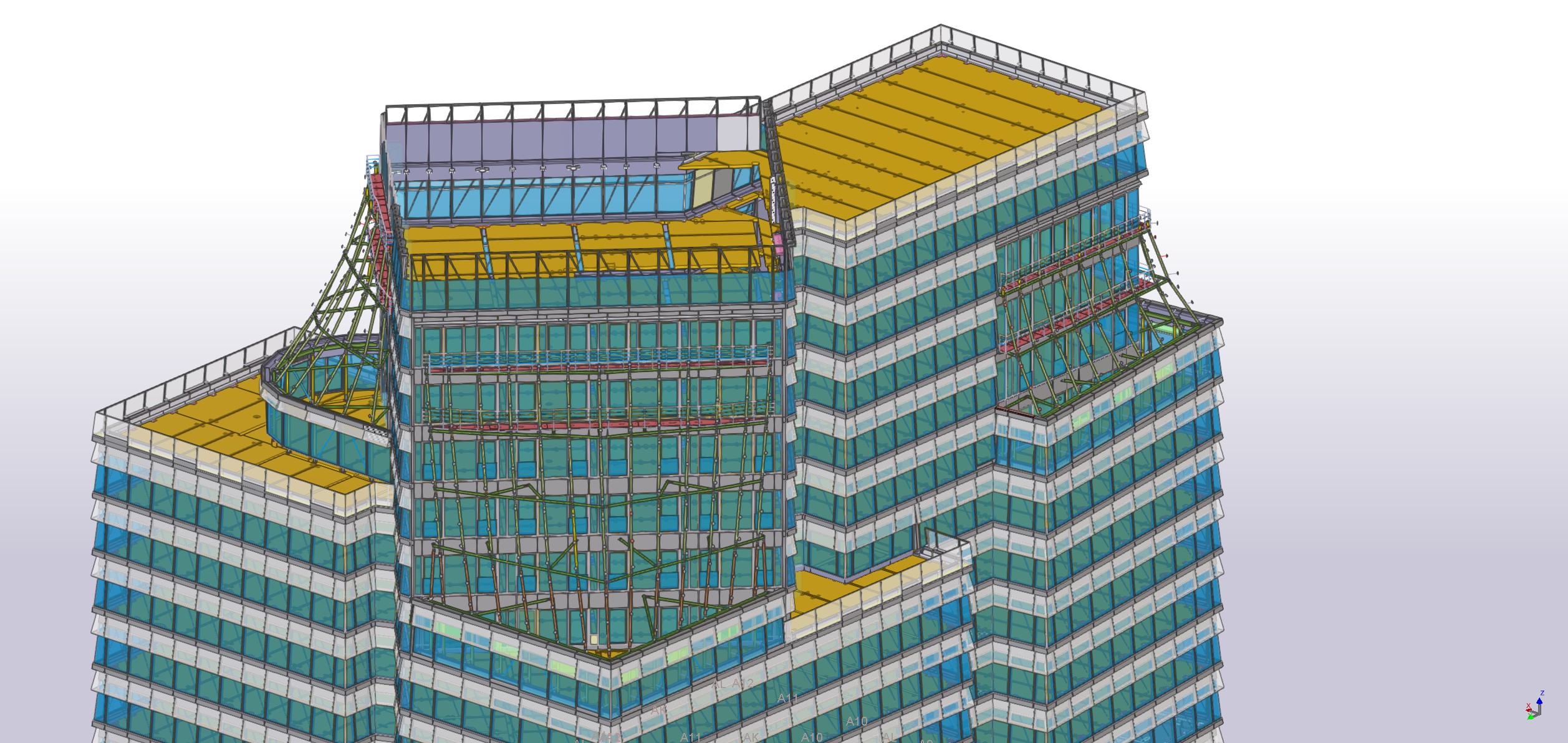
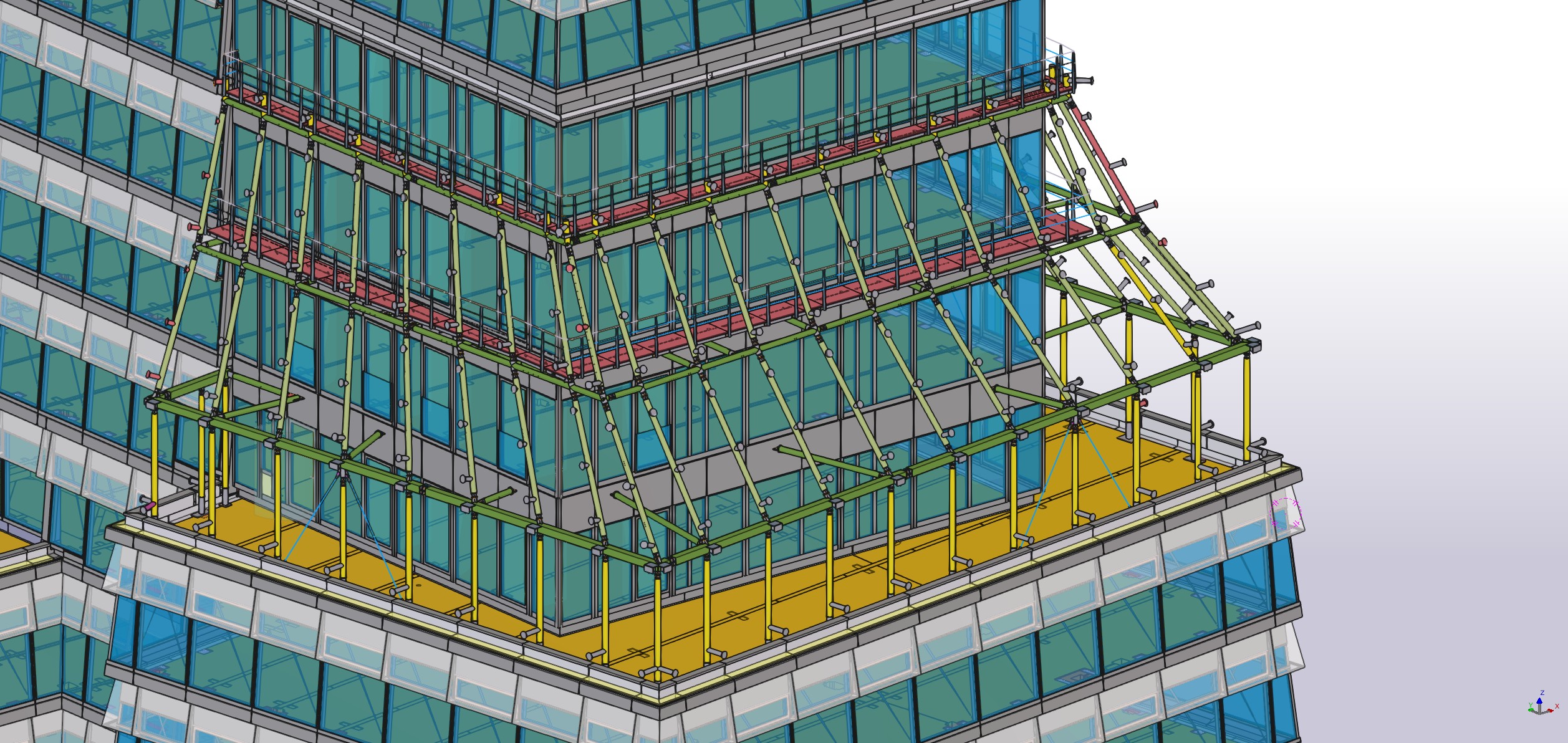
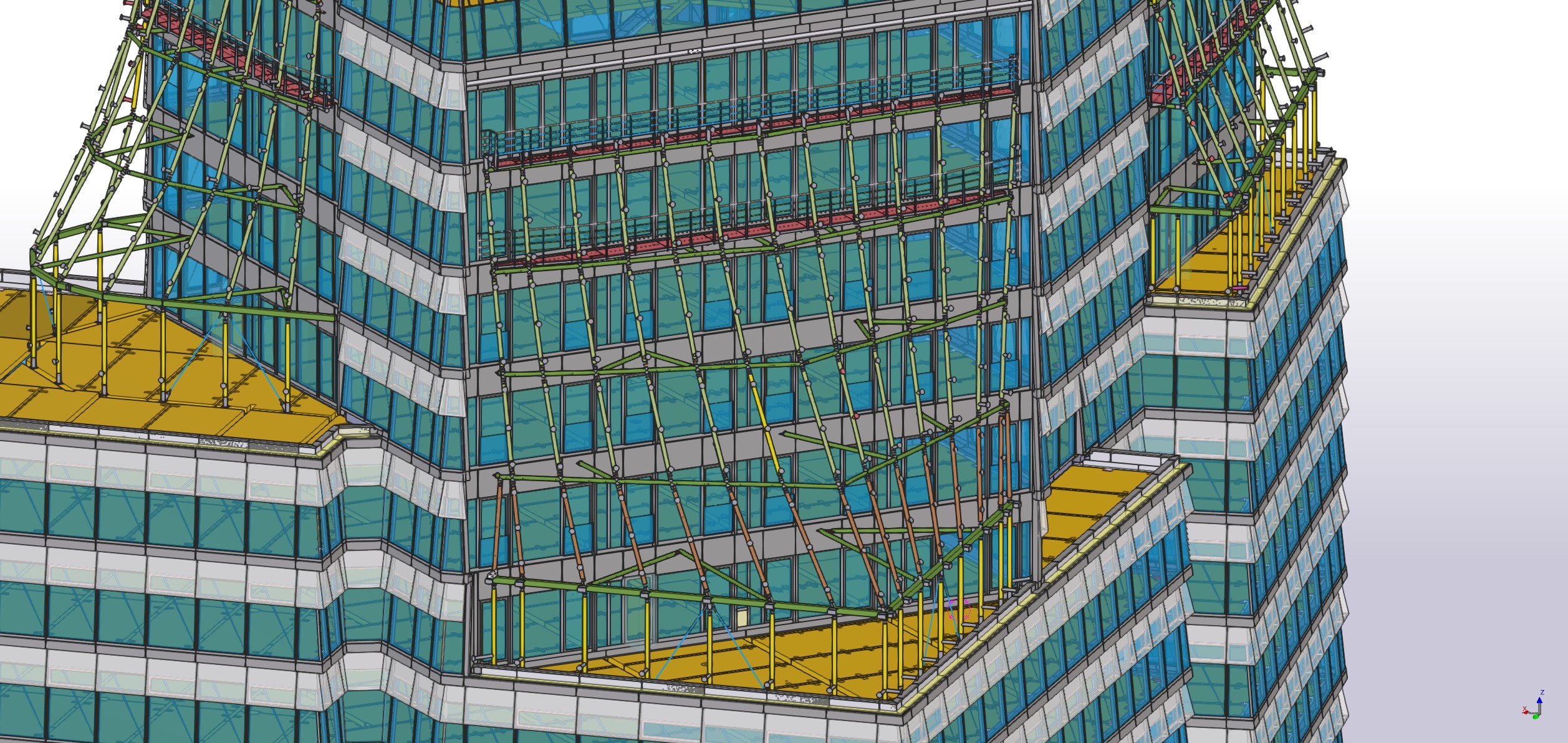
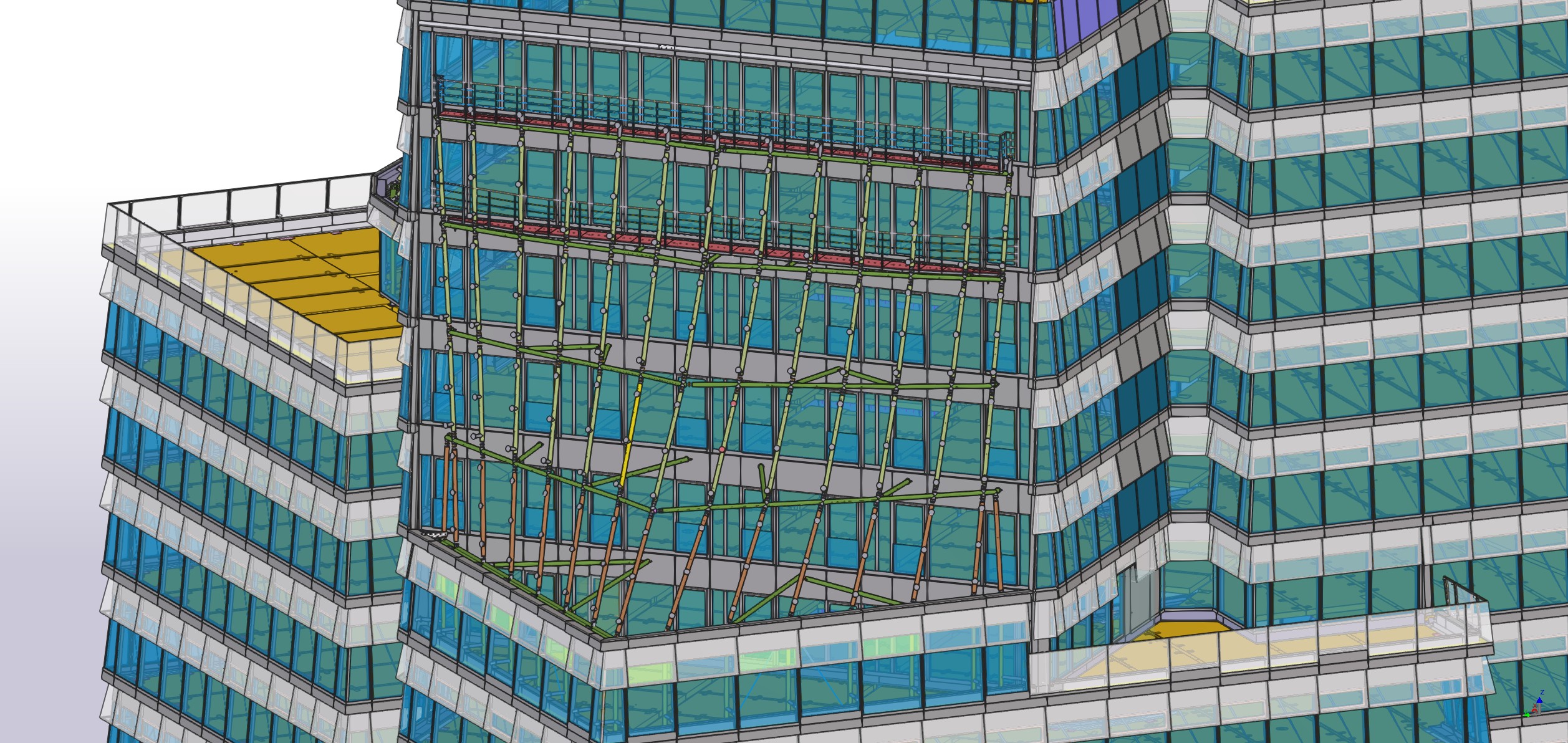
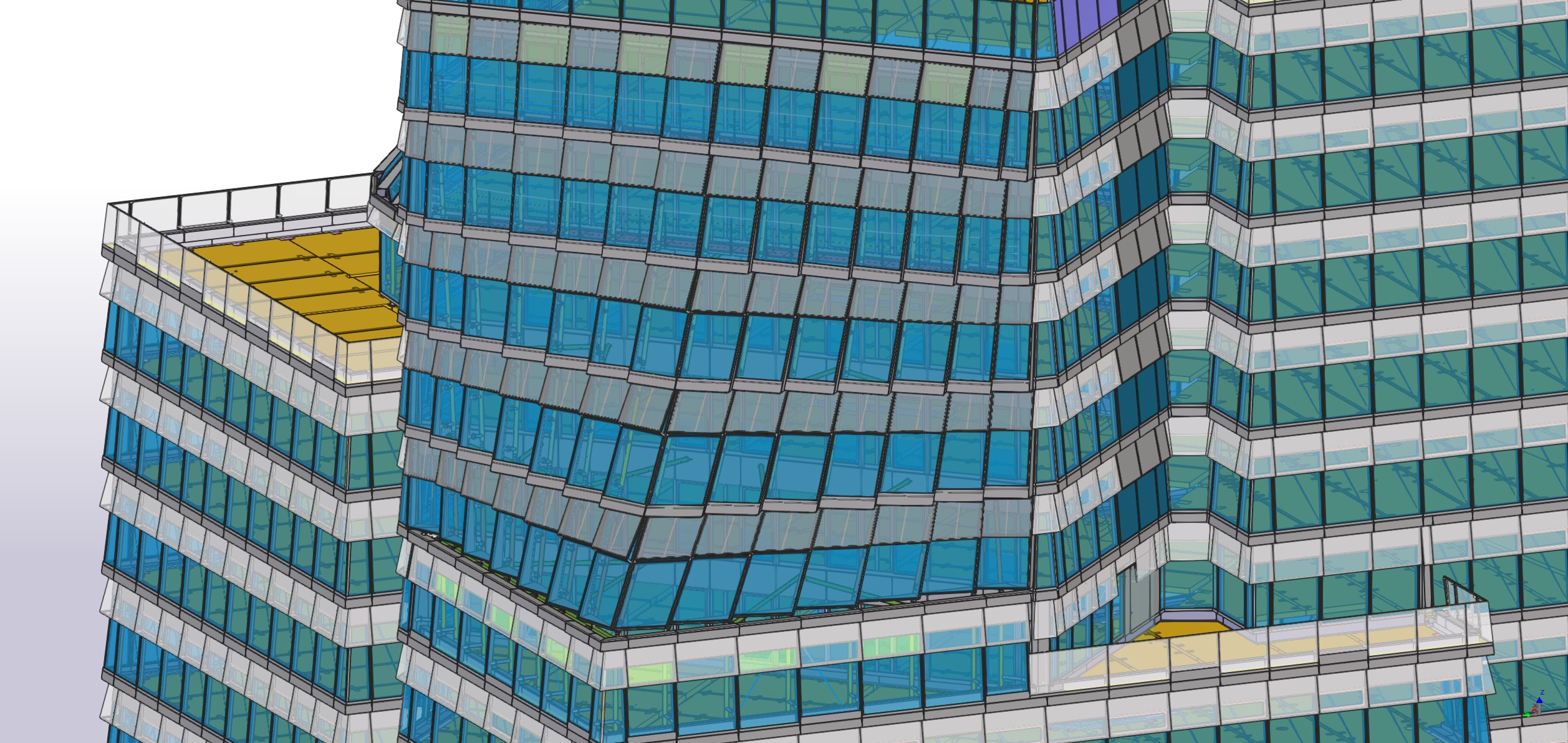
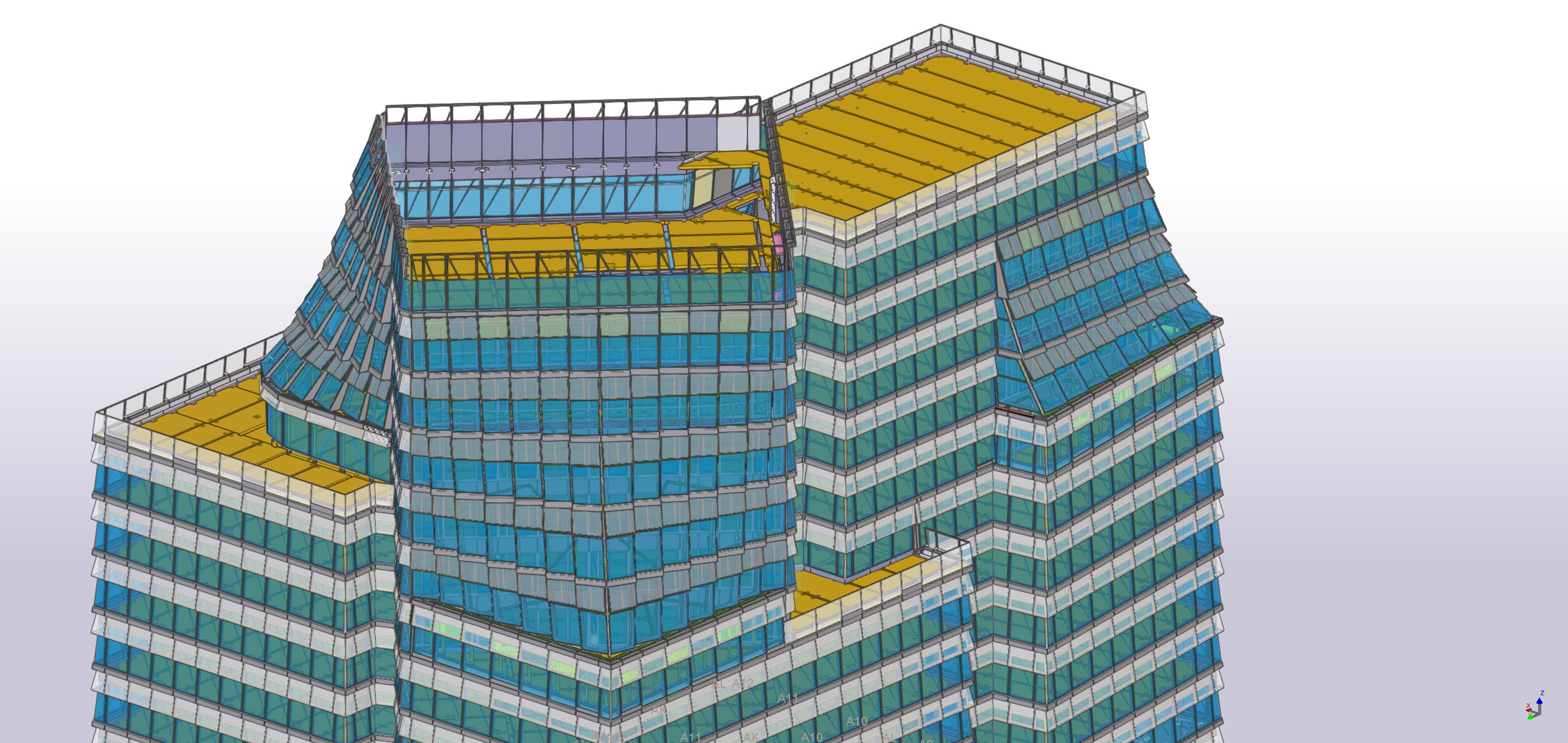
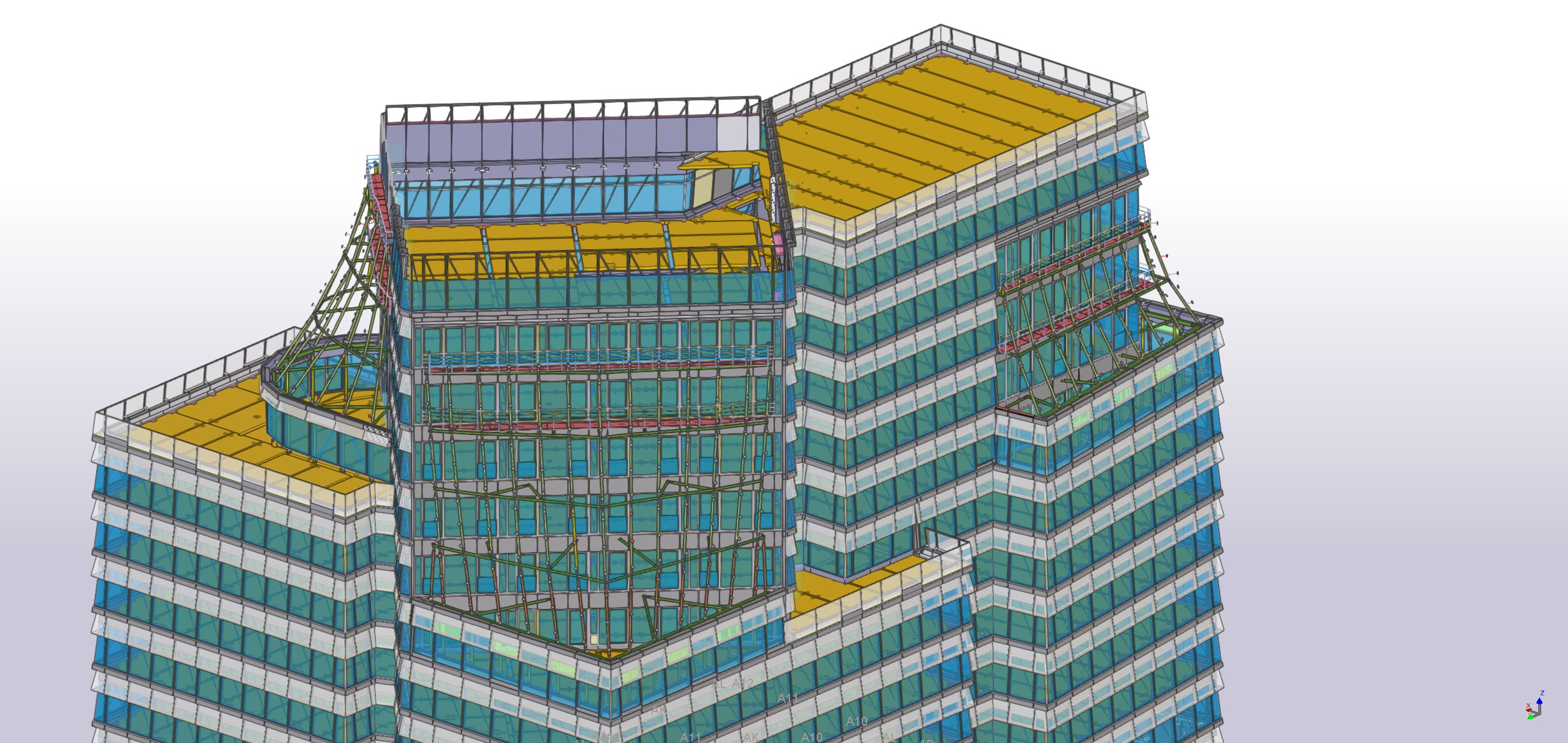
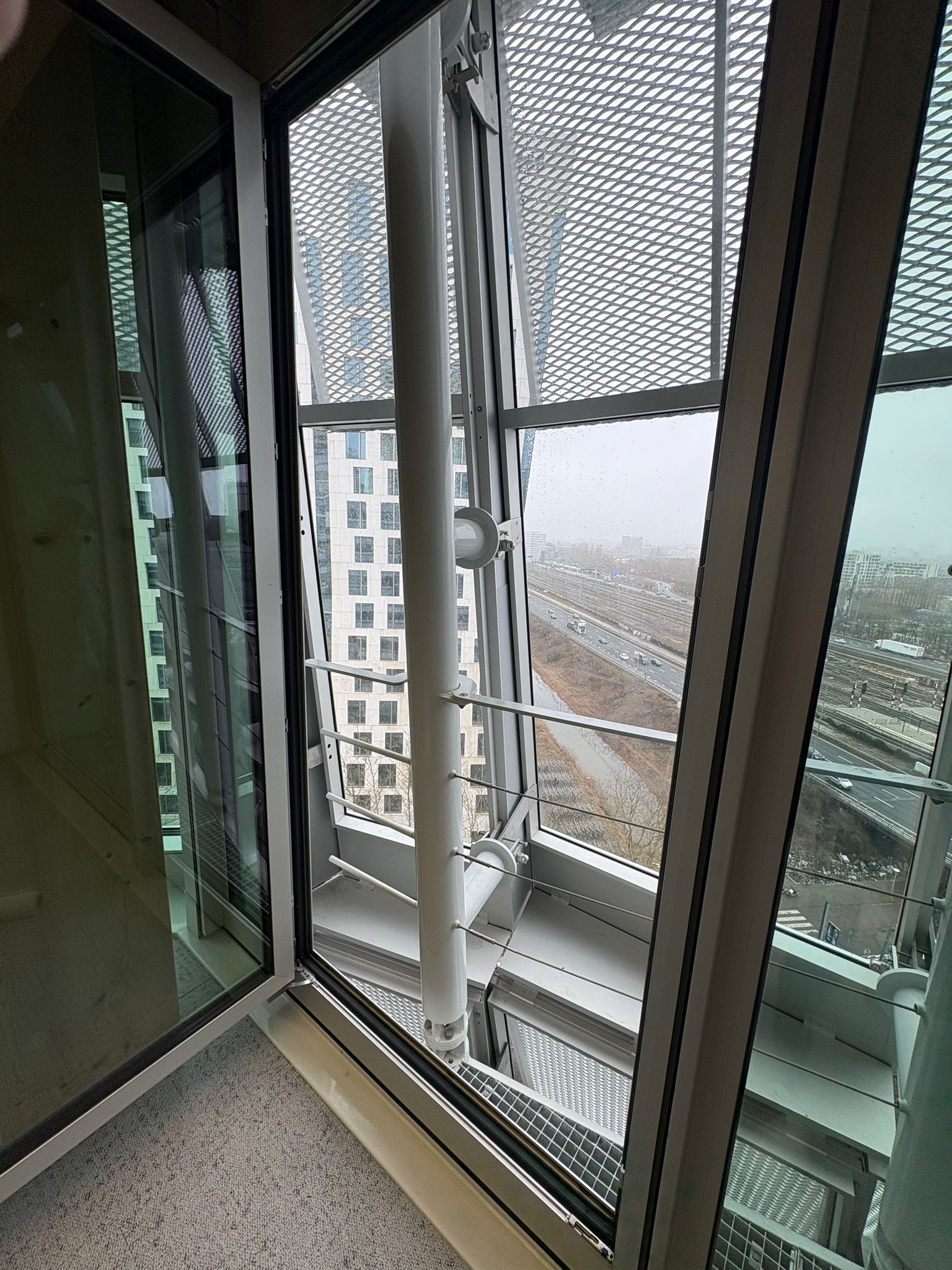
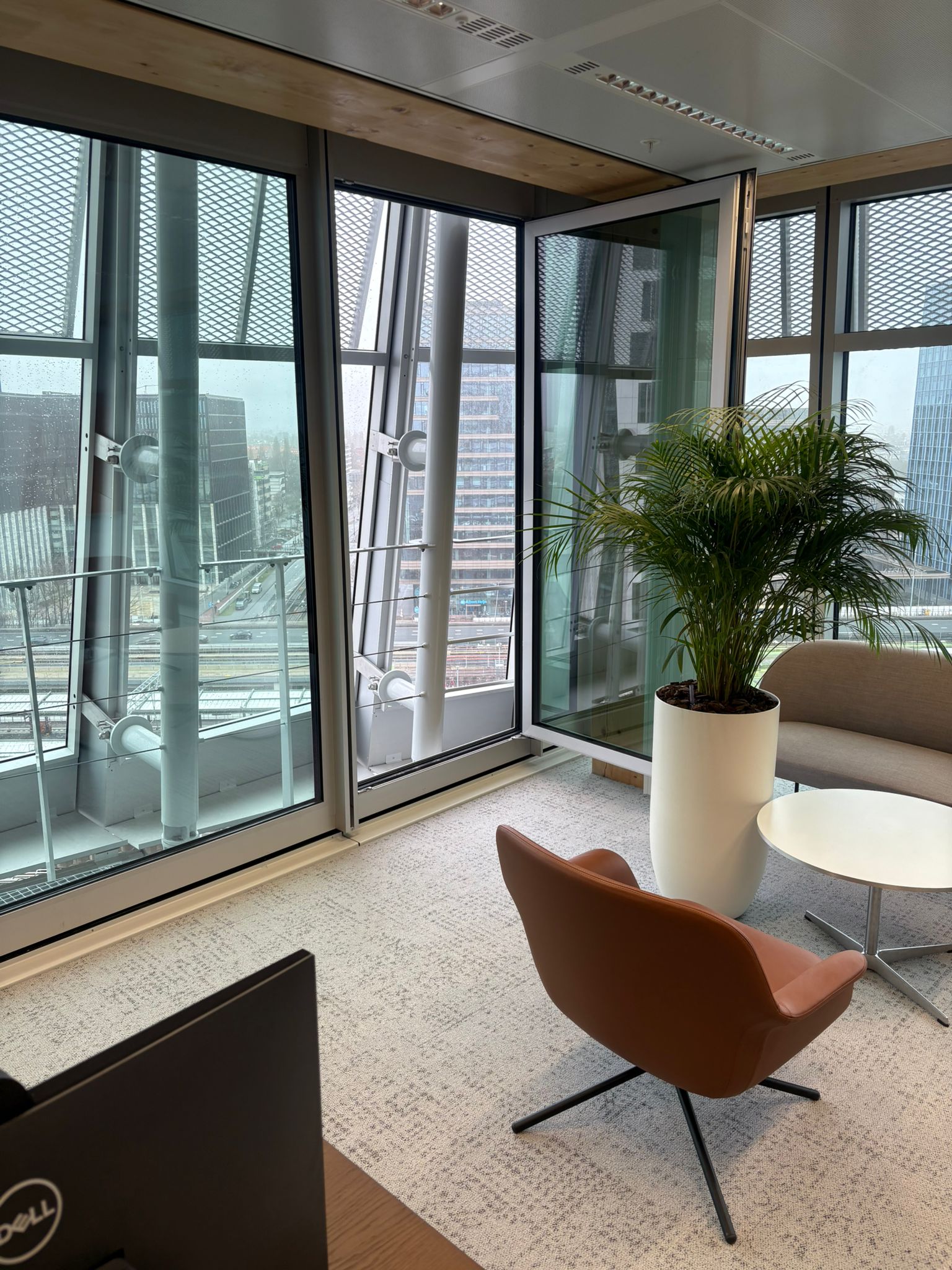
Dit project is uniek vanwege het creëren van zogenoemde Breath Spaces aan de buitengevel van het pand. Deze overdekte buitenruimtes vormen samen een soort gordijnvormige constructie rondom het gebouw. In combinatie met de schuin geplaatste glazen panelen ontstaat een dynamisch en transparant gevelbeeld, waarin binnen en buiten op een unieke manier met elkaar worden verbonden.
Het gebruik van BIM en samenwerking
De gegevensuitwisseling voor de afstemming tussen de opdrachtgever, prefableveranciers, VIC Obdam Staalbouw en Seldenthuis Engineering is voornamelijk met IFC-modellen uitgevoerd. Uitgangspunt bij de start van het modelleren was een IFC-bestand dat door gevelleverancier Rollecate werd gegenereerd vanuit een parametrisch model, waarmee de posities van de beugels werden vastgelegd. Dit bestand vormde een belangrijk uitgangspunt voor de verdere engineering en uitvoering, samen met IFC’s van de overige gebouwelementen zoals de vloeren en overige gevels.
Om de nauwkeurigheid te waarborgen en consistentie in het model te behouden, zijn door Seldenthuis veelvuldig gebruikerscomponenten toegepast. Deze zorgden ervoor dat soortgelijke verbindingen, hoewel verschillend gepositioneerd in de constructie, qua onderdelen identiek werden. Dit alles droeg bij aan een efficiënte samenwerking tussen de verschillende partijen en een gestroomlijnd bouwproces.
Het (innovatief) gebruik van Trimble software
Voor het bepalen van de exacte posities van de uithouders op de kolommen heeft Seldenthuis een applicatie ontwikkeld met gebruik van de Tekla Structures API. Hiermee kon met zeer hoge nauwkeurigheid de positionering van de uithouders worden bepaald, ondanks de complexe geometrie van het ontwerp.
Binnen de gebruikerscomponenten zijn componenten van HGG geïntegreerd, waardoor de contouren van de buizen eenvoudig uitgewisseld konden worden met productiemachines. Dit zorgde voor een directe koppeling tussen ontwerp en productie.
Daarnaast resulteerde deze werkwijze in opmerkelijk eenvoudige werkplaatstekeningen, veelal met slechts twee principedetails en minimale maatvoering — een sterk bewijs van de kracht van digitale engineering en het gebruik van gebruikerscomponenten voor standaardisering. Ook het gebruik van sub- en supermerken in Tekla Structures zorgde voor een eenvoudige opbouw van complexe samenstellingen.
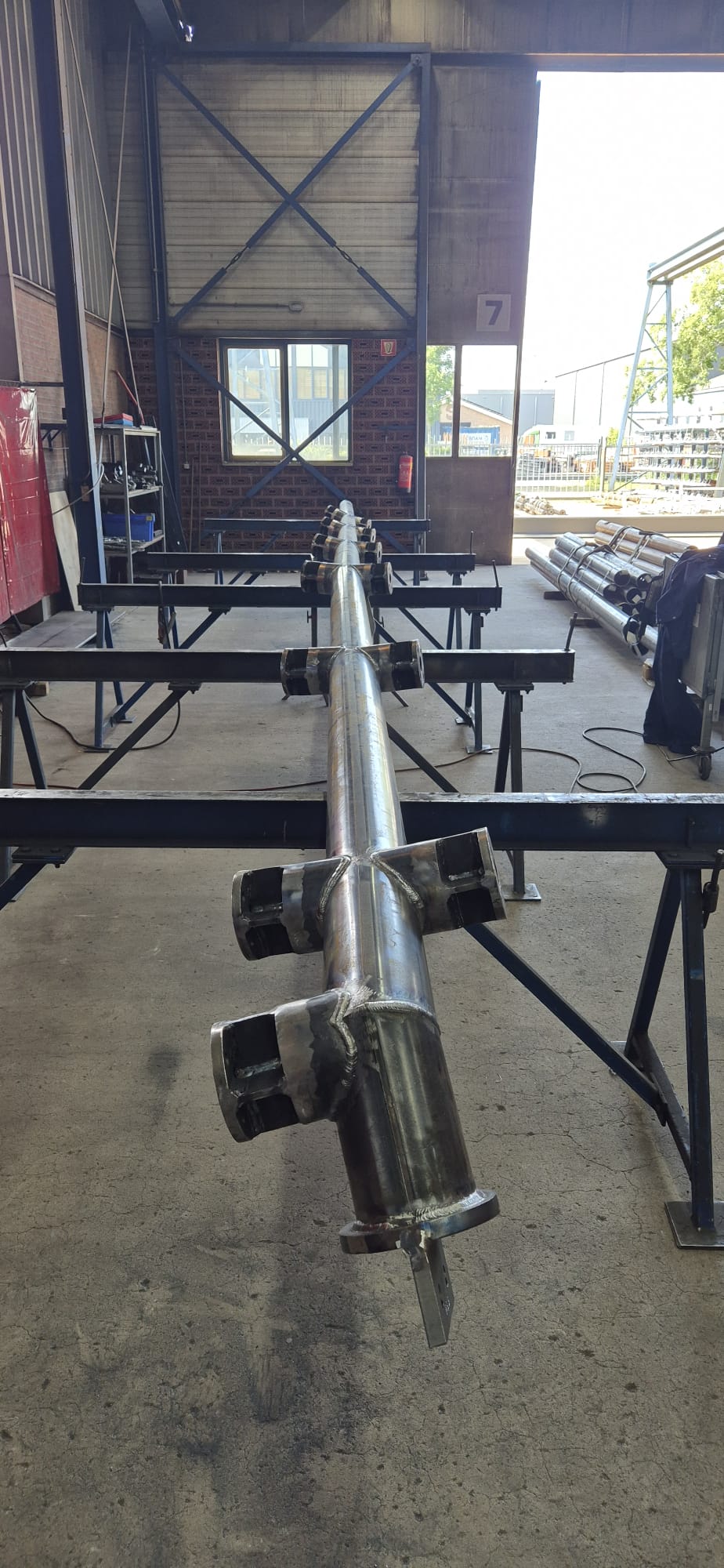
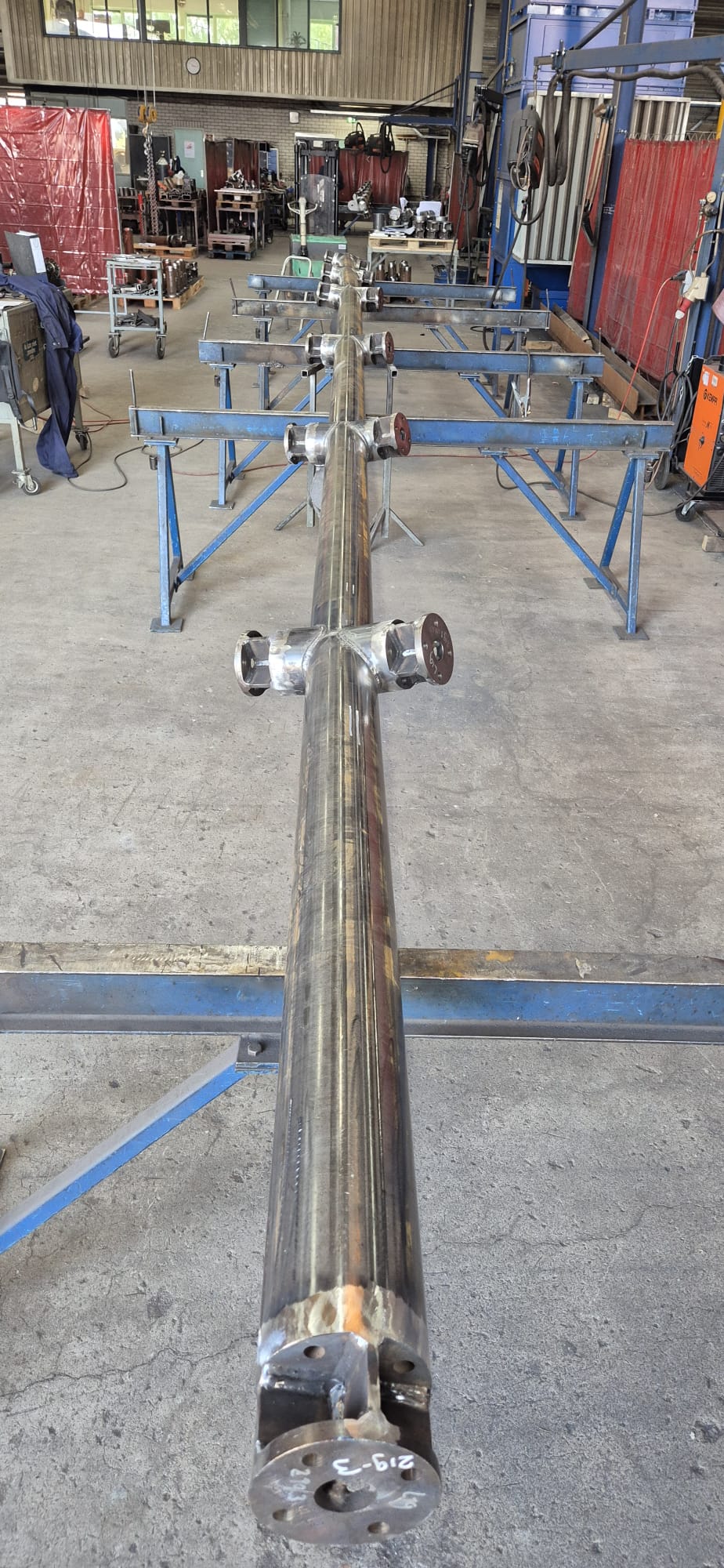
Tijdens het productieproces zijn onderdelen in de fabriek door Vic Obdam Staalbouw op innovatieve wijze met een 3D scanner ingemeten en hierna in Tekla Structures gecontroleerd, zodat kon worden vastgesteld dat deze exact volgens het model zijn geproduceerd.
De maakbaarheid van het project
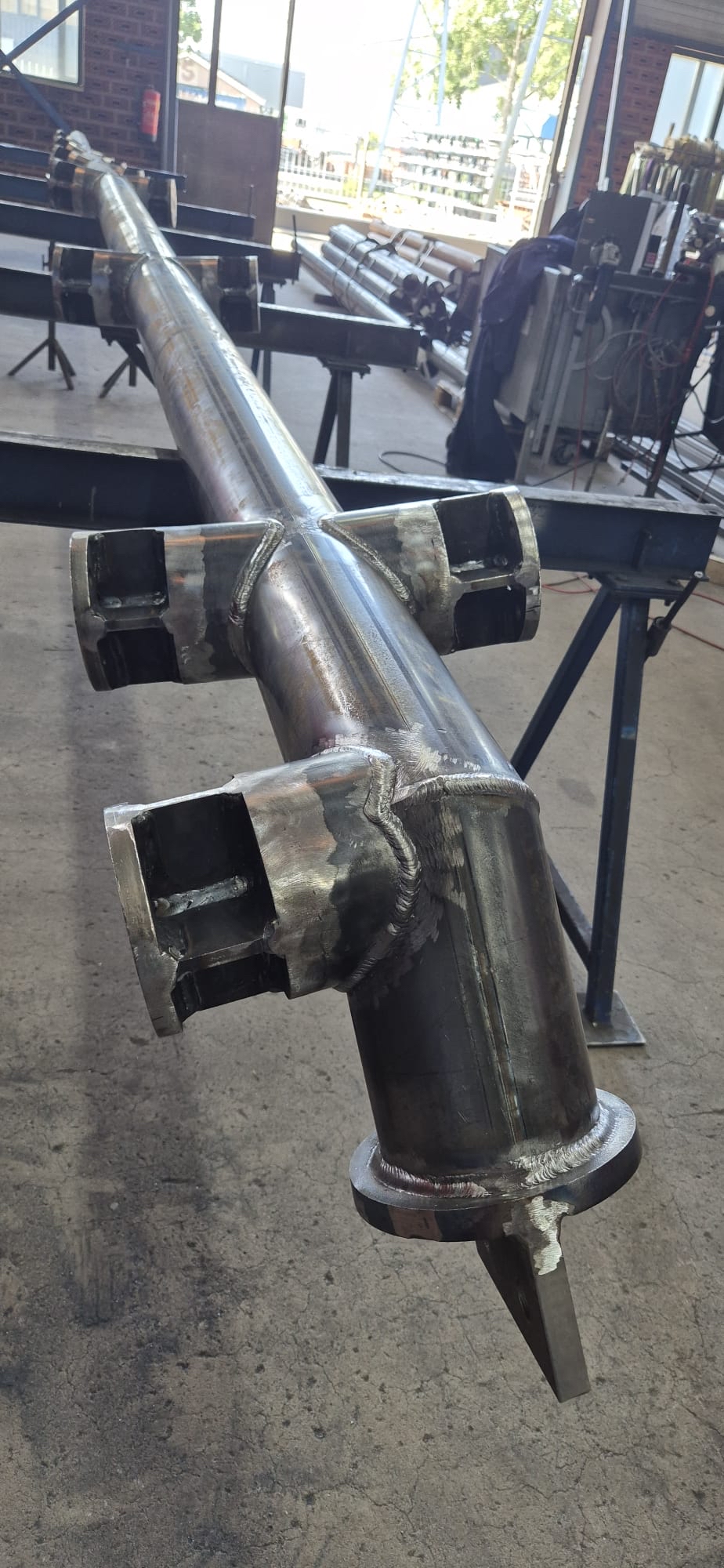
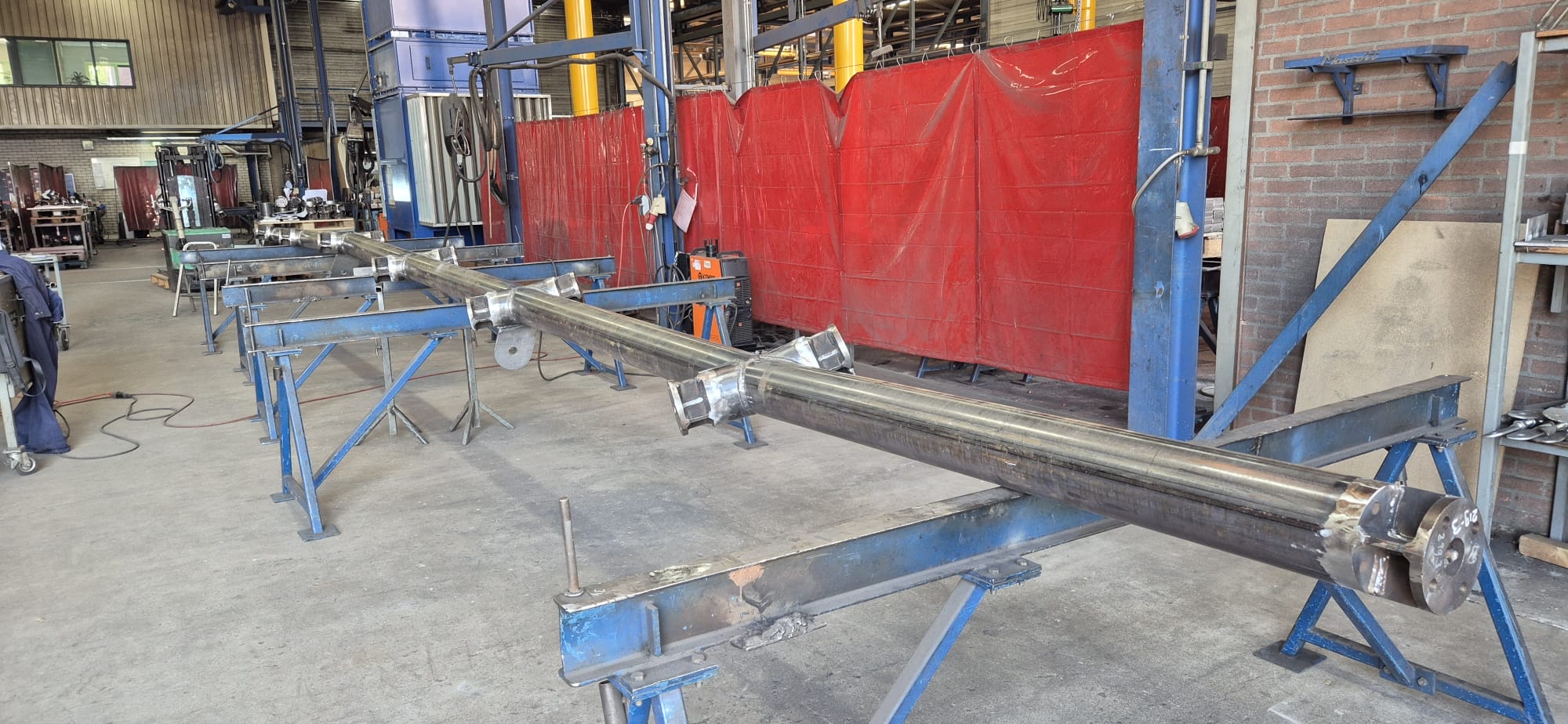
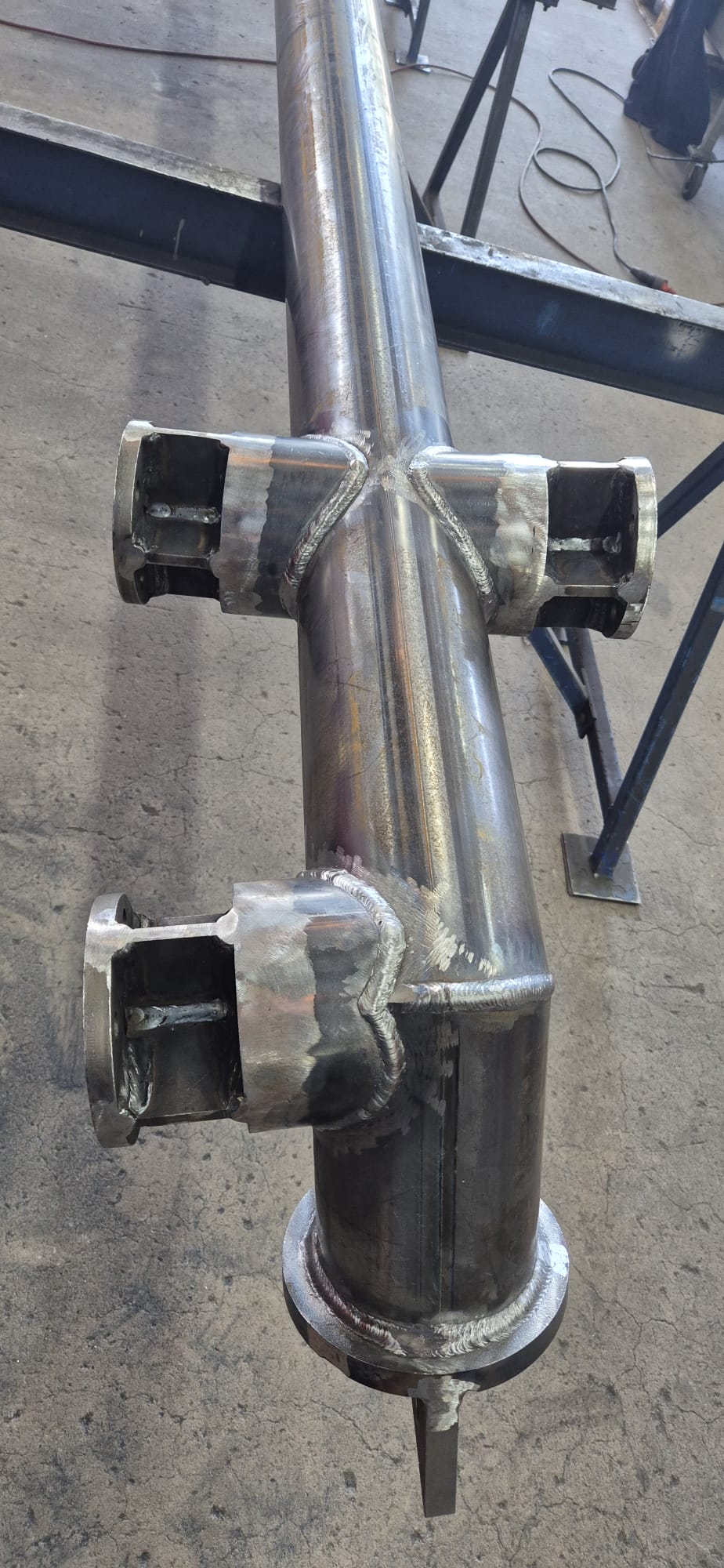
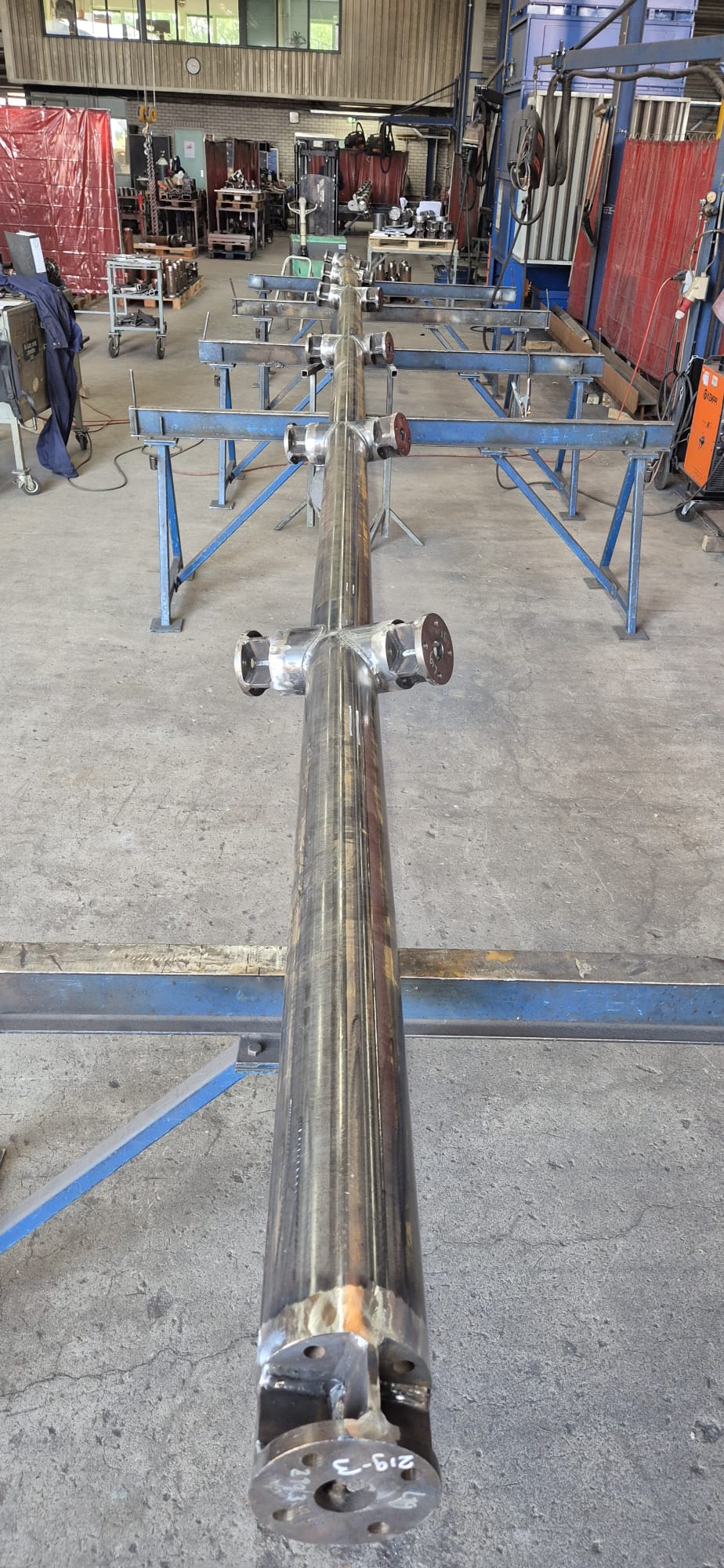
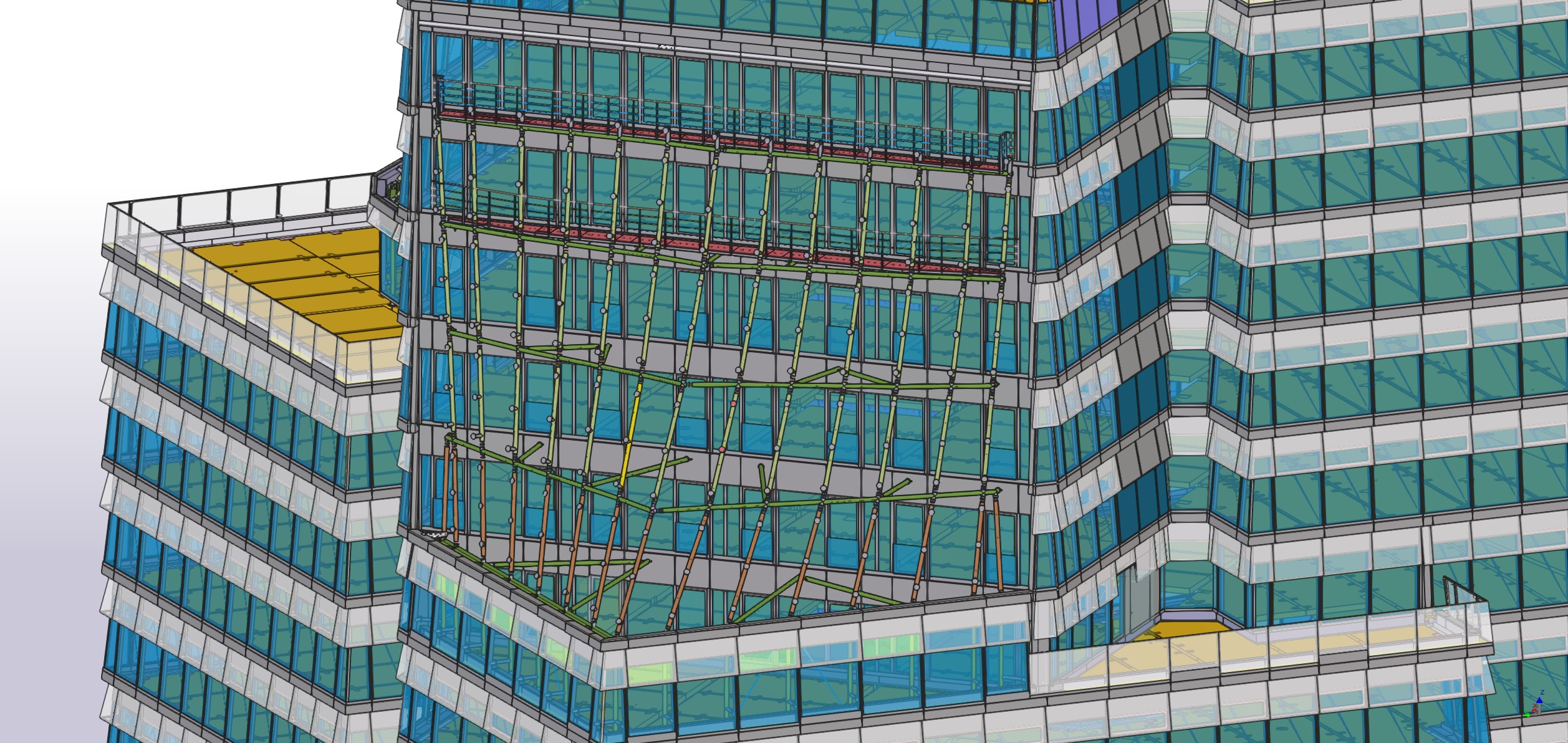
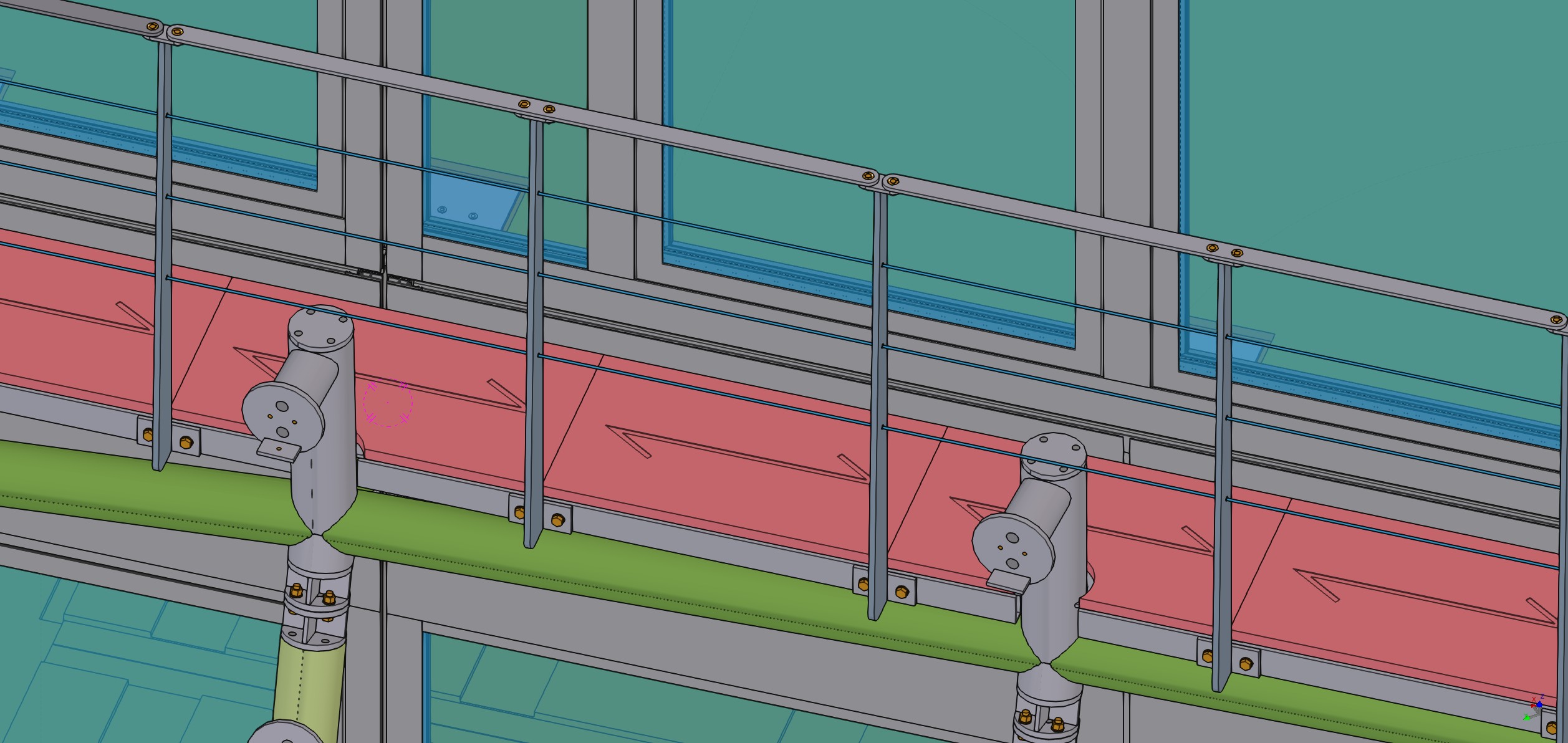
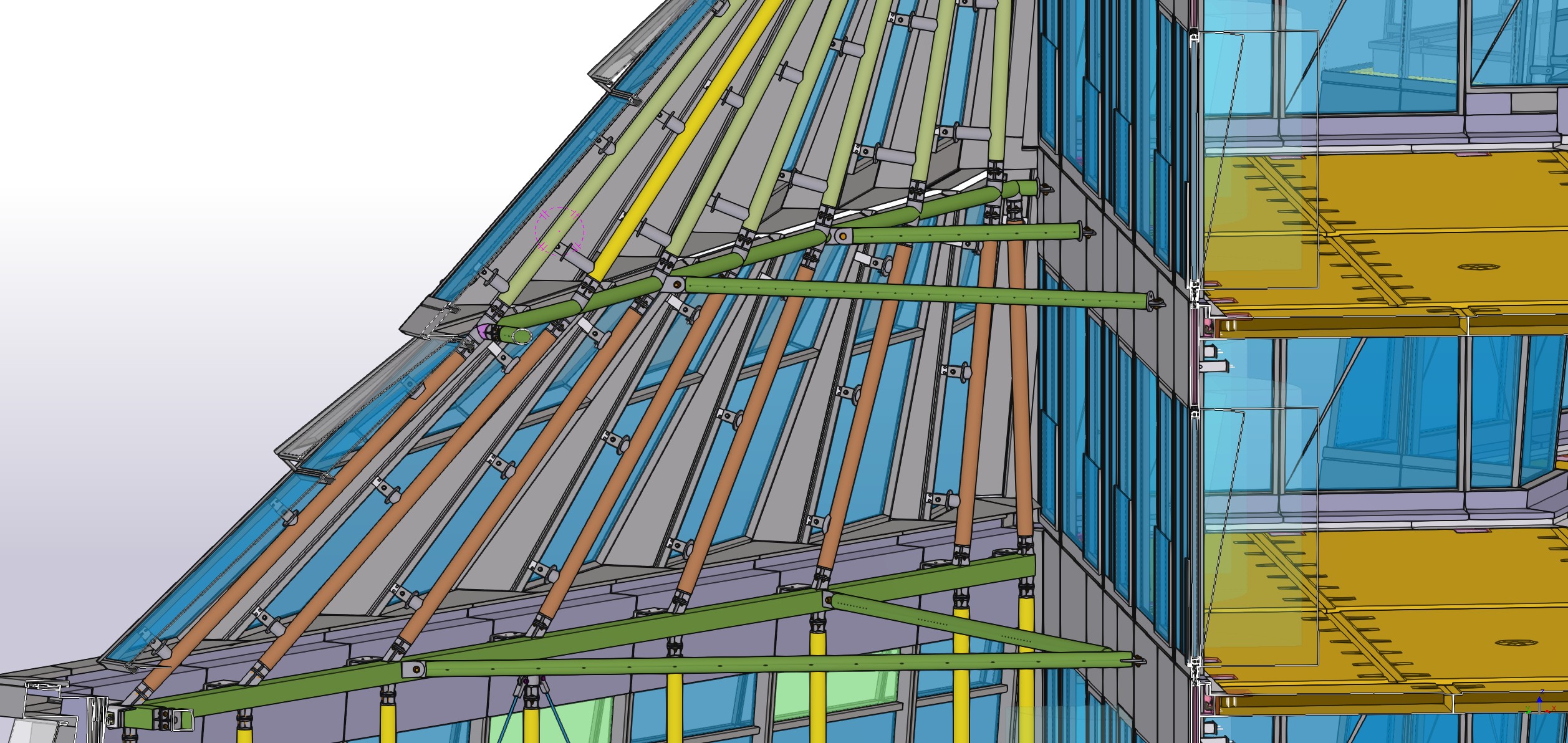
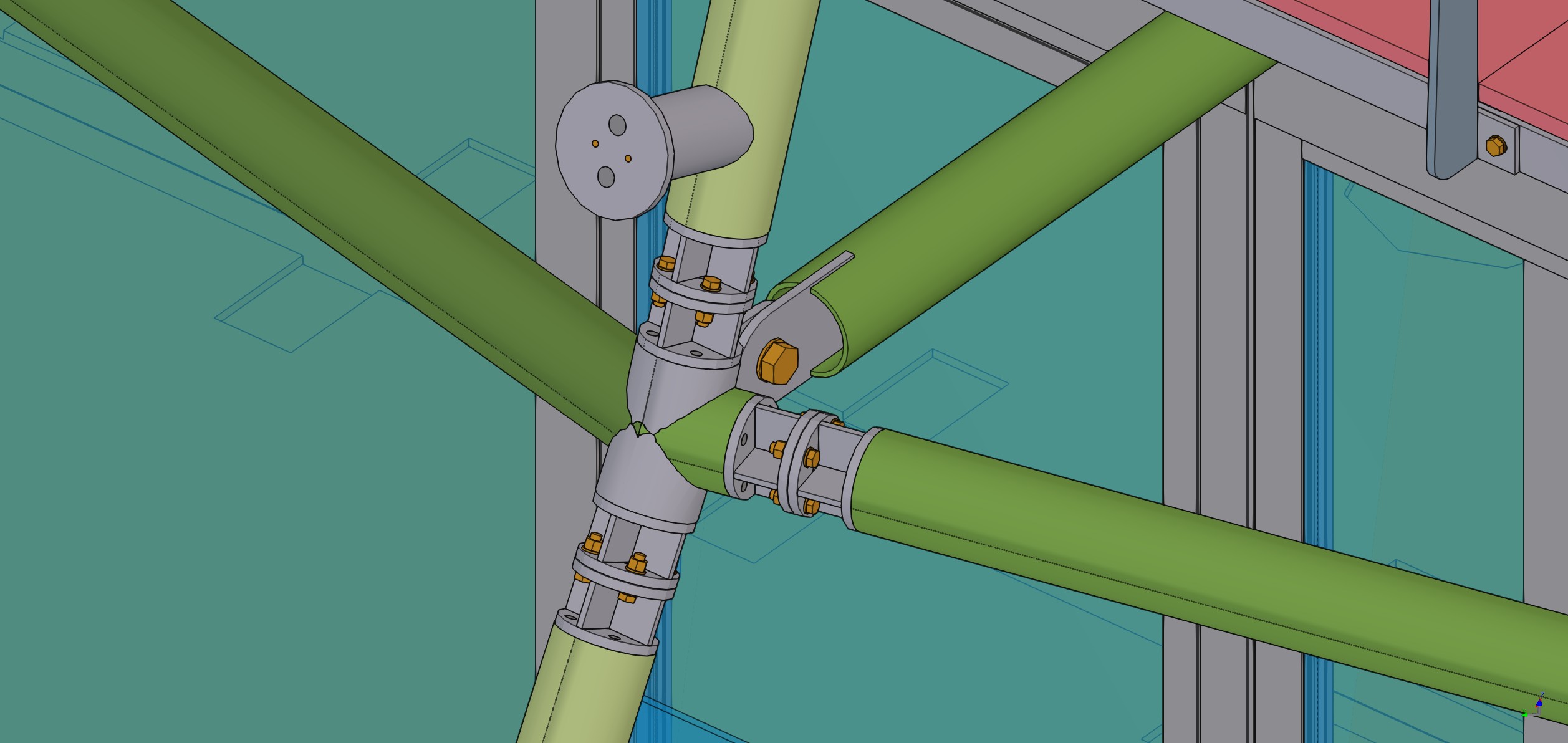
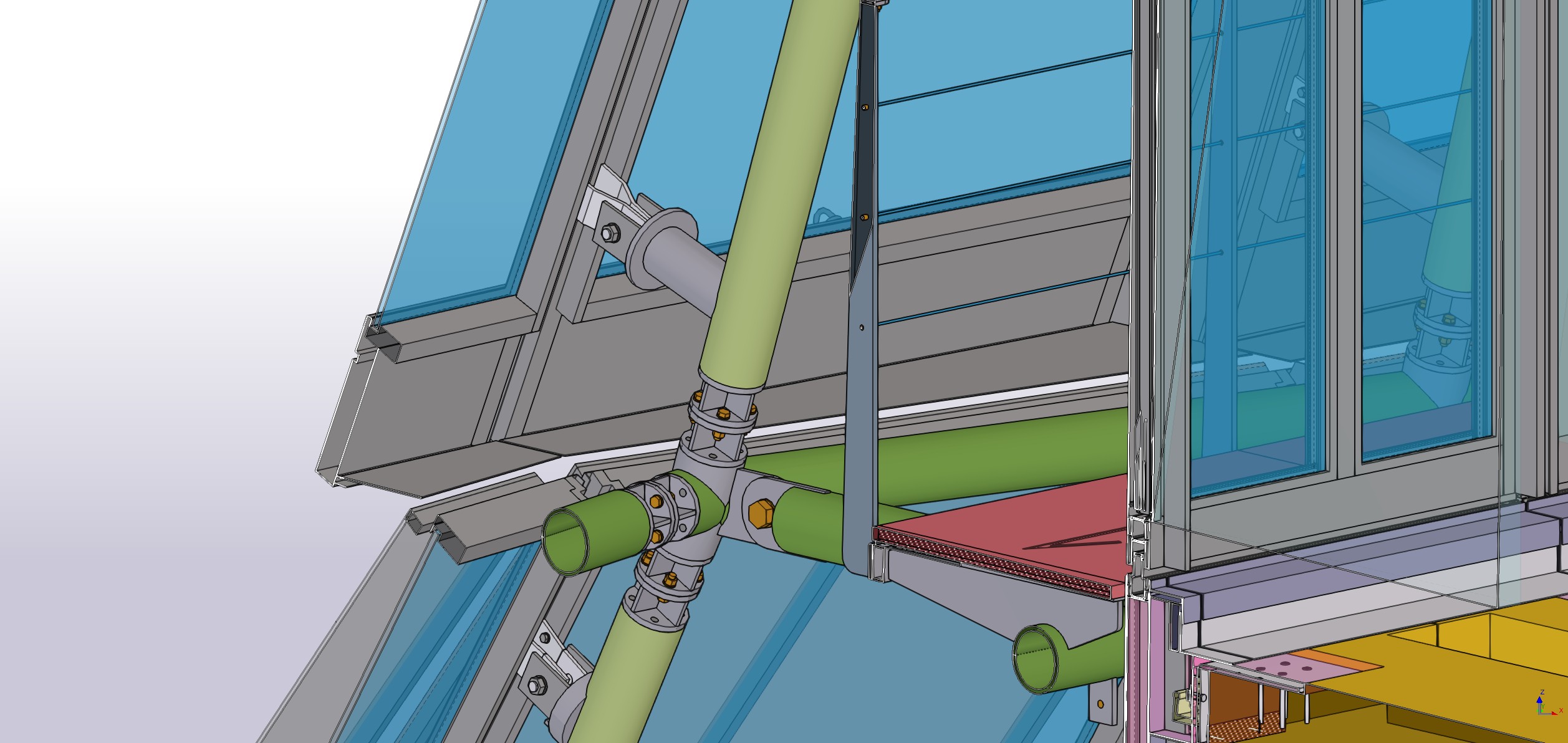
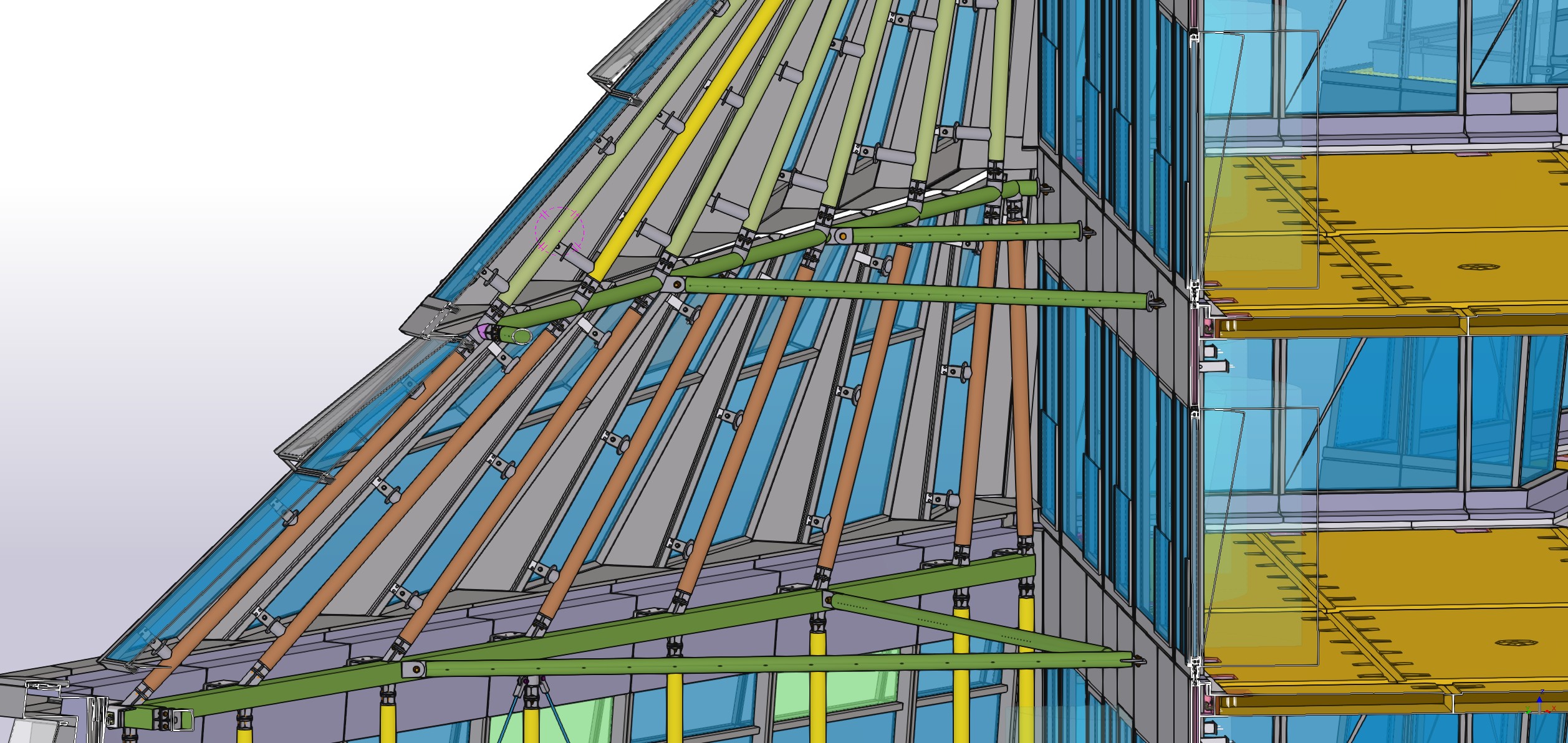
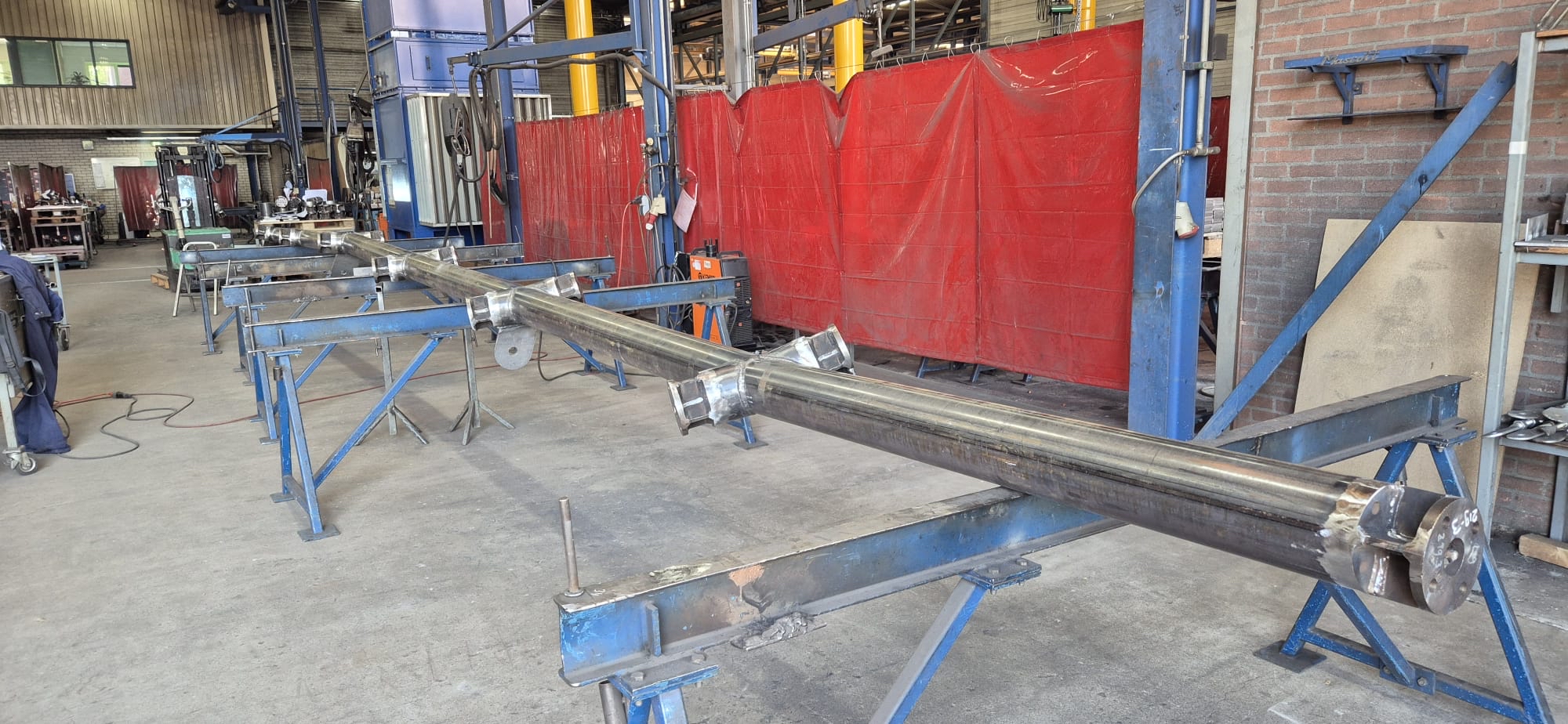
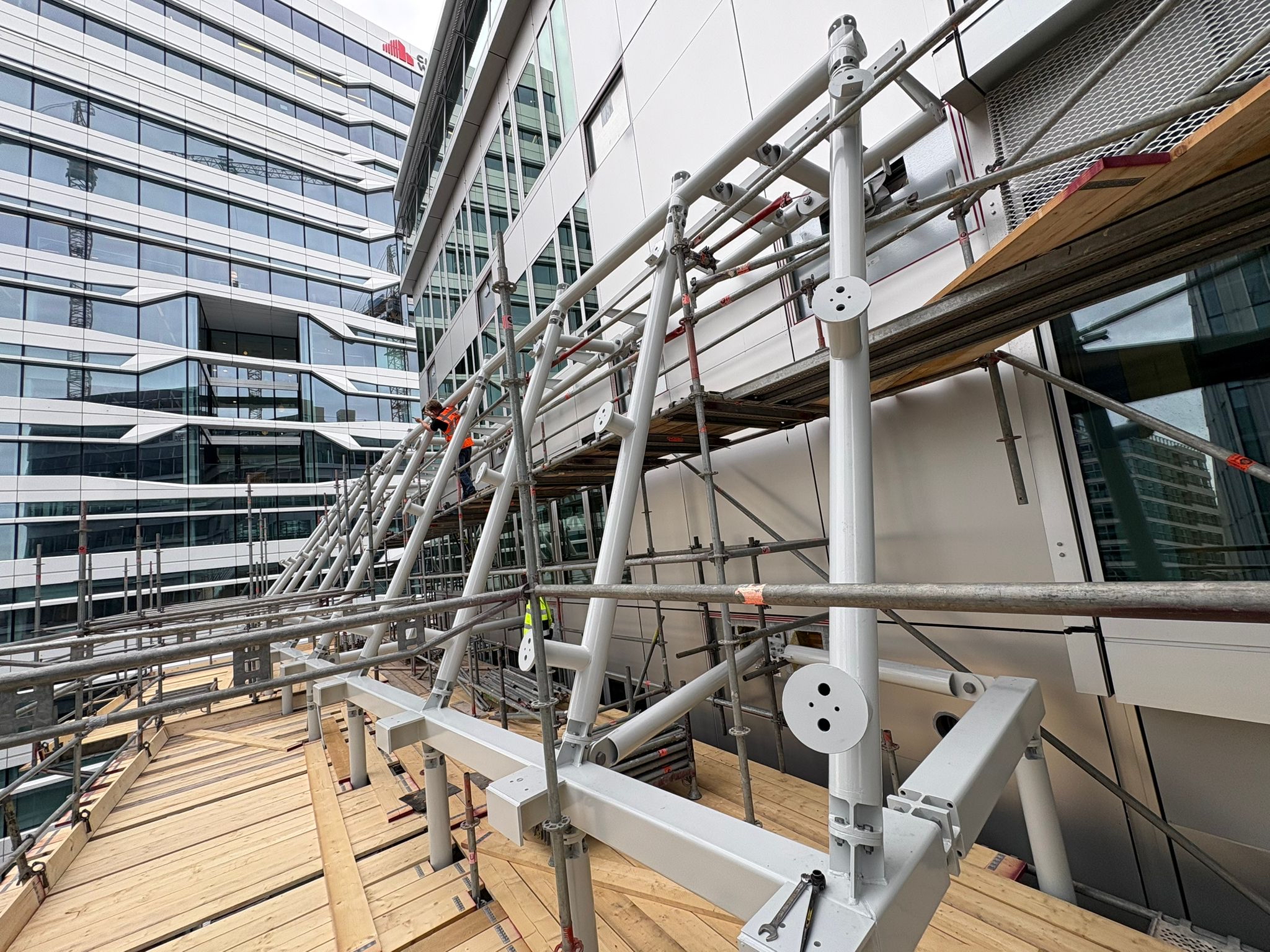
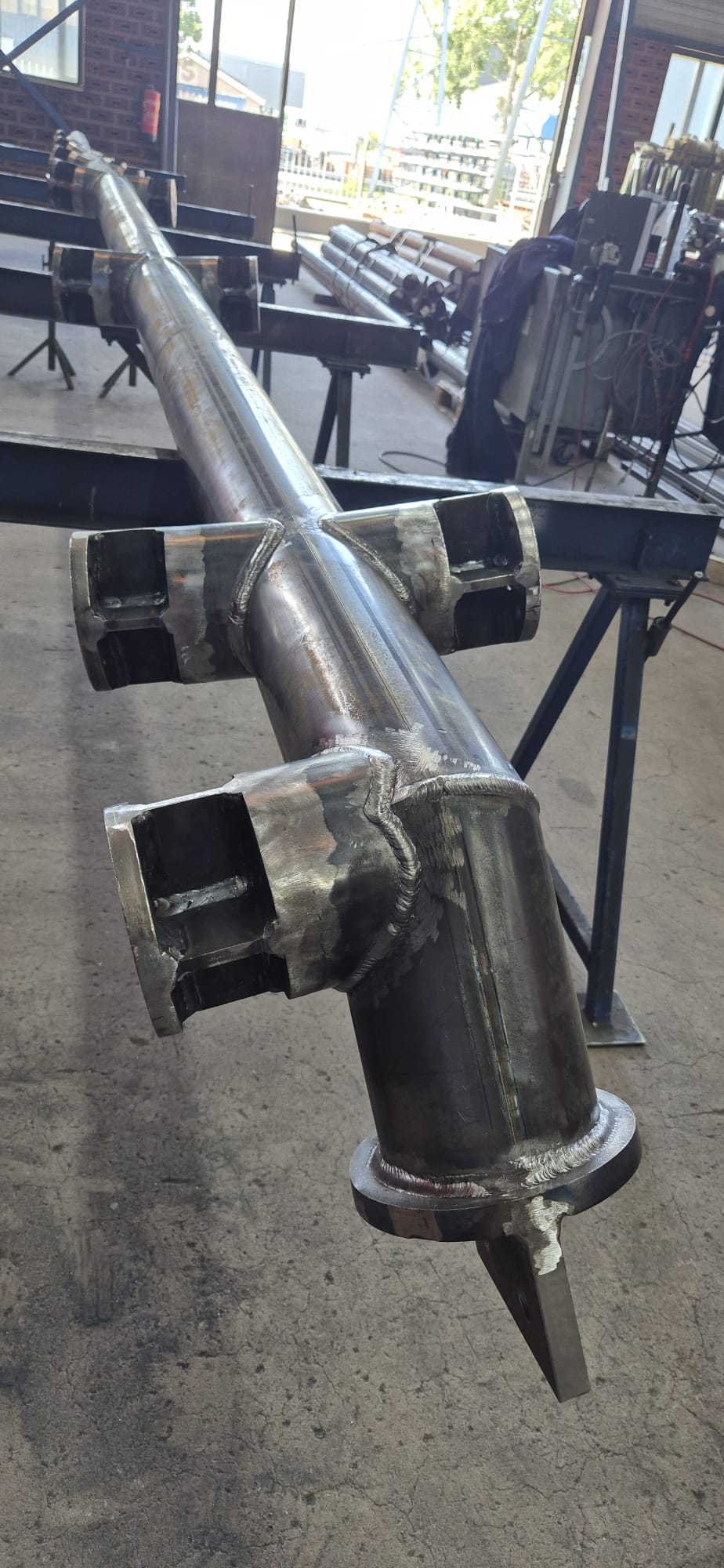
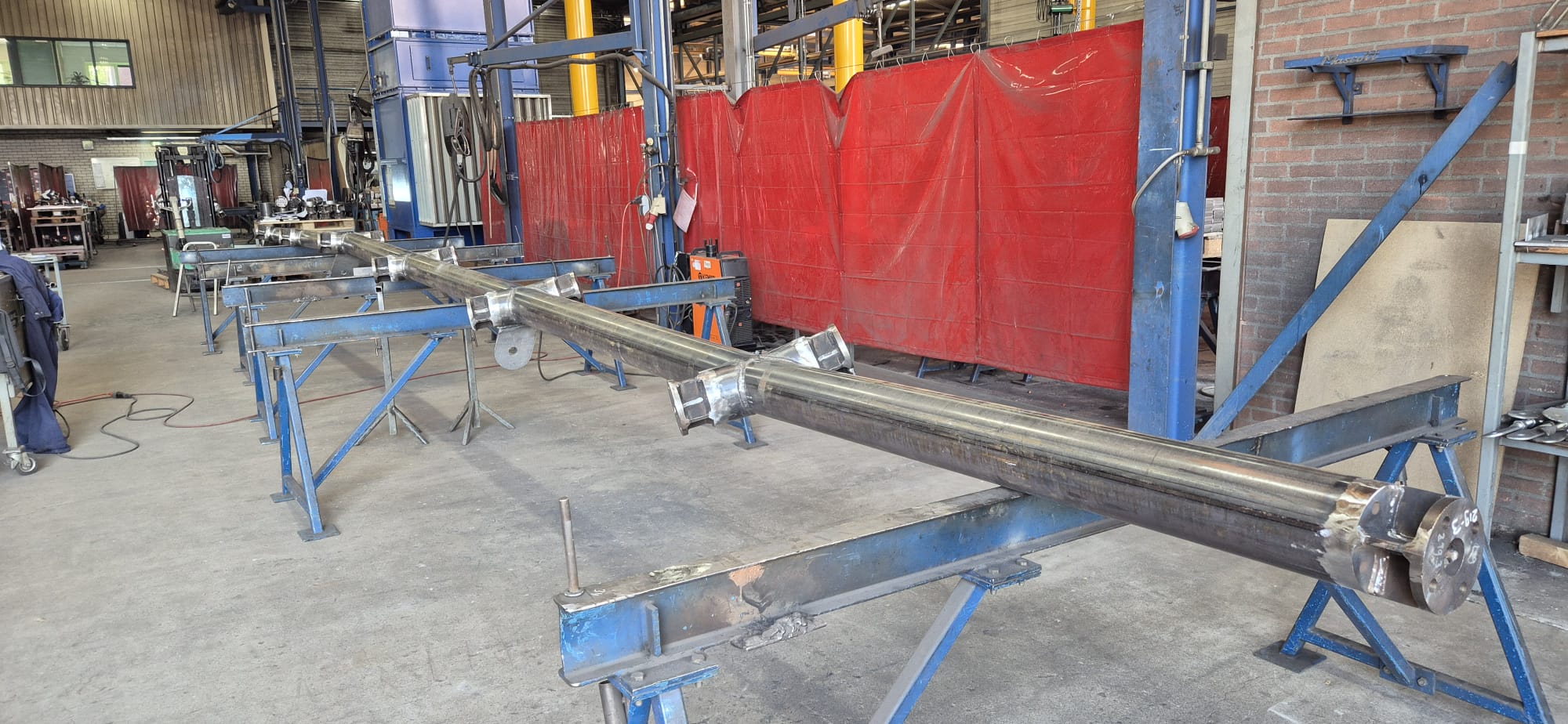
De staalconstructie bestaat hoofdzakelijk uit ronde buizen met een diameter van 152 mm en een wanddikte variërend van 6,3 tot 8 mm. Deze sluiten goed aan bij de organische vorm van de Breath Spaces, maar de ronde vormen brengen natuurlijk ook uitdagingen met zich mee.
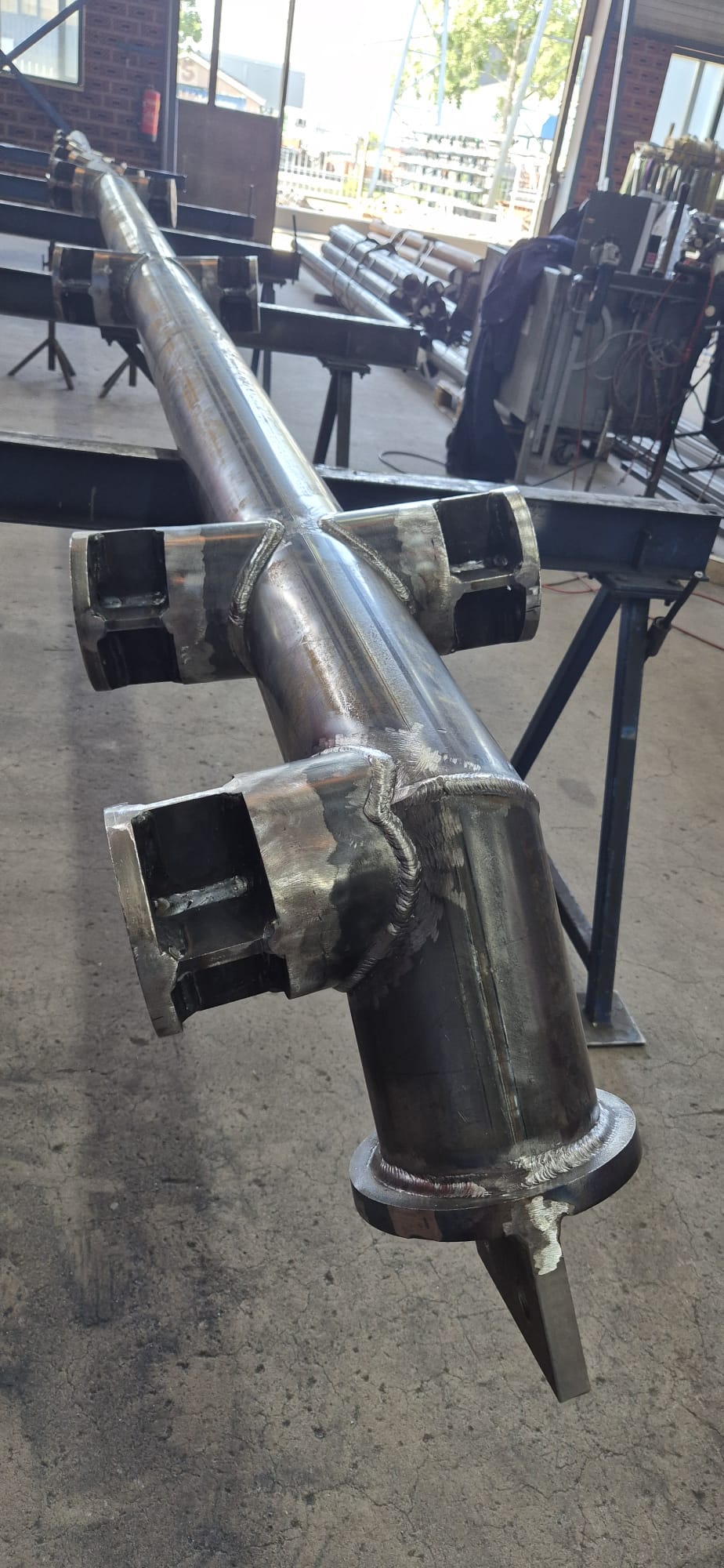
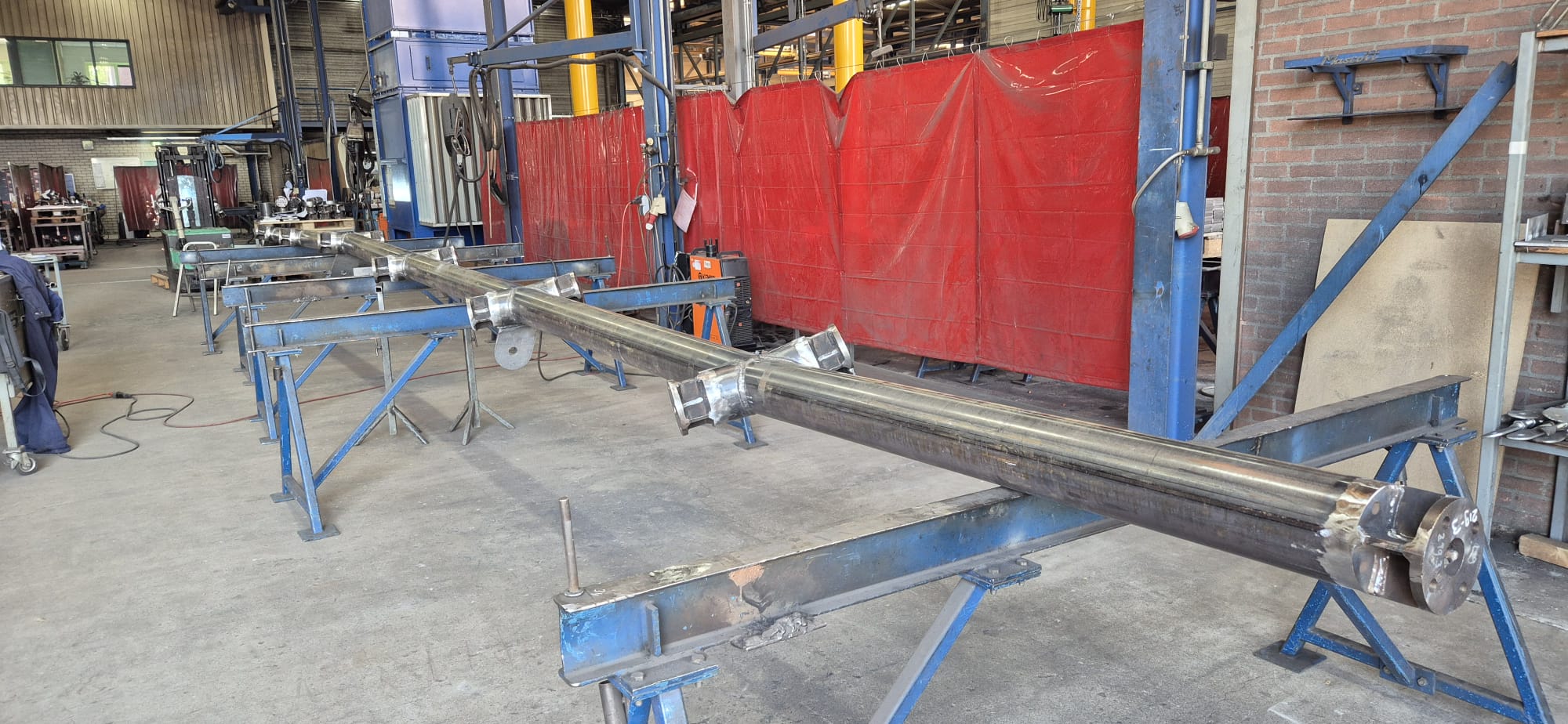
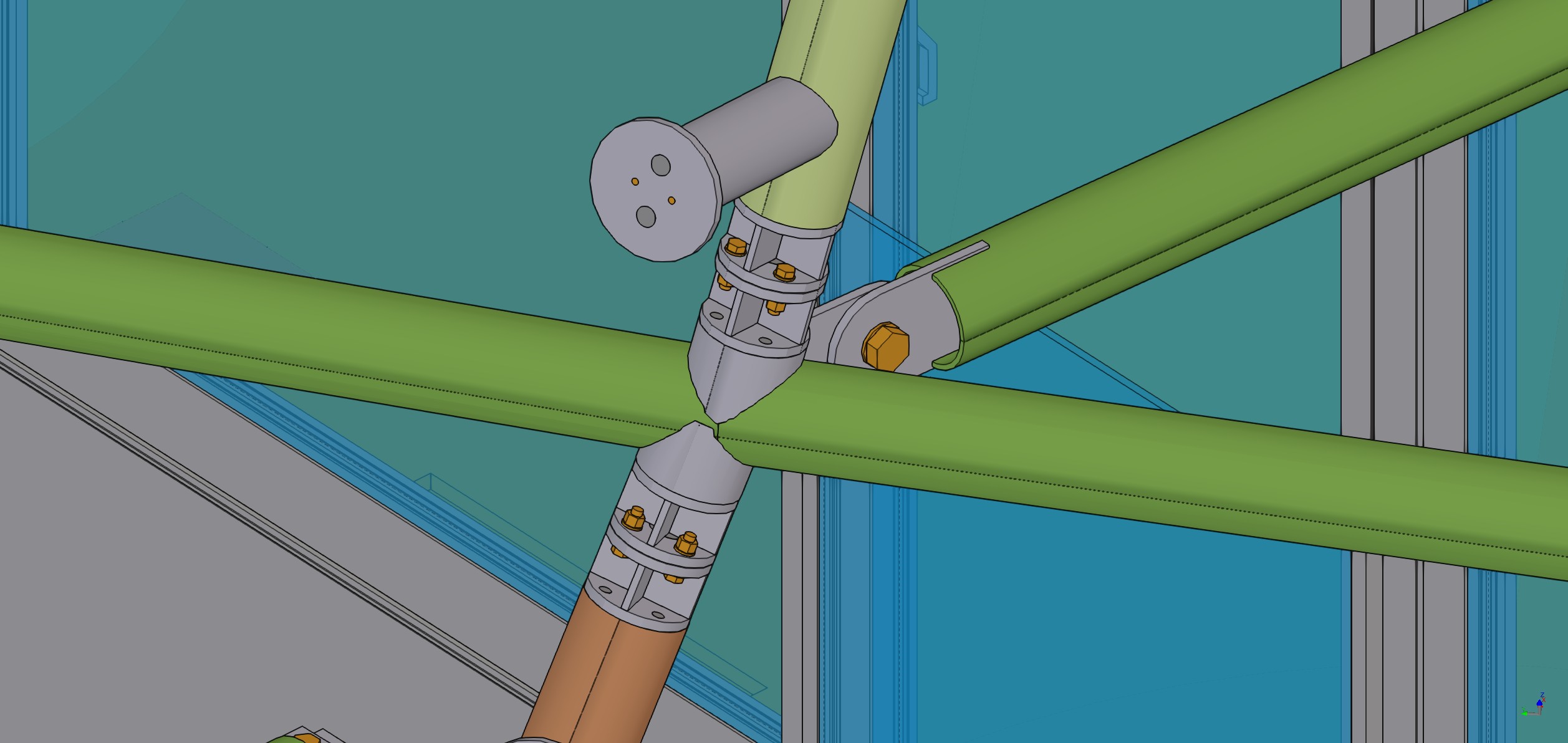
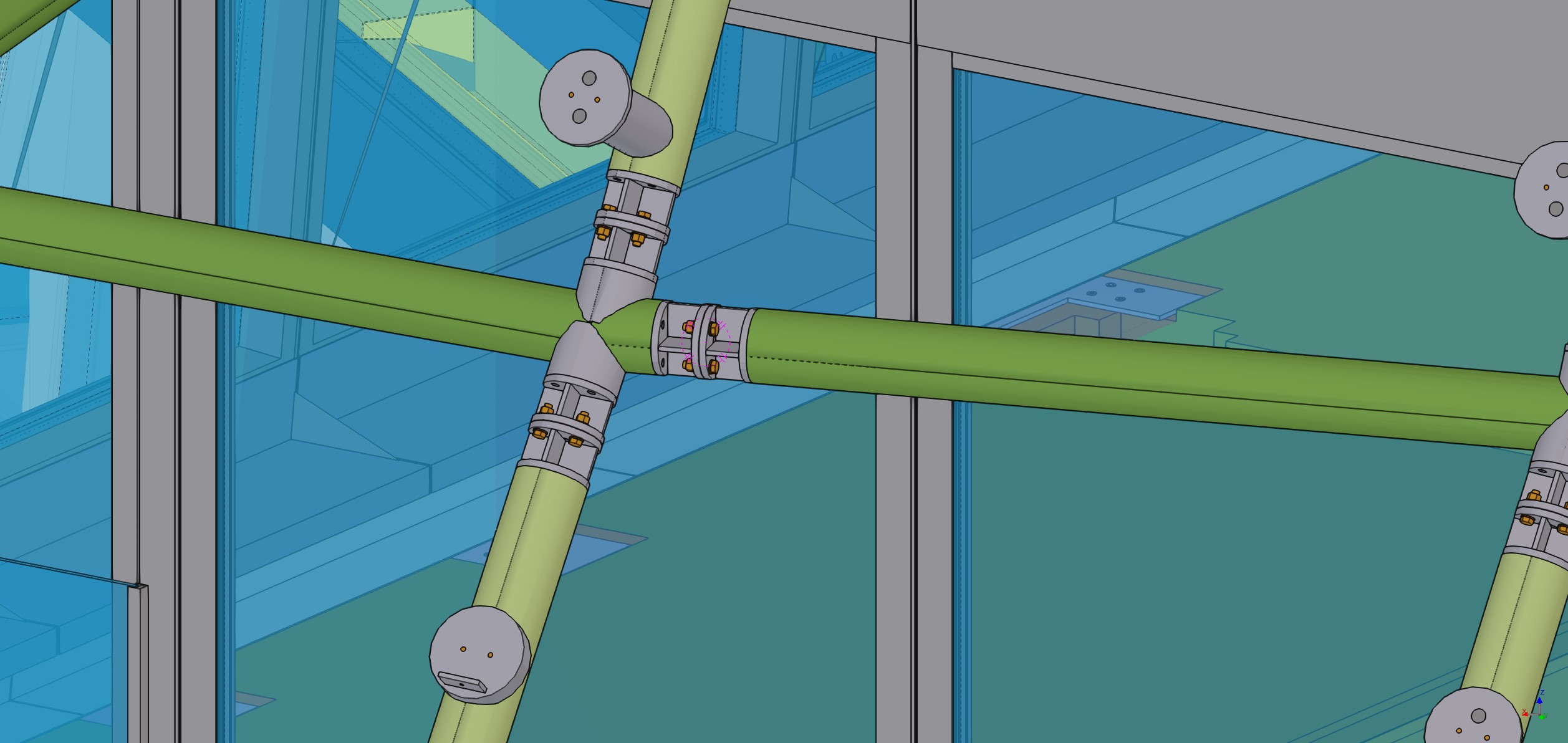
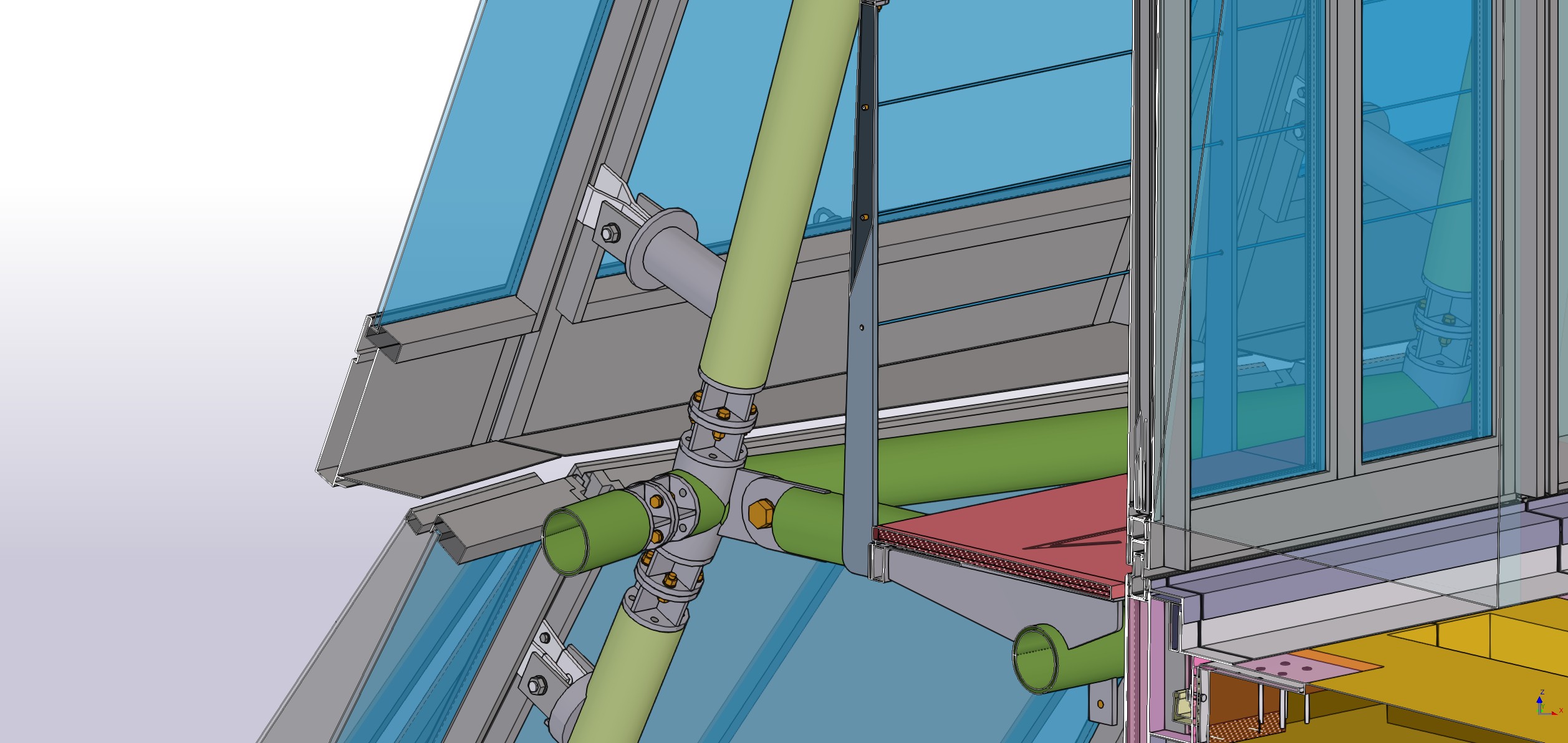
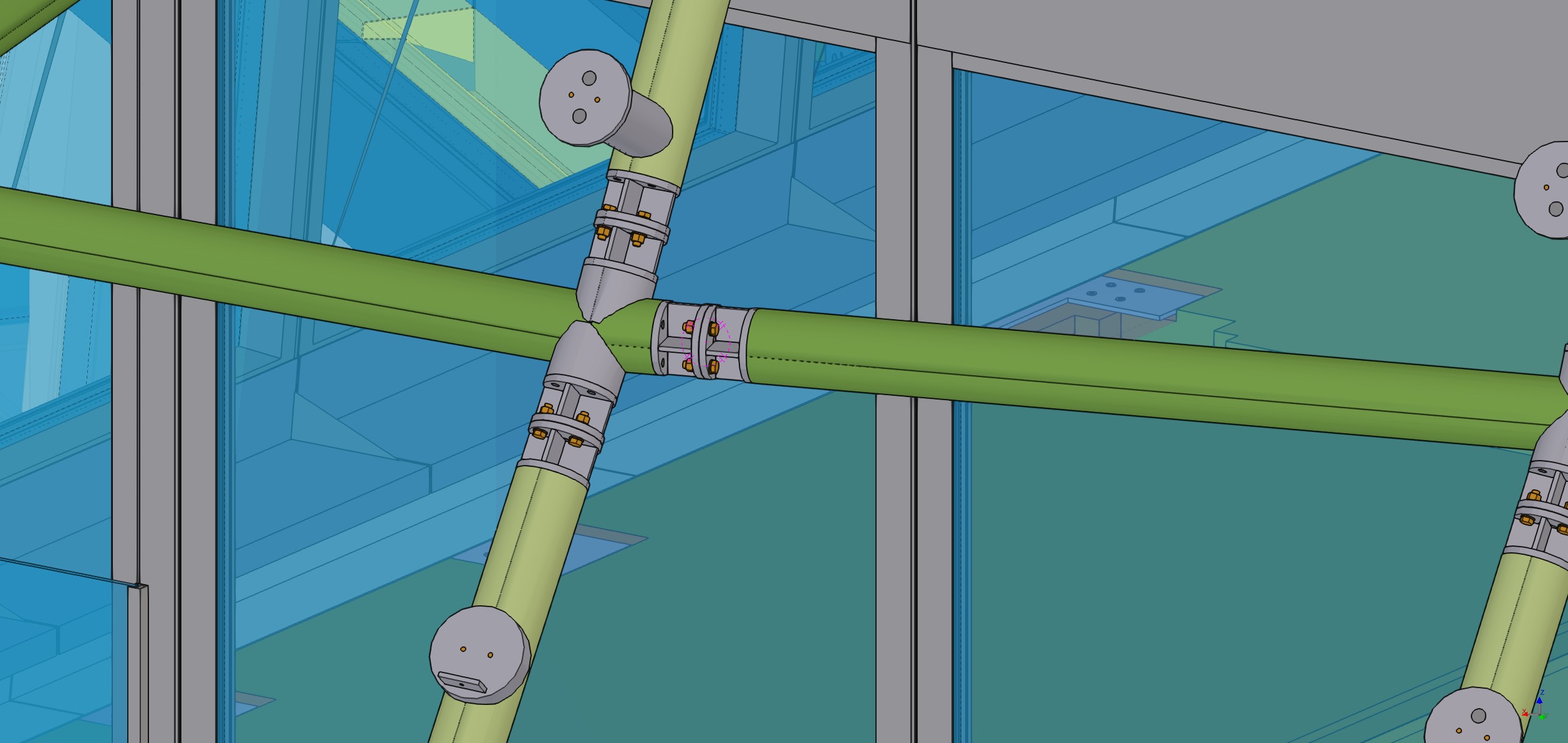
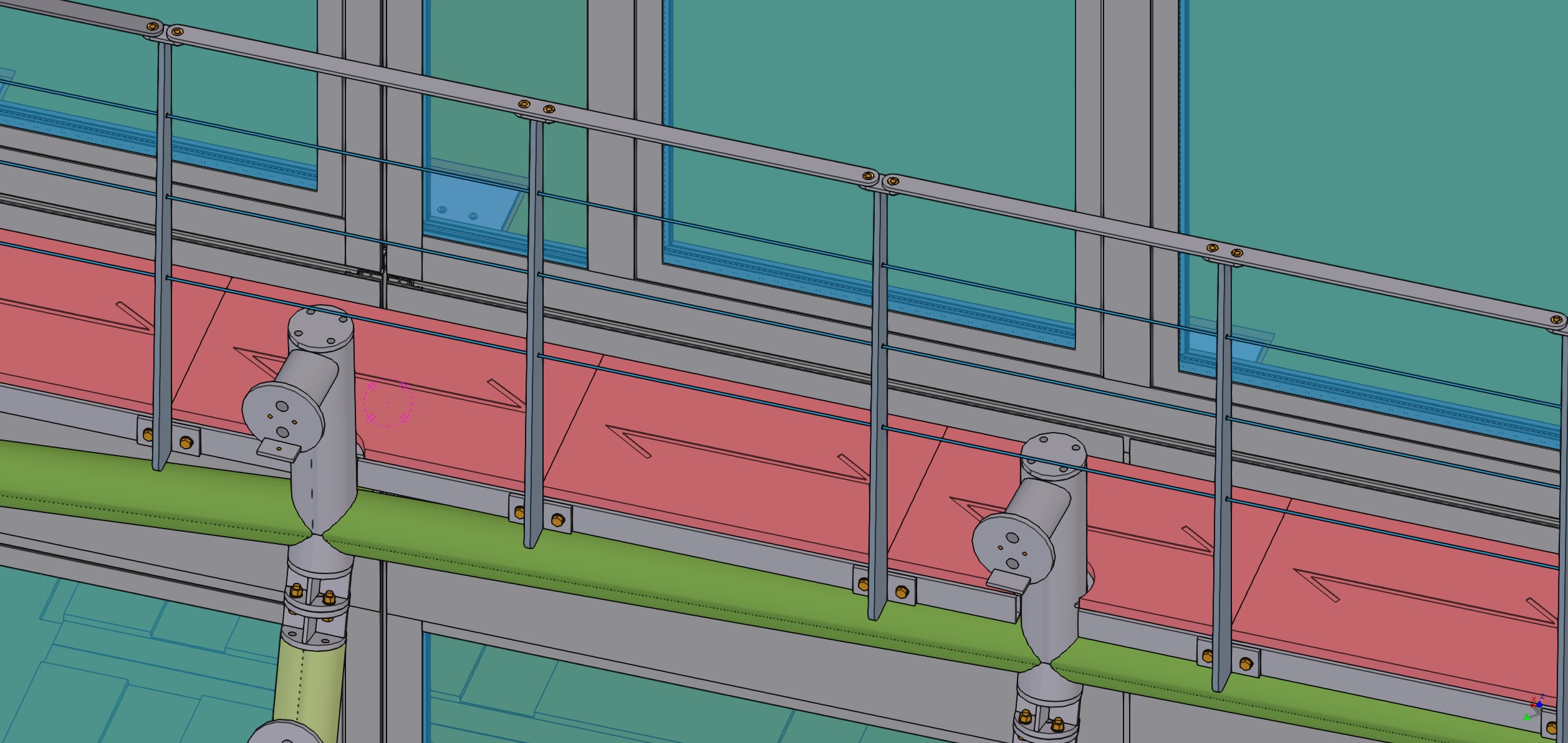
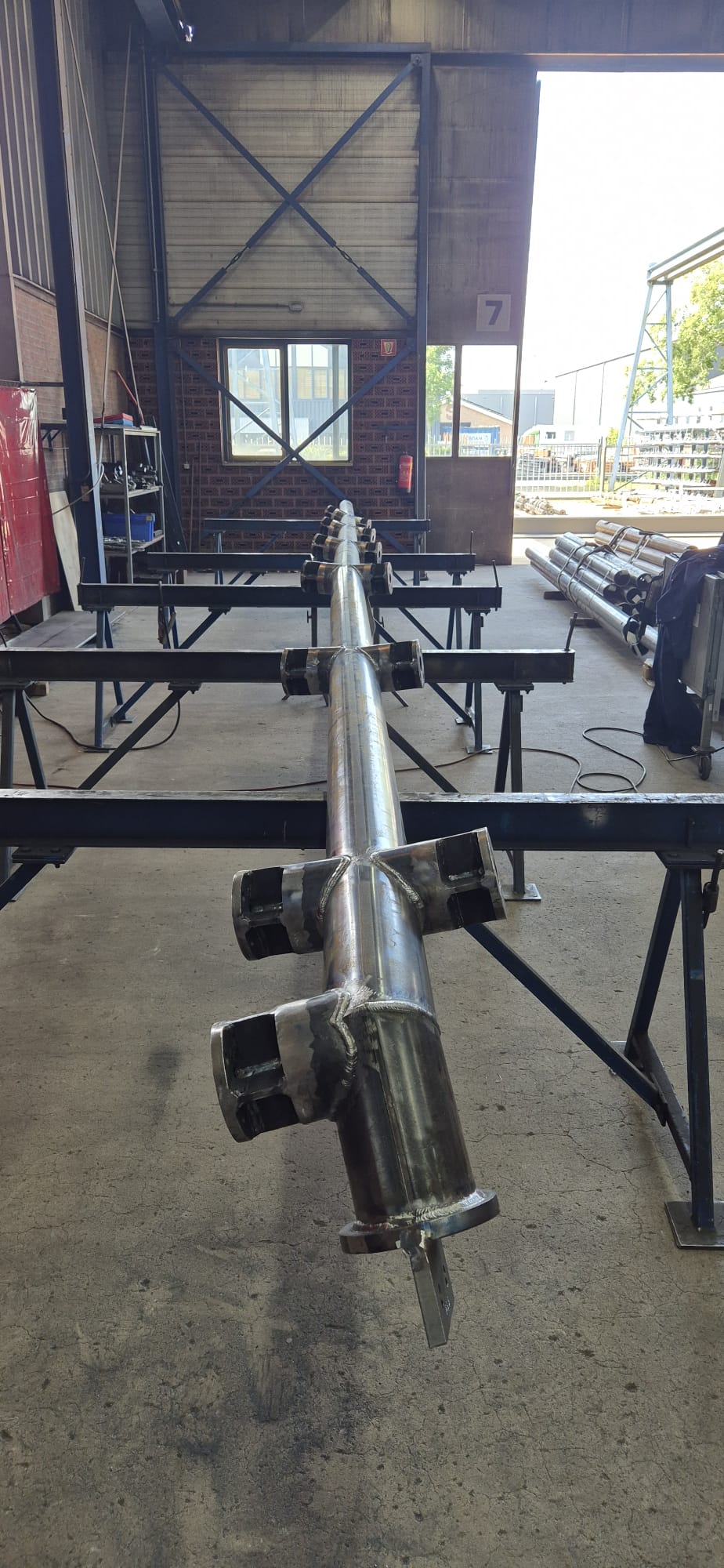
Vanwege de kleine toleranties en de maakbaarheid is ervoor gekozen om alle uithouders exact haaks op de buizen te positioneren. Daarnaast zijn de uithouders per buis vrijwel overal in één vlak geplaatst, weliswaar met variabele lengte. Dit vereenvoudigde de productie en verkleinde de kans op fouten.
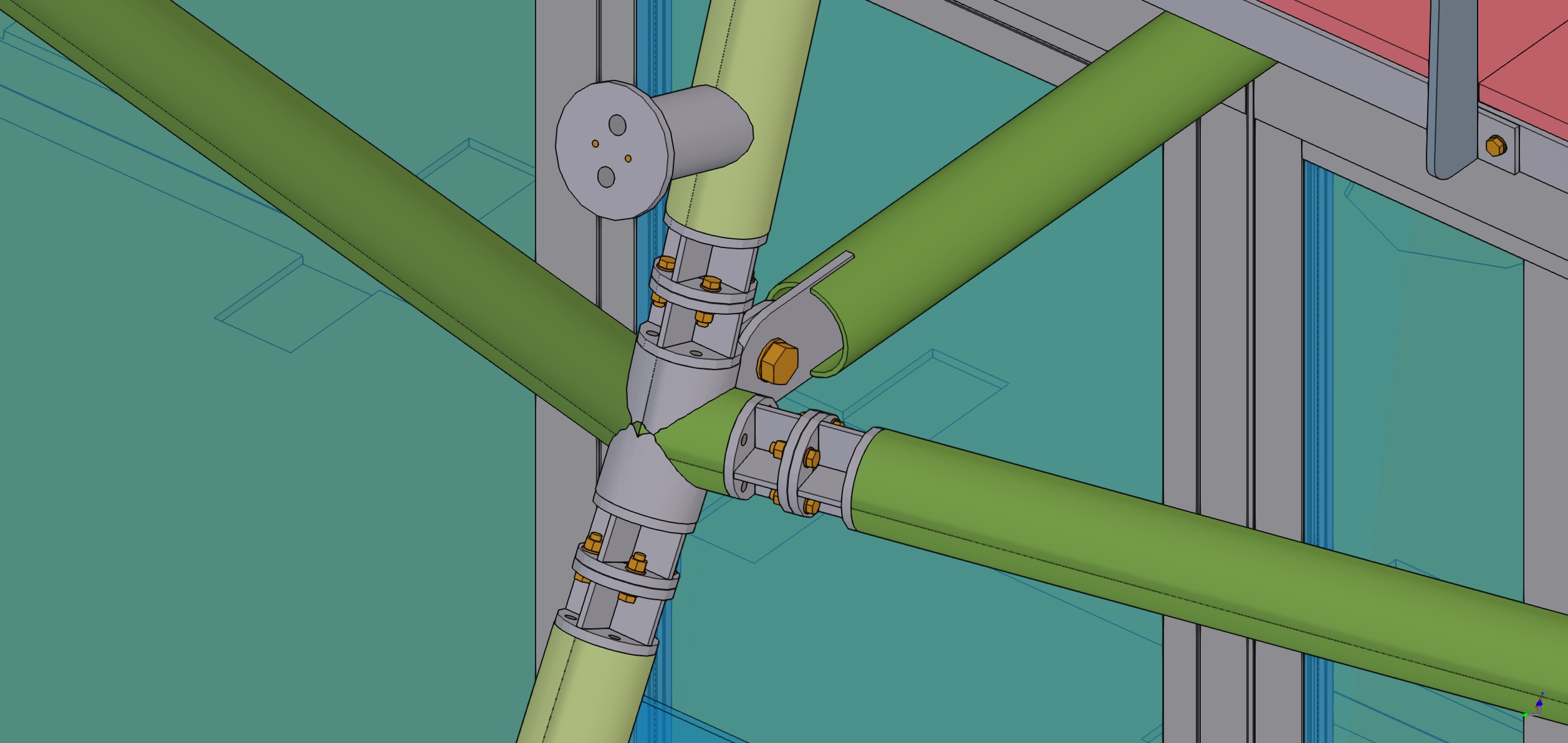
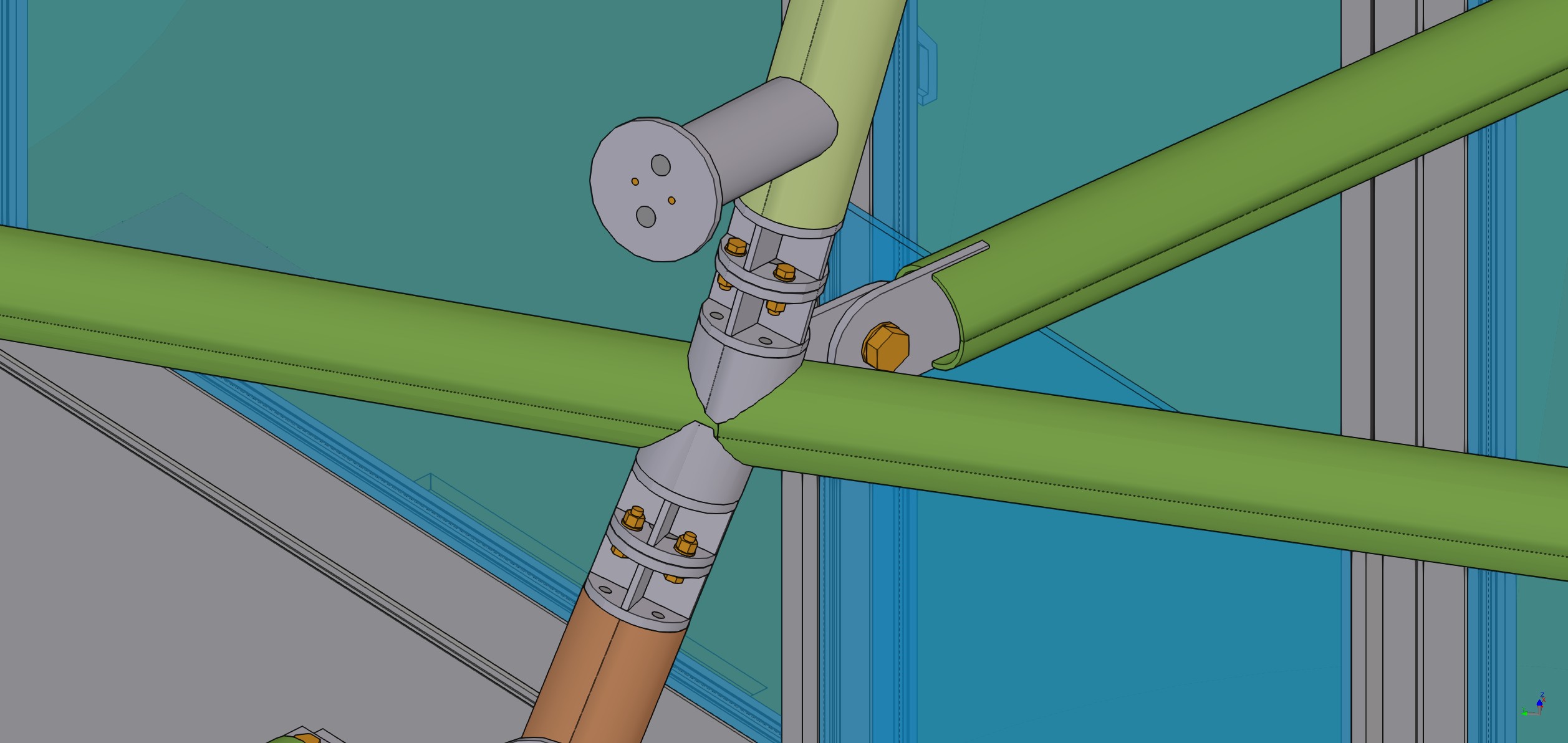
De contouren van de uithouders en aansluitende onderdelen zijn door HGG met scribing op de buizen aangebracht. Hierdoor konden onderdelen met hoge precisie op de juiste positie worden aangebouwd.
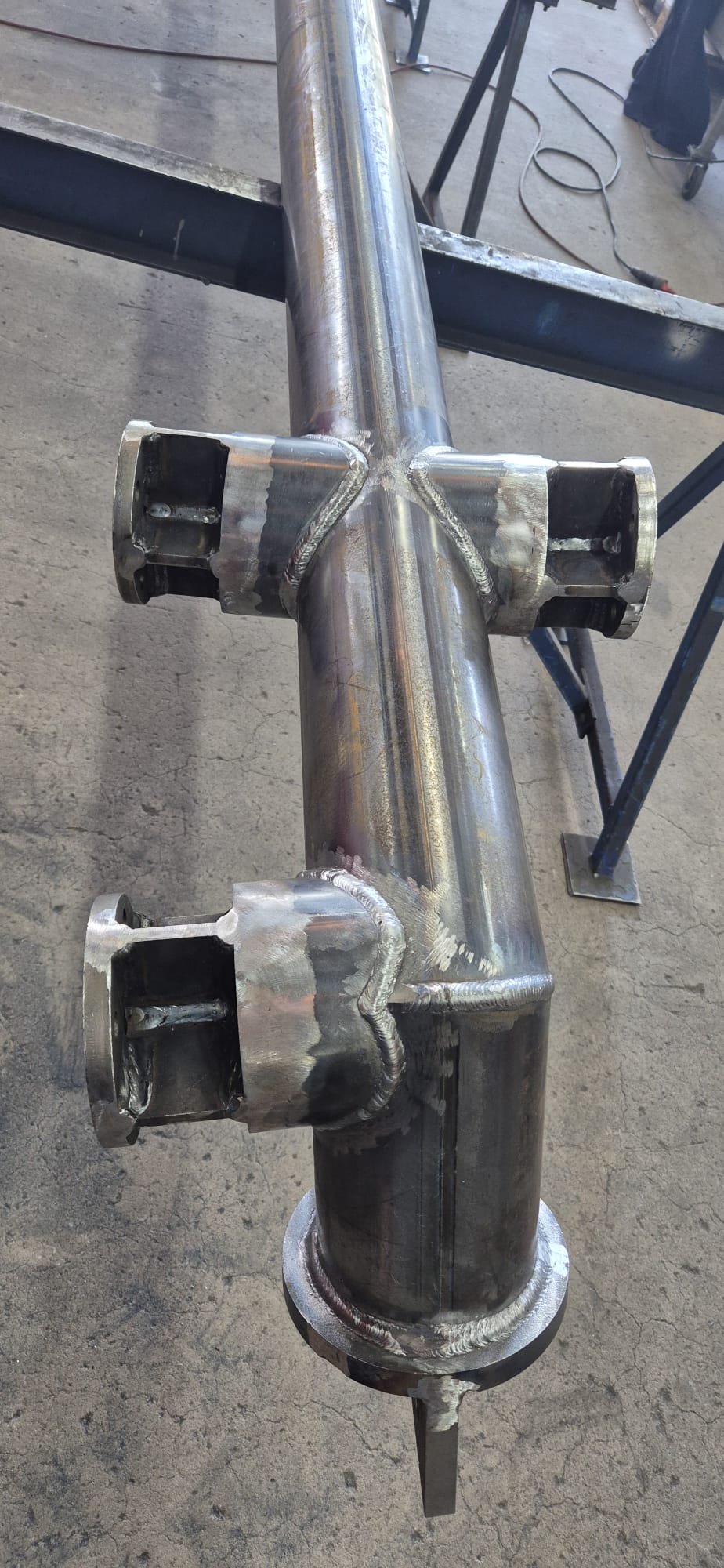
Ook is een innovatief verbindingsdetail ontwikkeld waarbij alle verbindingen binnen de contouren van de buis blijven. Om dit te realiseren is de deling van de buis ontworpen met kruisvormige platen: een sterke, goed maakbare maar ook elegante verbinding.
De constructie is bevestigd aan de CLT-vloeren met behulp van consoles en honderden nauwkeurig berekende houtdraadbouten.
Duurzaamheid
De Breath Spaces vormen een belangrijk duurzaam onderdeel van het gebouw. Deze overdekte parken verbinden de binnen- en buitenwereld en fungeren als een natuurlijke bufferzone. Door de open gevel blijven deze ruimtes koel in de zomer en warm in de winter, wat bijdraagt aan een comfortabel binnenklimaat zonder intensief energiegebruik.
De efficiënte digitale uitwerking en prefabricage hebben gezorgd voor minder faalkosten, minder materiaalverspilling en een geoptimaliseerd bouwproces.
Wauw-factor
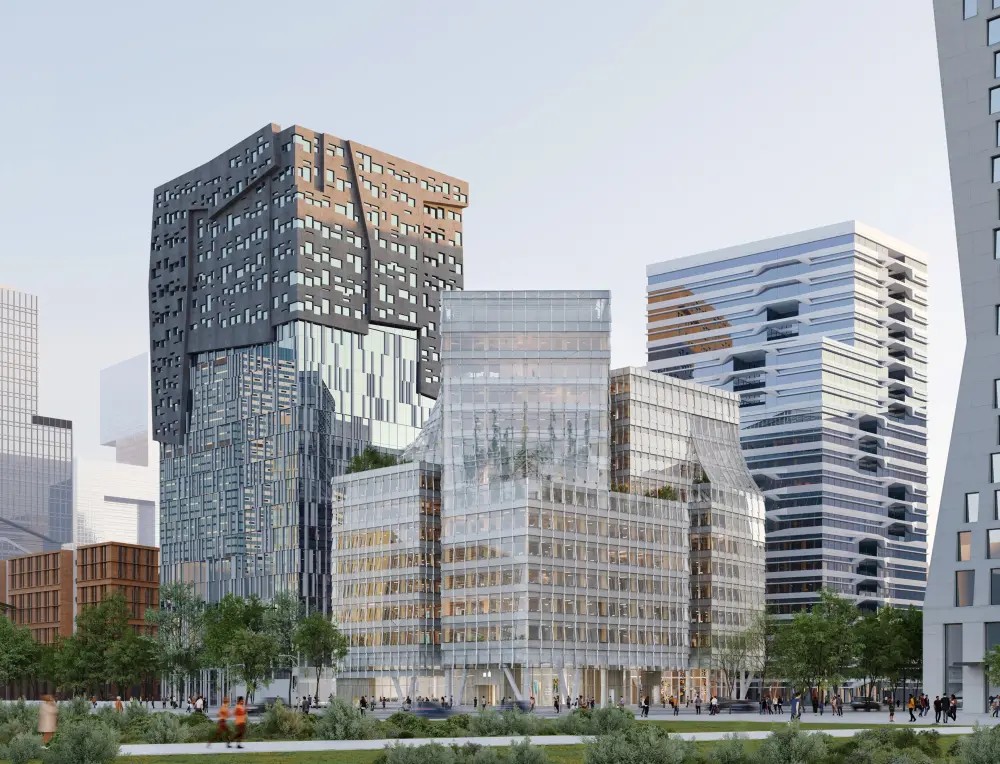
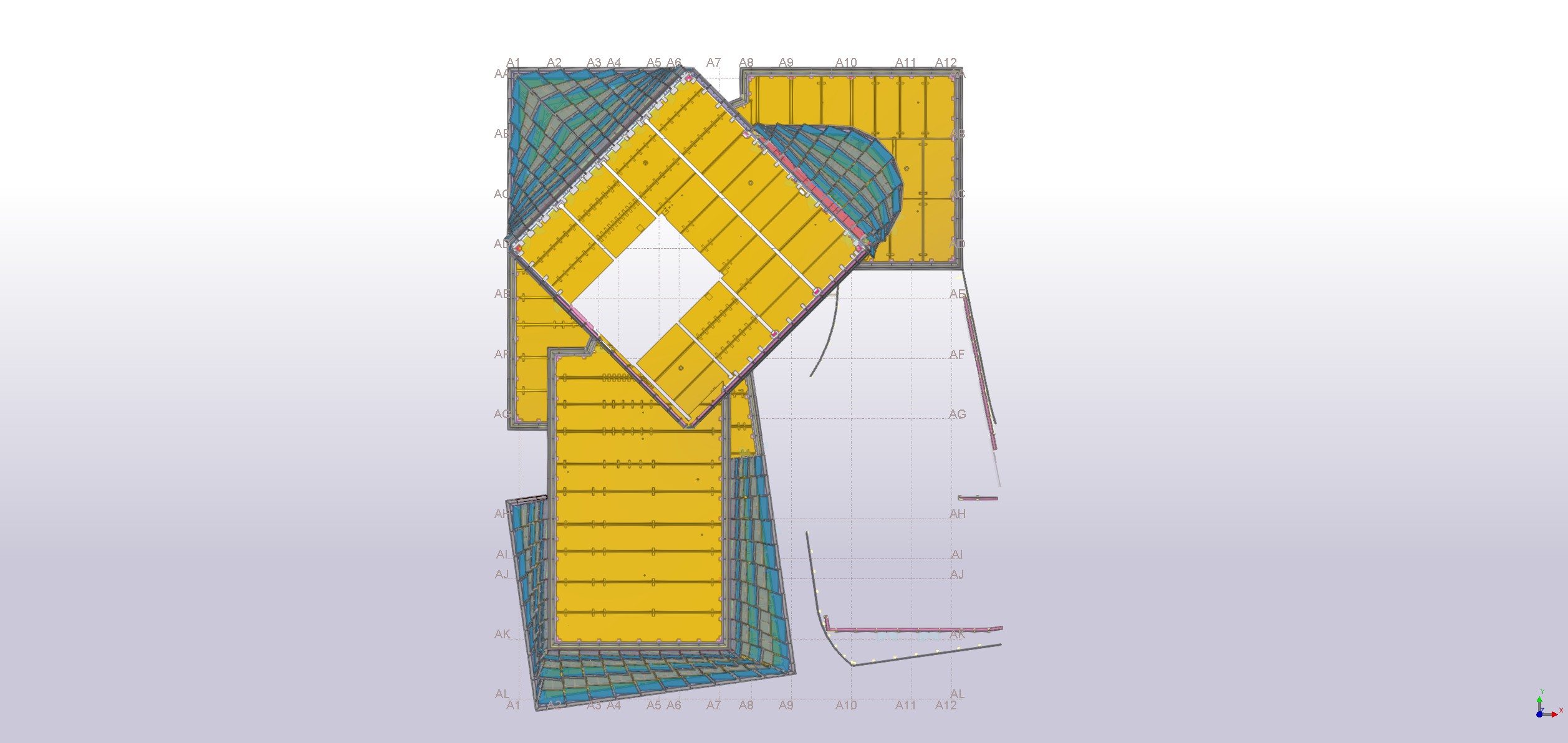
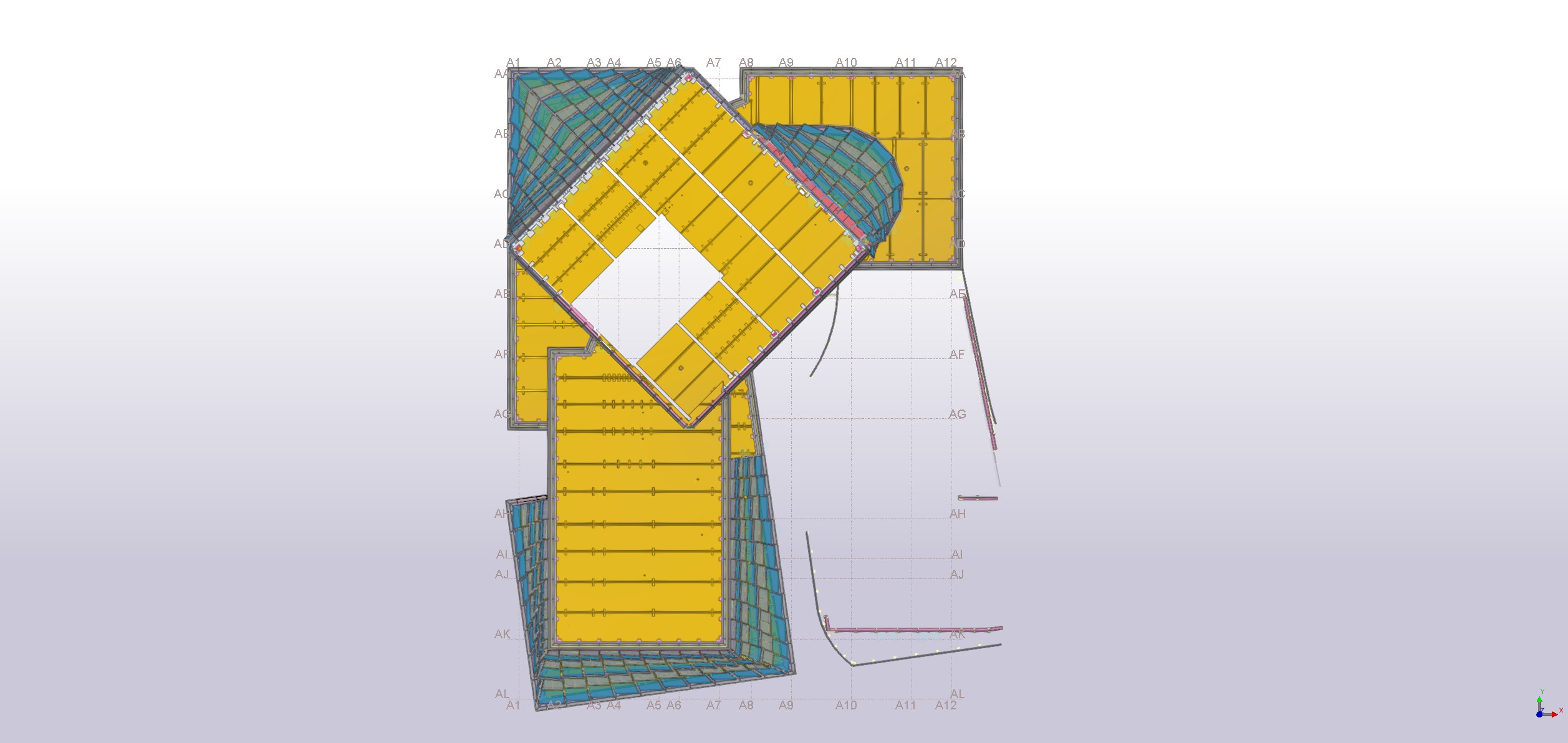
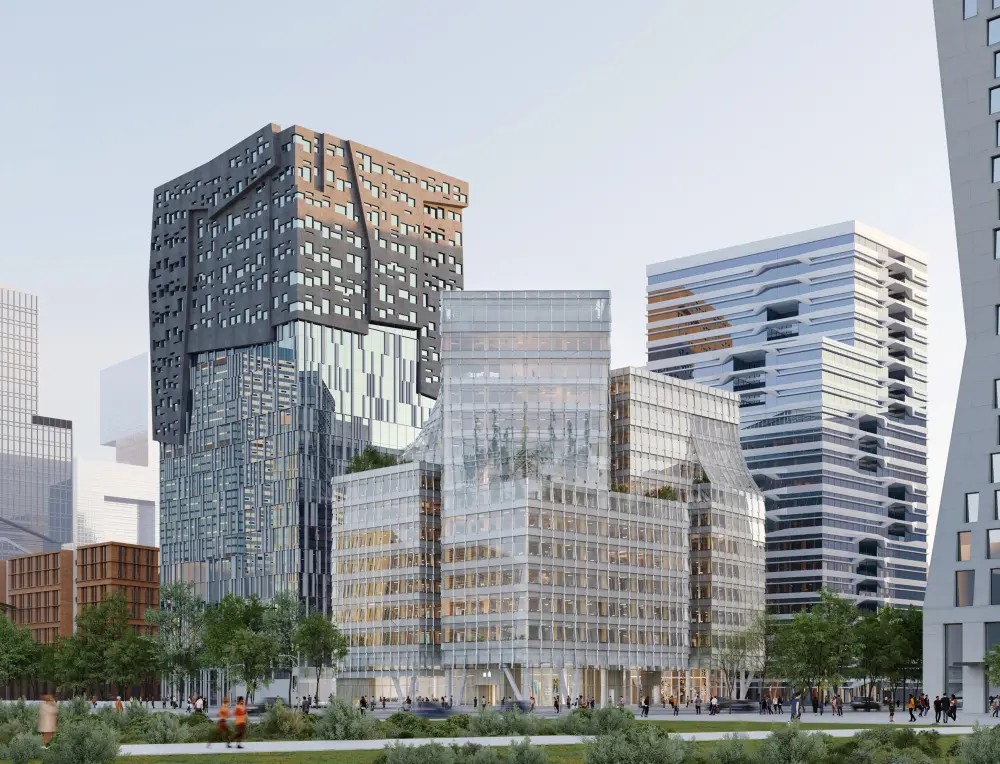
Het CubeHouse heeft een prominente plek in de skyline van de Zuidas en is zichtbaar vanaf de A10. De drie unieke Breath Spaces, elk met een eigen vorm (rond, piramidevormig en U-vormig), geven het gebouw een uitgesproken en herkenbare uitstraling.
De schuin geplaatste ramen, elk onder een andere hoek, vormen samen een organische schubbenstructuur. Doordat de onderzijde open verbonden is met de buitenlucht, ontstaat een dynamisch gevelbeeld dat zowel technisch als esthetisch indrukwekkend is.
De combinatie van complexe geometrie, innovatieve engineering en een verfijnde afwerking zorgt voor een sterk visueel en architectonisch statement.
Project The Cubehouse – Breathspaces: a collaboration between Visser & Smit Bouw, Vic Obdam Staalbouw B.V. and Seldenthuis Engineering
What makes this project so special?
This project stands out for the creation of so-called Breath Spaces along the building’s façade. These covered outdoor areas together form a curtain-like structure surrounding the building. Combined with the inclined glass panels, this results in a dynamic and transparent façade, where interior and exterior are uniquely connected.
The use of BIM and collaboration
Data exchange for coordination between the client, prefab suppliers, VIC Obdam Staalbouw and Seldenthuis Engineering was primarily carried out using IFC models. The starting point for the modelling process was an IFC file generated by façade supplier Rollecate from a parametric model, which defined the positions of the brackets. This file formed a key basis for further engineering and execution, alongside IFC models of other building elements such as floors and façades
To ensure accuracy and maintain consistency within the model, Seldenthuis made extensive use of custom components. These ensured that similar connections—although positioned differently within the structure—remained identical in terms of parts. This approach contributed to efficient collaboration between all parties and a streamlined construction process.
The (innovative) use of Trimble software
To determine the exact positioning of the outriggers on the columns, Seldenthuis developed an application using the Tekla Structures API. This enabled highly precise positioning despite the complex geometry of the design.
Within the custom components, HGG components were integrated, allowing tube contours to be easily exchanged with production machinery. This created a direct link between design and manufacturing.
This approach also resulted in remarkably simple workshop drawings, often consisting of only two principle details and minimal dimensions—clear evidence of the power of digital engineering and the use of custom components for standardisation. The use of sub- and assembly hierarchies in Tekla Structures further simplified the modelling of complex assemblies.
During the production process, components were innovatively measured in the factory by Vic Obdam Staalbouw using a 3D scanner and subsequently checked in Tekla Structures, ensuring they were produced exactly according to the model.
Constructability of the project
The steel structure mainly consists of circular hollow sections with a diameter of 152 mm and wall thicknesses ranging from 6.3 to 8 mm. These align well with the organic shape of the Breath Spaces, although the curved geometry also introduced challenges.
Due to tight tolerances and manufacturability requirements, all outriggers were positioned perpendicular to the tubes. In addition, the outriggers on each tube were almost entirely placed within a single plane, albeit with varying lengths. This simplified production and reduced the risk of errors.
The contours of the outriggers and connecting elements were applied to the tubes by HGG using scribing technology, enabling highly accurate assembly.
An innovative connection detail was also developed, whereby all connections remain within the contour of the tube. To achieve this, the tube segmentation was designed with cross-shaped plates—resulting in a strong, manufacturable and elegant connection.
The structure is connected to the CLT floors using brackets and hundreds of precisely calculated timber screws.
Sustainability
The Breath Spaces form an important sustainable element of the building. These covered “parks” connect the interior and exterior while acting as a natural buffer zone. Due to the open façade, these spaces remain cool in summer and warm in winter, contributing to a comfortable indoor climate without intensive energy use.
The efficient digital design and prefabrication resulted in reduced failure costs, less material waste, and an optimised construction process.
Wow factor
The CubeHouse occupies a prominent position in the Zuidas skyline and is visible from the A10 motorway. The three unique Breath Spaces—each with its own shape (circular, pyramidal, and U-shaped)—give the building a distinctive and recognisable identity.
The inclined windows, each set at a different angle, together create an organic, scale-like structure. With the underside open to the outside air, the façade presents a dynamic appearance that is both technically and aesthetically impressive.
The combination of complex geometry, innovative engineering, and refined detailing results in a powerful visual and architectural statement.
Deixe o seu comentário


A Construsoft é revendedor autorizado de Tekla Structures e disponibiliza formação, suporte técnico e outros serviços aos seus clientes.
Para mais informações, visite nosso site:
construsoft.ptTekla is a Trimble Company © Copyright 2026 Tekla