 Category winner in these countries:
Modernizace mostu Řečany n. Labem
| Category | Infrastructure Projects |
|---|---|
| Year | 2026 |
| Country | Czech Republic |
| Organization | ALLCONS Industry s.r.o. |
| Project partners | sdružení firem: Chládek a Tintěra, Pardubice a.s.; MADOS MT s.r.o.; Mostostal Kielce S.A. |
| Author | ALLCONS Industry |
| Place of construction | Řečany n. Labem, Česká Republika |
| Tags | Parametric designTekla StructuresTrimble ConnectSteel |
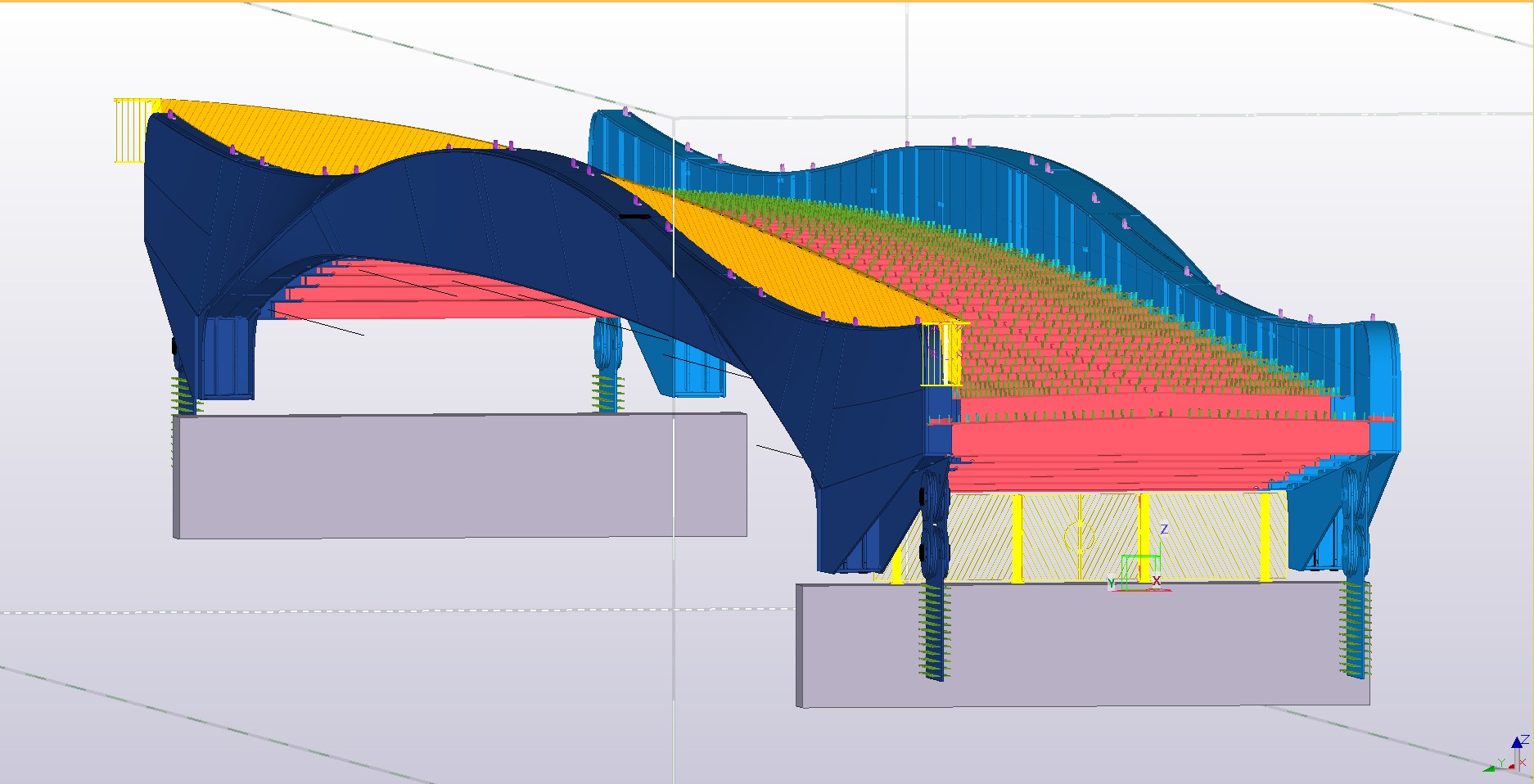
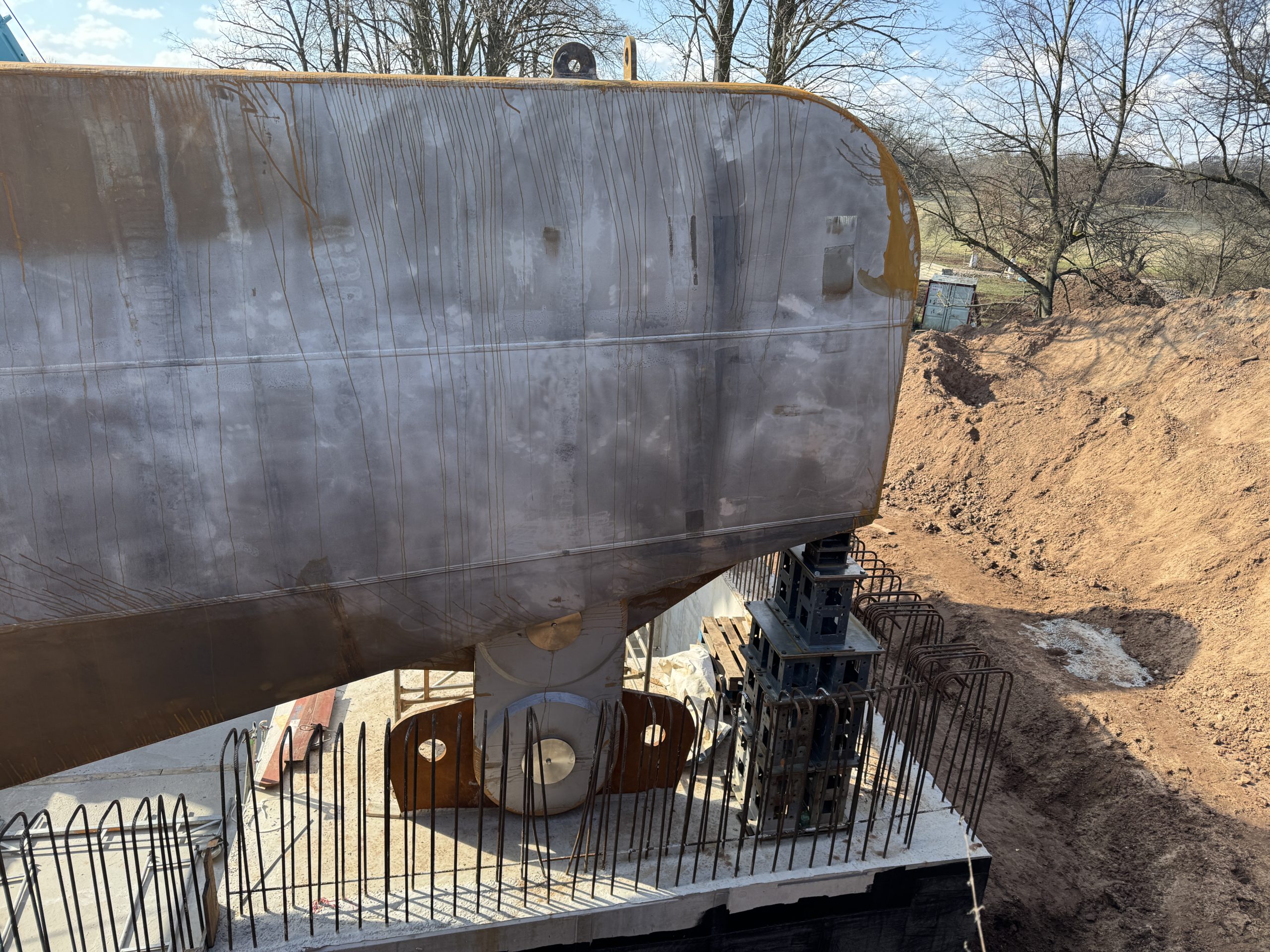
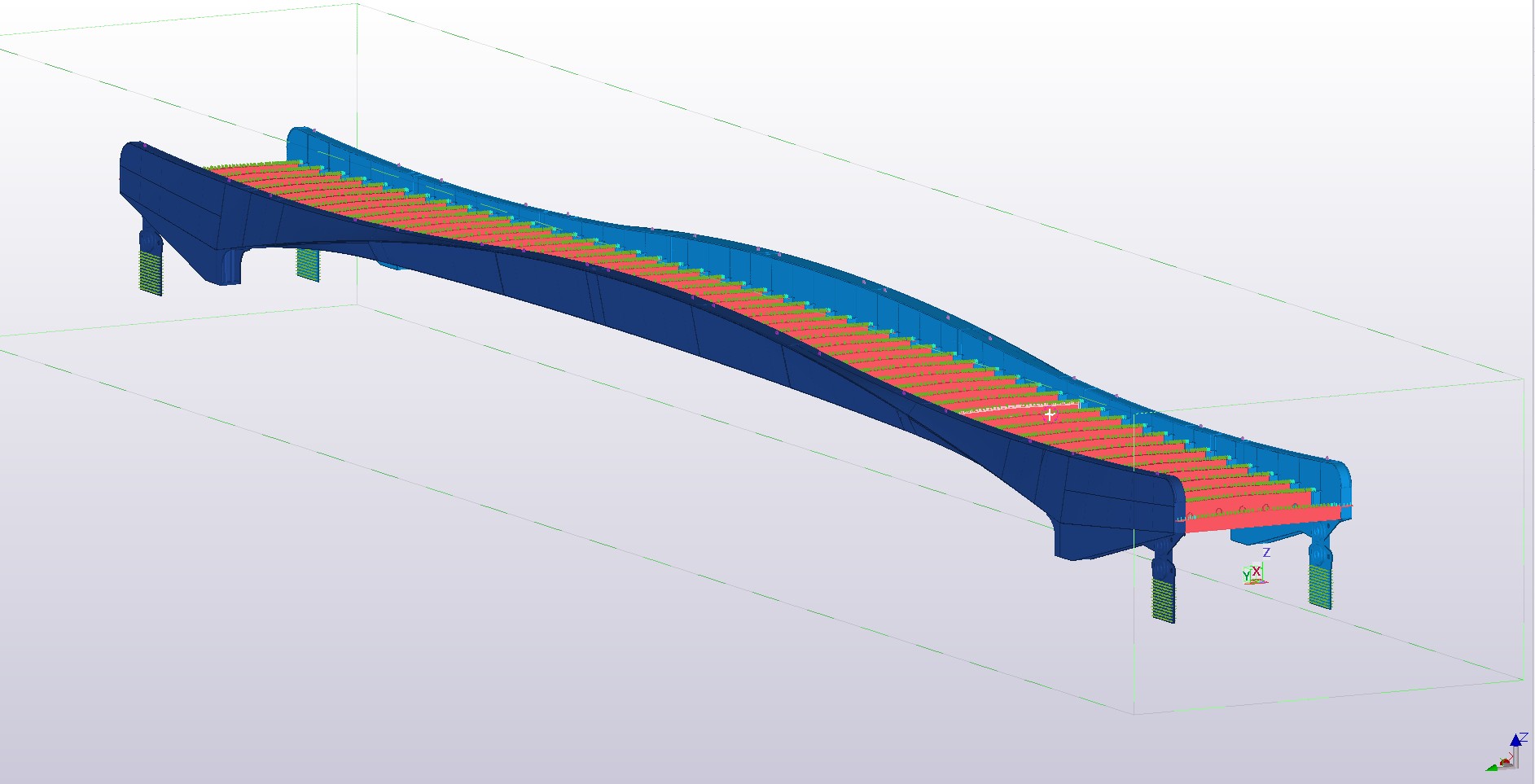
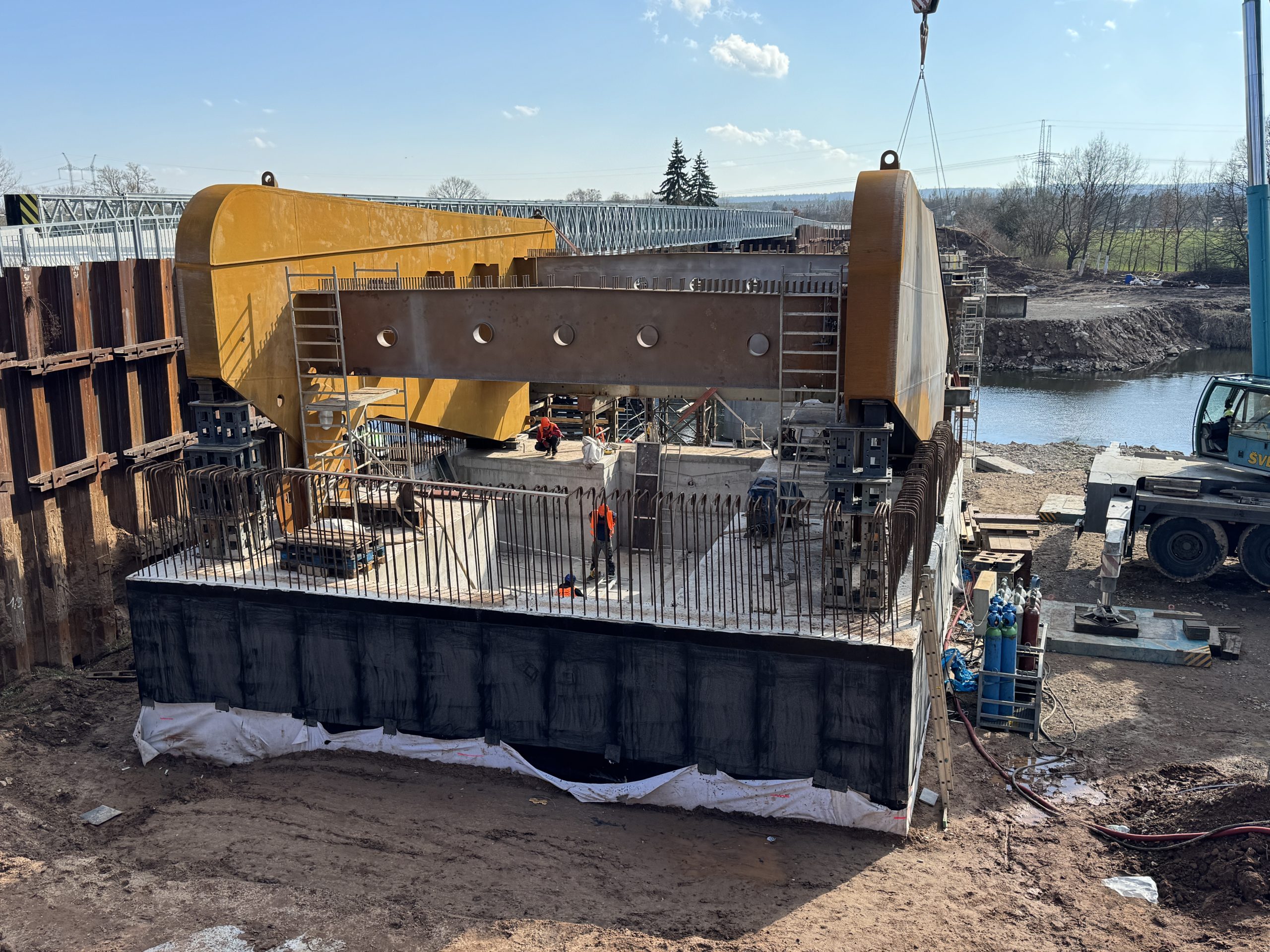
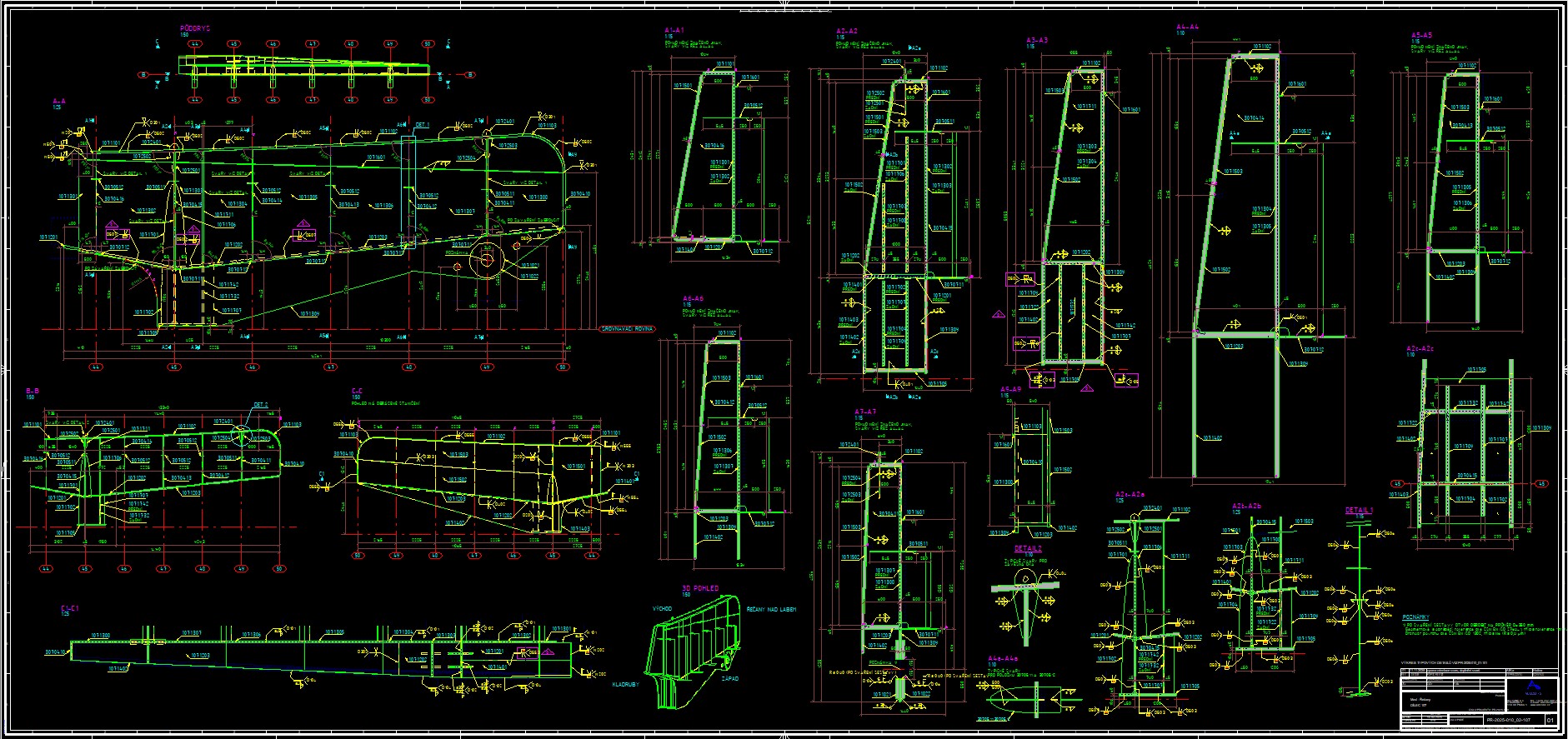
Mostní objekt „Řečany nad Labem“ je navržen jako spojitá ocelobetonová trámová konstrukce o třech polích s rozpětím 8,9 + 89,0 + 8,9 m, převádějící komunikaci III/3227 přes řeku Labe. Nosnou konstrukci tvoří ocelové podélníky se spřaženou železobetonovou mostovkou z patinující oceli typu Corten.
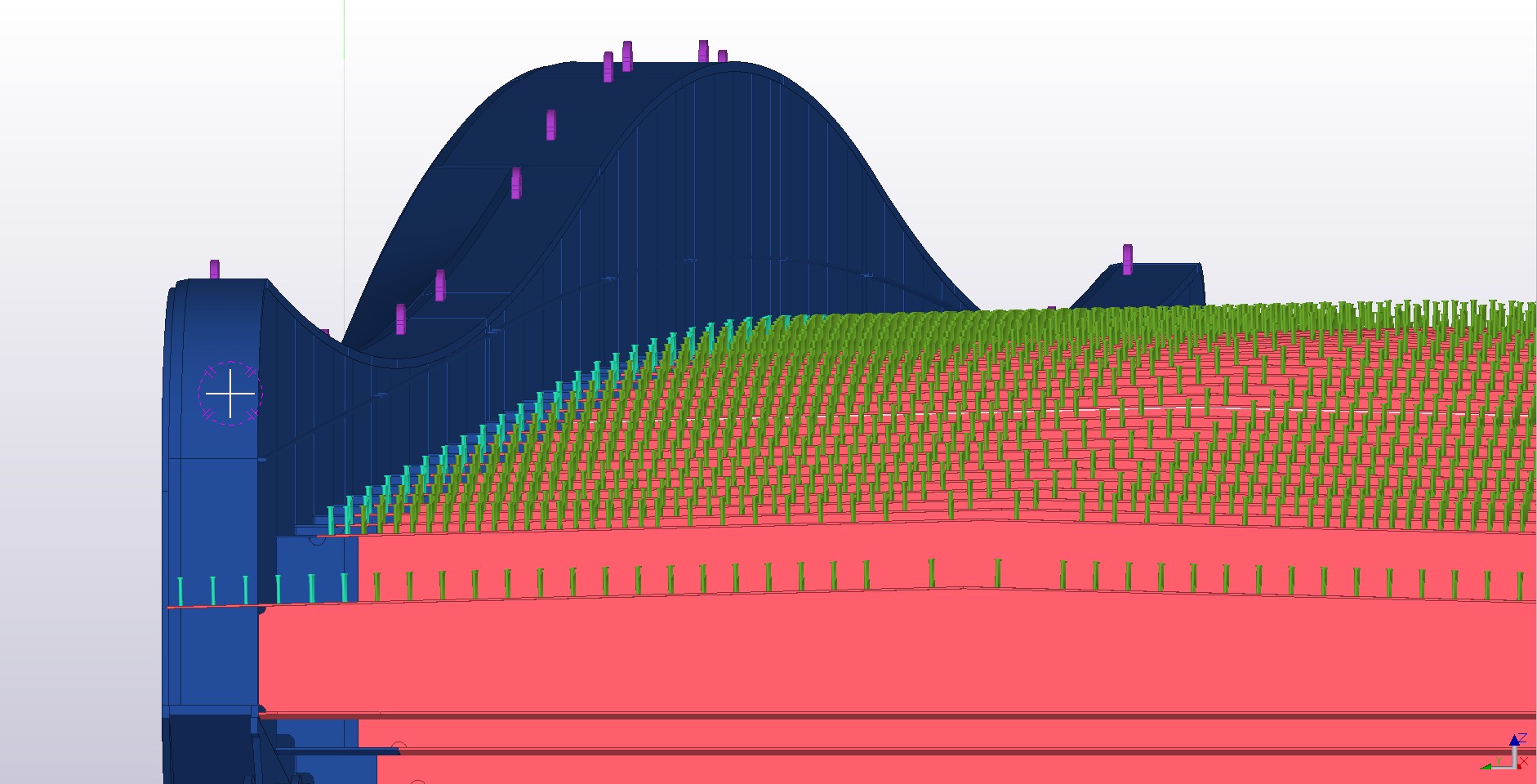
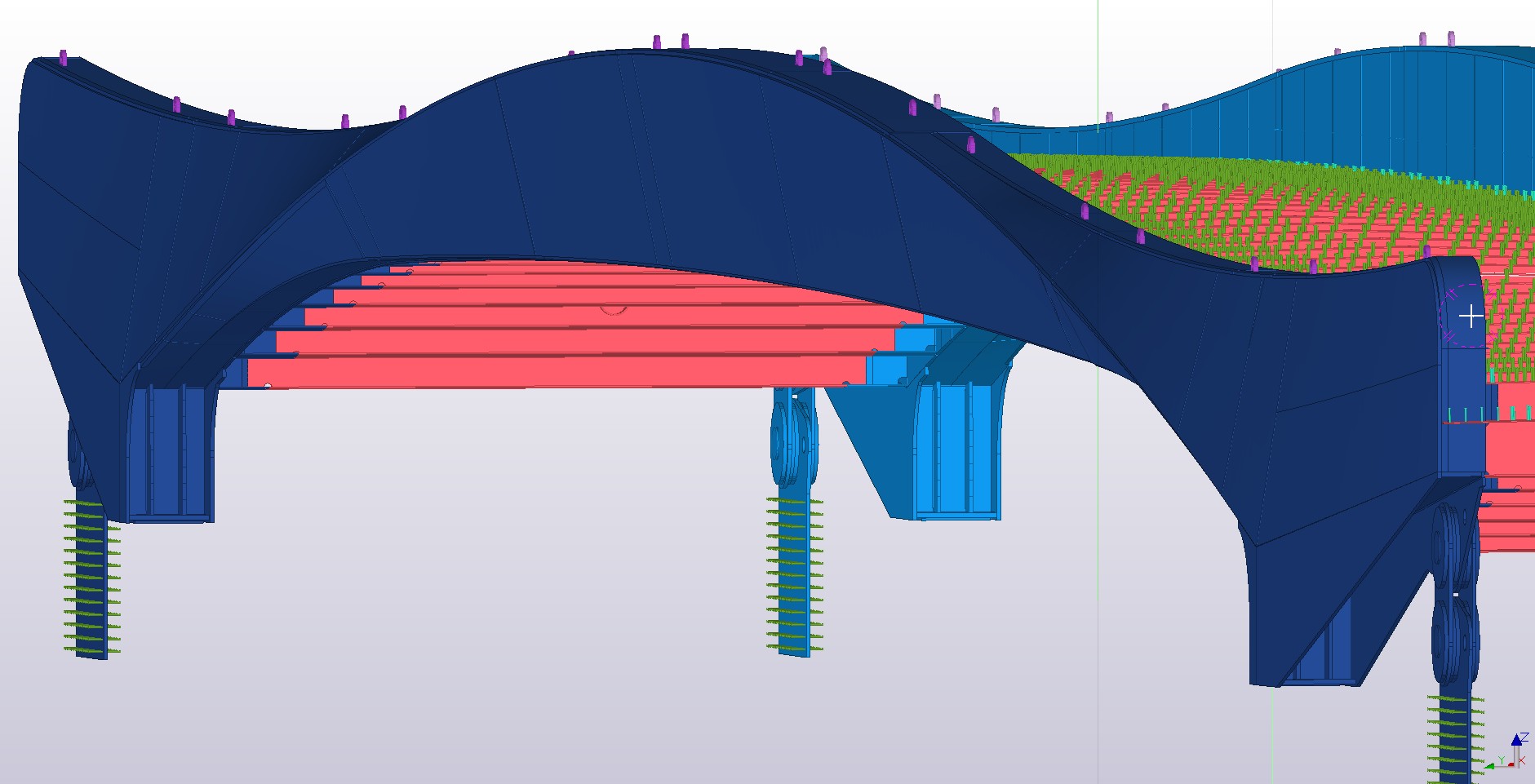
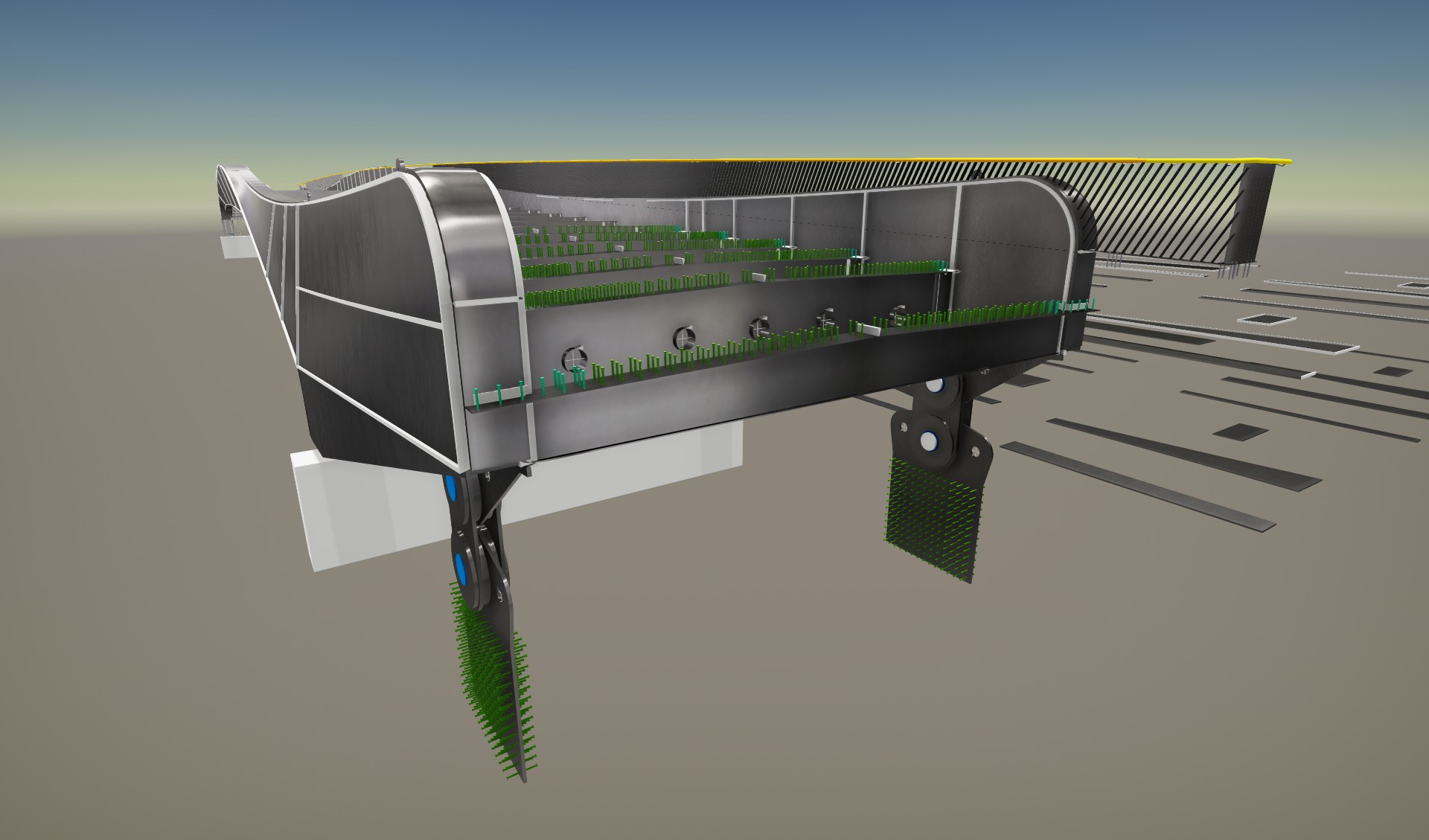
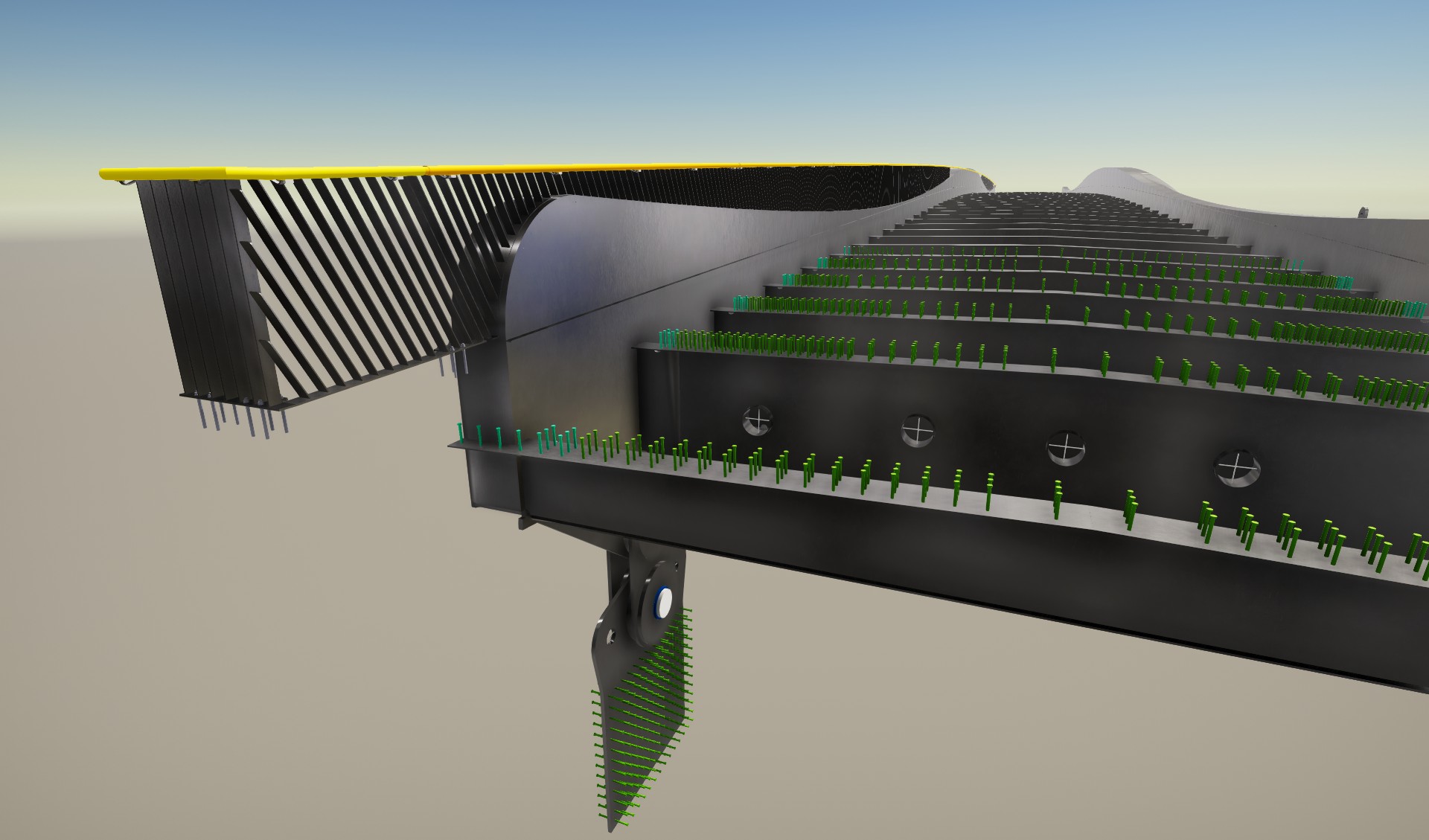
Nosná konstrukce se vyznačuje proměnnou geometrií podélníků. Průřez se po délce mostu mění výškově i tvarově, včetně změn polohy pásnic a orientace stěn. Tyto prvky nejsou v celém rozsahu rovnoběžné ani kolmé, což v kombinaci s podélným zakřivením a nadvýšením vede ke vzniku prostorových (neplanárních) dílců.
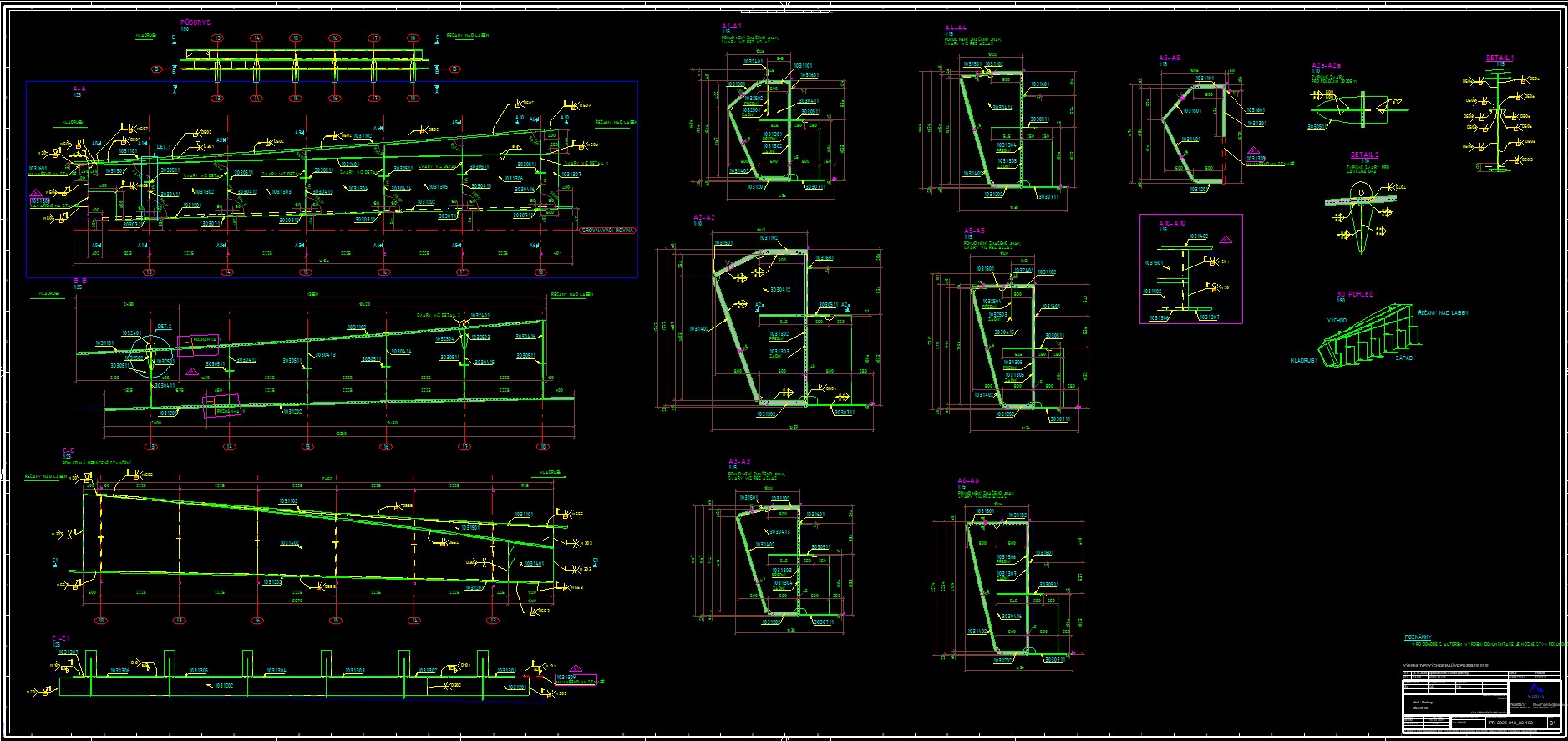
Model konstrukce byl zpracován s důrazem na rozvinutelnost jednotlivých plechových dílců z rovinných tabulí. Analýza základní geometrie identifikovala oblasti s násobnou křivostí, které nebylo možné přímo rozvinout. Tyto části byly upraveny aproximací a rozdělením na menší segmenty tak, aby odpovídaly výrobním tolerancím a možnostem zpracování. Návrh současně respektuje omezení daná maximálními rozměry plechů a výrobními kapacitami.
Součástí přípravy podkladů byla optimalizace rozmístění výpalků na tabule plechů (2D nesting) s cílem snížení materiálových ztrát. Pro řešení byly využity nástroje parametrického modelování umožňující iterativní optimalizaci při zohlednění výrobních omezení.
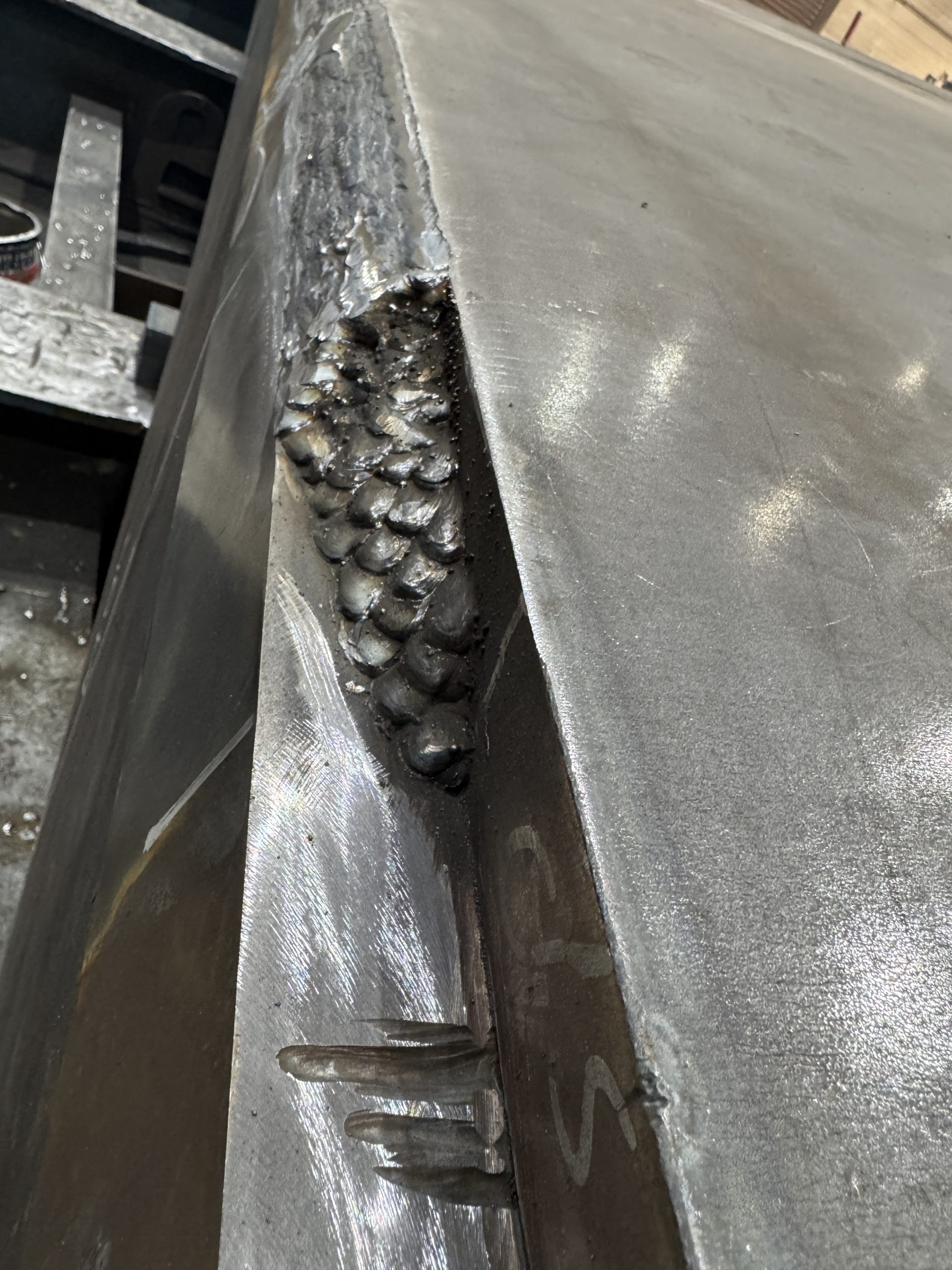
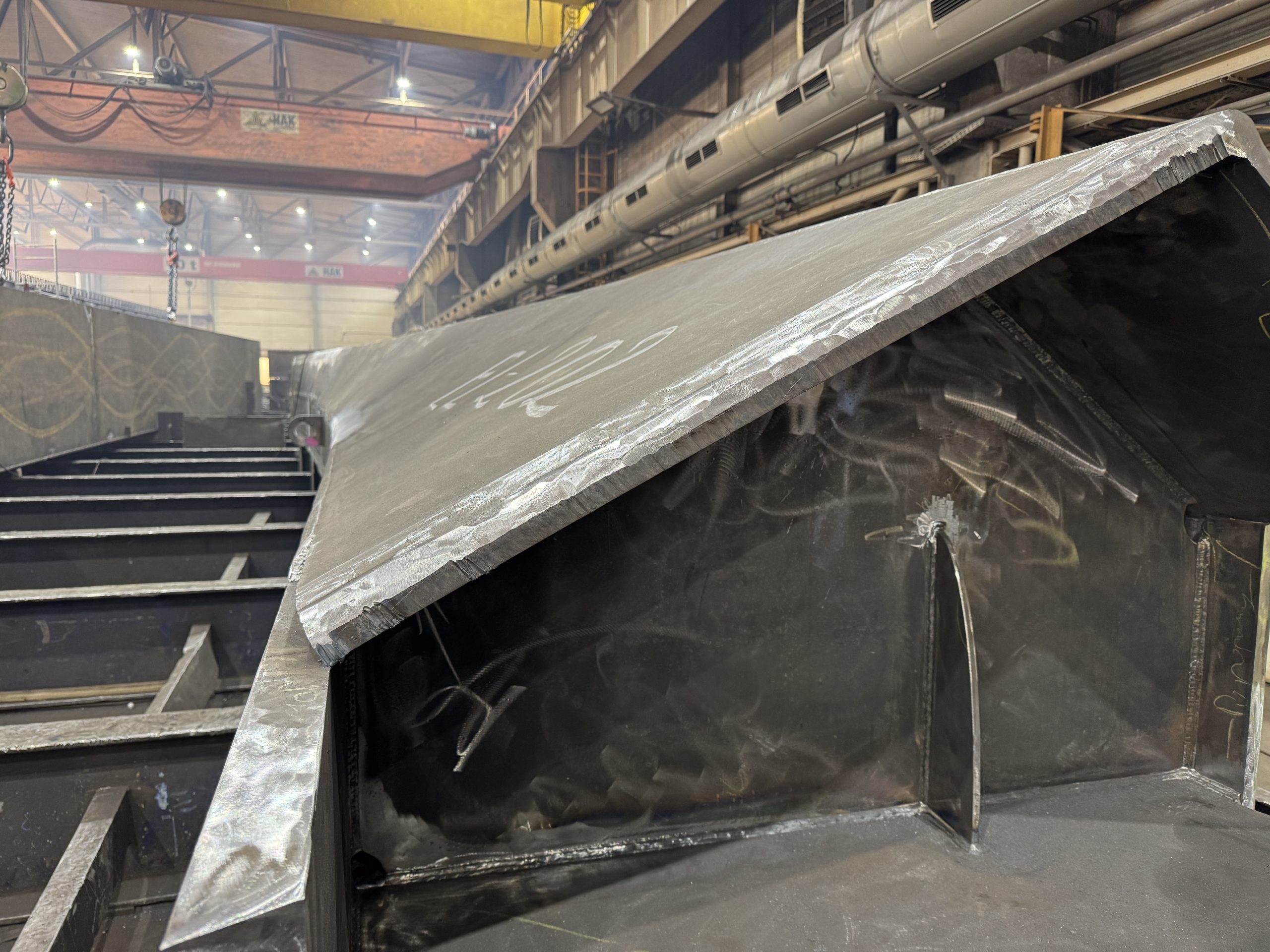
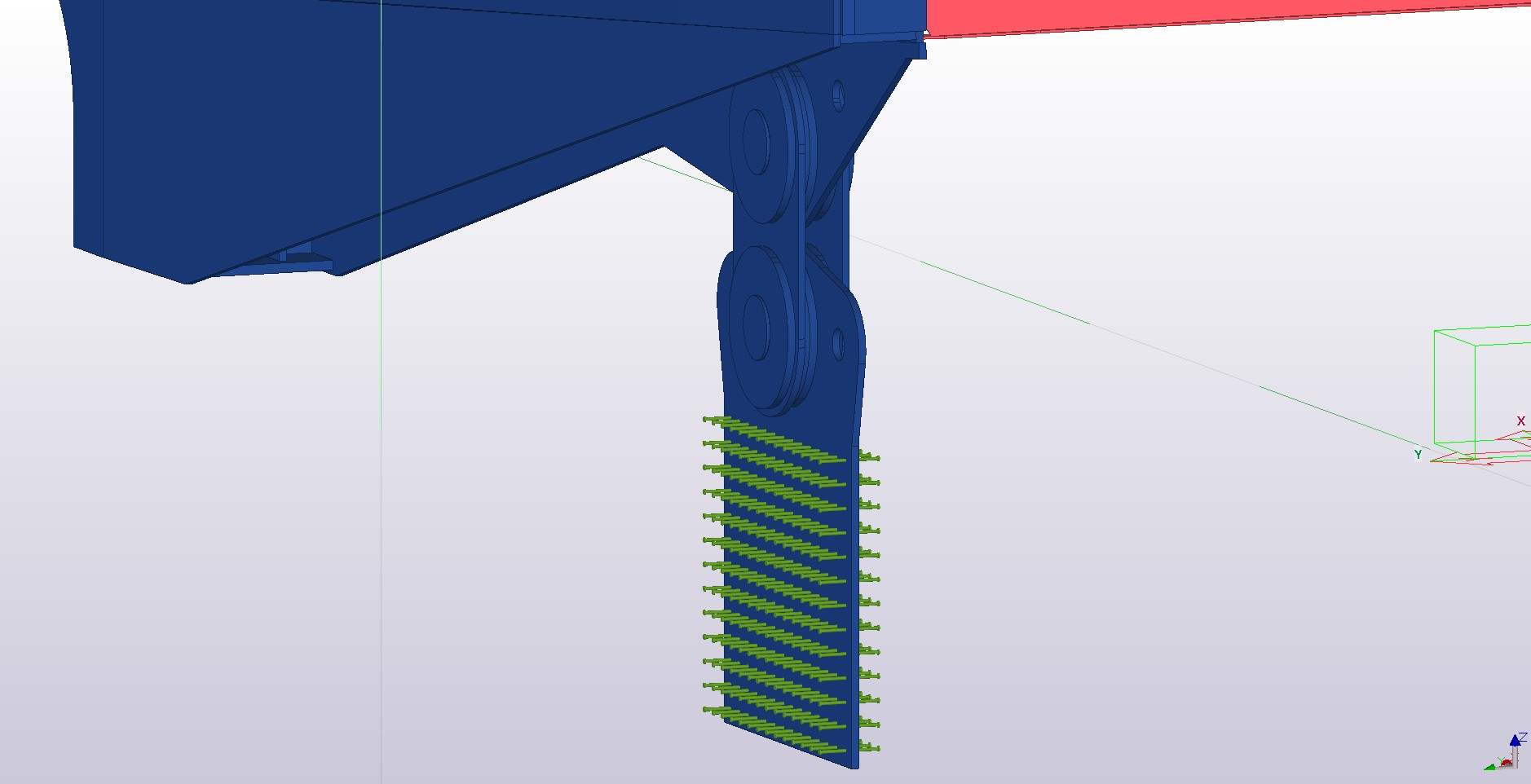
Proměnná geometrie konstrukce klade zvýšené nároky na výrobu a návrh svarových detailů. V závislosti na tloušťkách plechů a tvarů prvků byly použity nejen standardní technologie mechanického zakřivování, ale i tepelná tváření.
Svařování, zejména u plně provařených spojů, vyžaduje zohlednění vzniku zbytkových napětí. Geometrie prvků současně ovlivňuje úhly úkosů svarů, které se podél spojů mění, a omezuje přístupnost pro svařování.
The bridge structure “Řečany nad Labem” is designed as a continuous steel-concrete girder structure with three spans of 8.9 + 89.0 + 8.9 m, carrying Road III/3227 across the Elbe River. The load-bearing structure consists of steel box girders with a composite reinforced concrete deck made of Corten weathering steel.
The supporting structure is characterized by the variable geometry of the box girders. The cross-section changes in height and shape along the length of the bridge, including changes in the position of the flanges and the orientation of the walls. These elements are neither parallel nor perpendicular throughout their entire extent, which, in combination with the longitudinal curvature and superelevation, leads to the creation of spatial (non-planar) components.
The structural model was developed with an emphasis on the ability to unfold individual sheet metal parts from flat sheets. An analysis of the basic geometry identified areas with multiple curvatures that could not be unfolded directly. These sections were modified by approximation and division into smaller segments to comply with manufacturing tolerances and processing capabilities. The design also respects the constraints imposed by the maximum sheet dimensions and manufacturing capacities.
Part of the preparation of the design documentation involved optimizing the placement of cutouts on the sheet metal sheets (2D nesting) with the aim of reducing material waste. Parametric modeling tools were used for this solution, enabling iterative optimization while taking manufacturing constraints into account.
The variable geometry of the structure places increased demands on the production and design of weld details. Depending on the thickness of the sheet metal and the shapes of the components, not only standard mechanical bending techniques but also thermal forming were used. Welding, particularly for fully penetrated joints, requires consideration of residual stress formation. The geometry of the elements also affects the weld bevel angles, which vary along the joints, and limits accessibility for welding.
Leave your comment


Construsoft is an authorized Tekla Structures vendor and provides training, technical support, and other services to its customers.
For more information, please visit our website:
construsoft.comTekla is a Trimble Company © Copyright 2026 Tekla