Modernizacja dachu tropikalnych szklarni w Grugapark Essen
| Kategoria | Sport i rekreacja |
|---|---|
| Rok | 2026 |
| Kraj | Poland |
| Organizacja | StahlConst Sp. z o.o. |
| Partnerzy projektu | Windhorst Stahl- & Metallbau GmbH |
| Autor | Damian Kosoń |
| Współautorzy | Rafał Szydziak |
| Klient | Grugapark Essen |
| Miejsce budowy | Essen |
| Tags | PointcloudsTekla StructuresSteel |
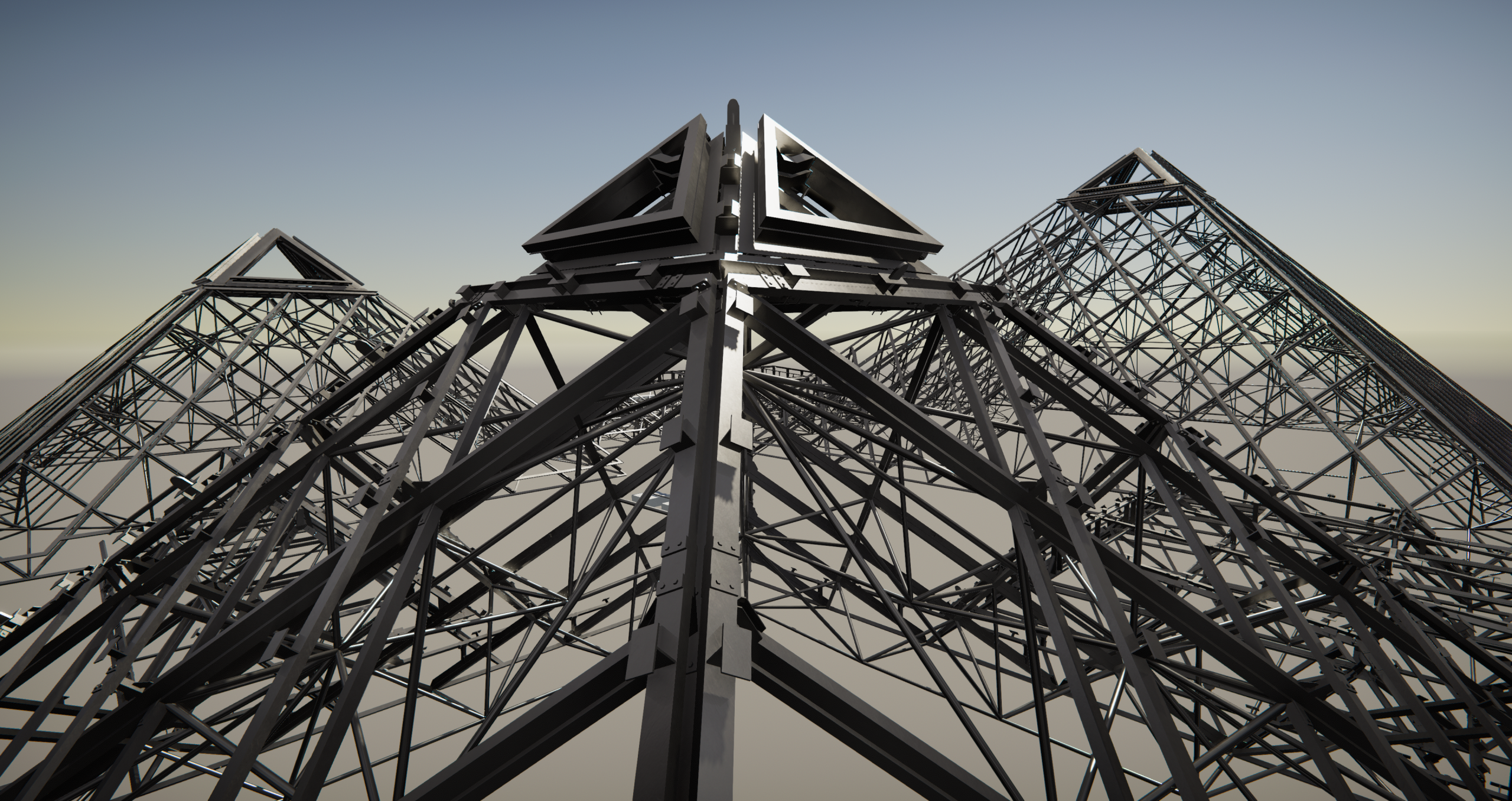
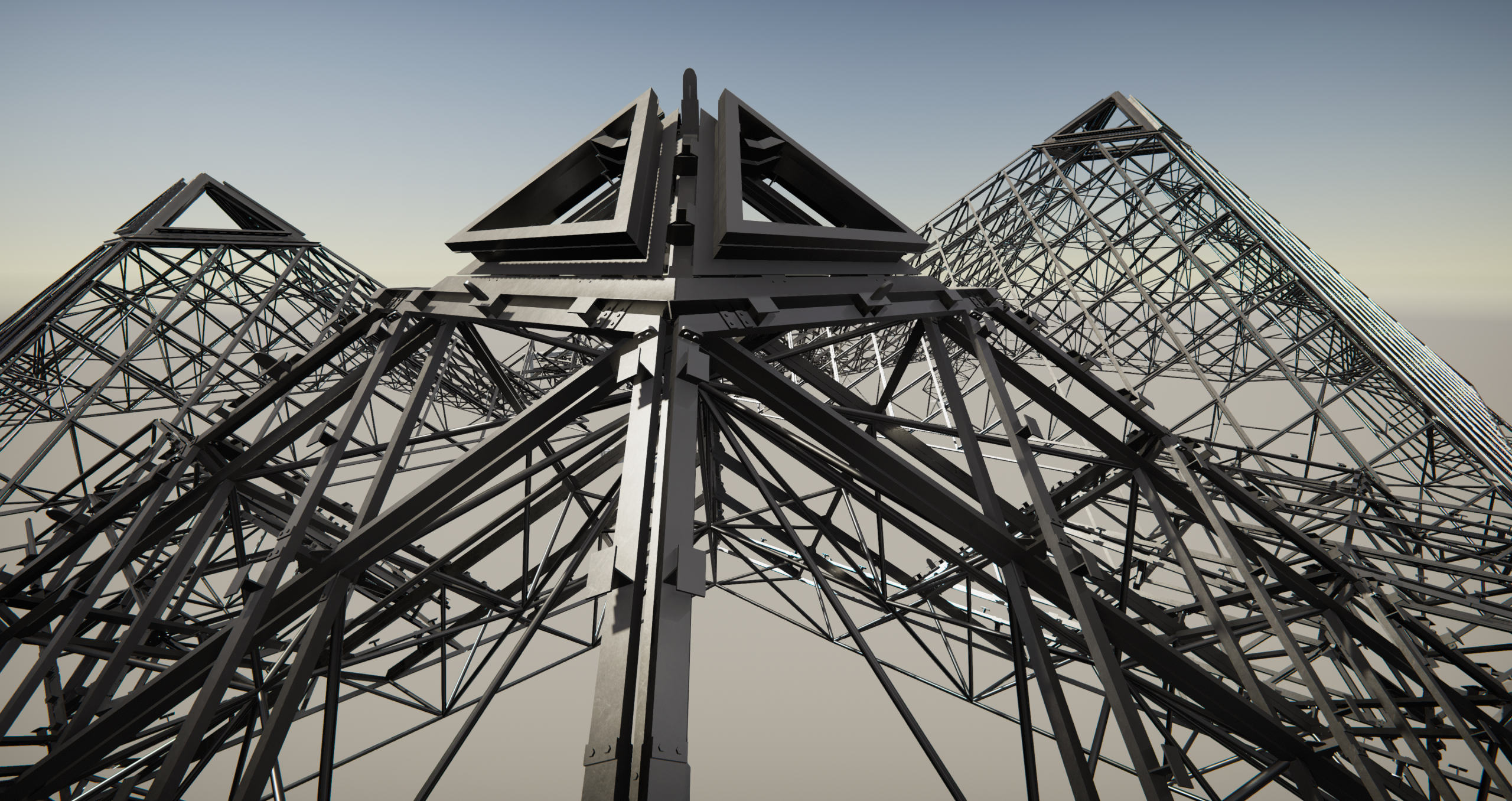
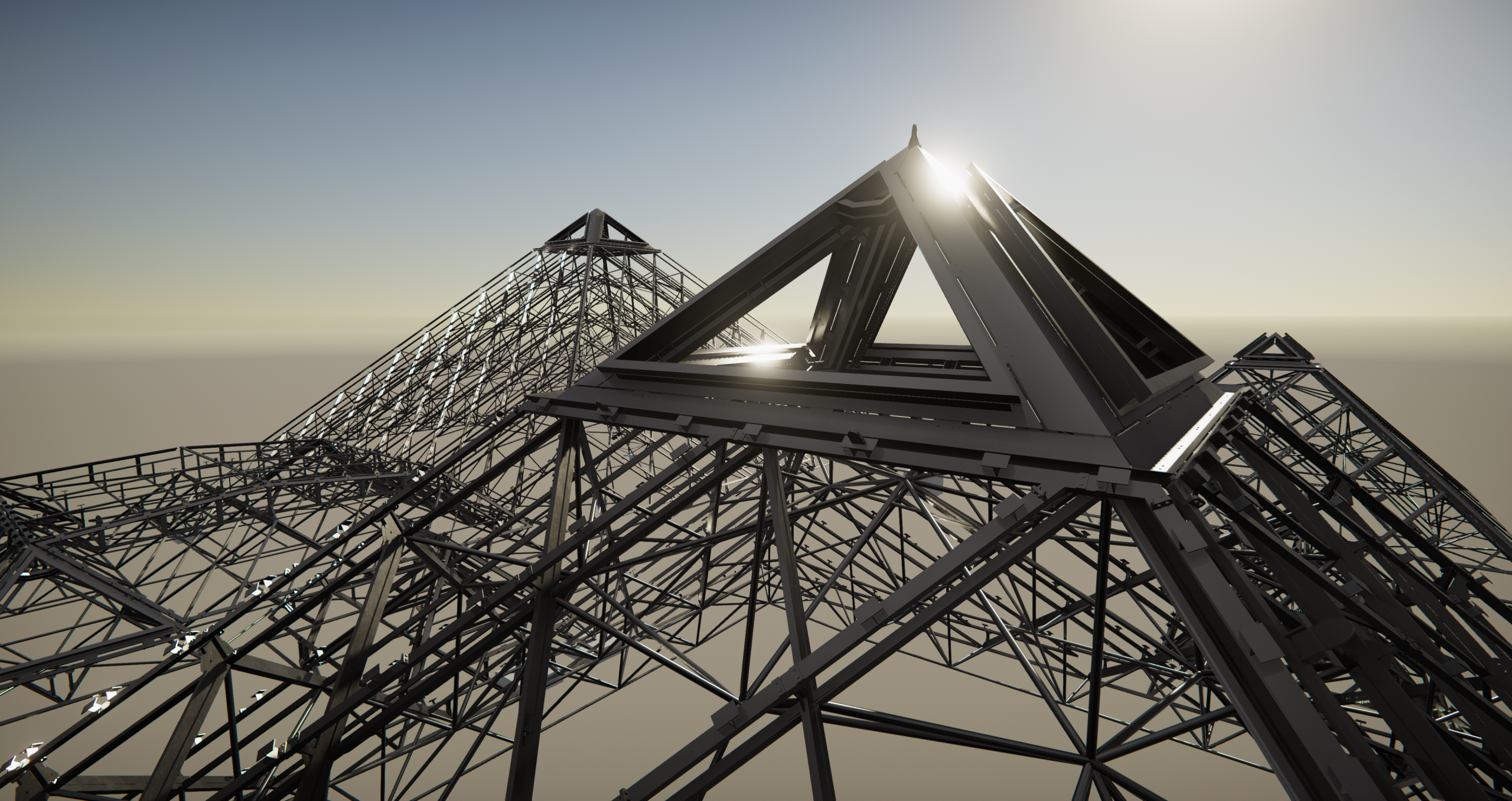
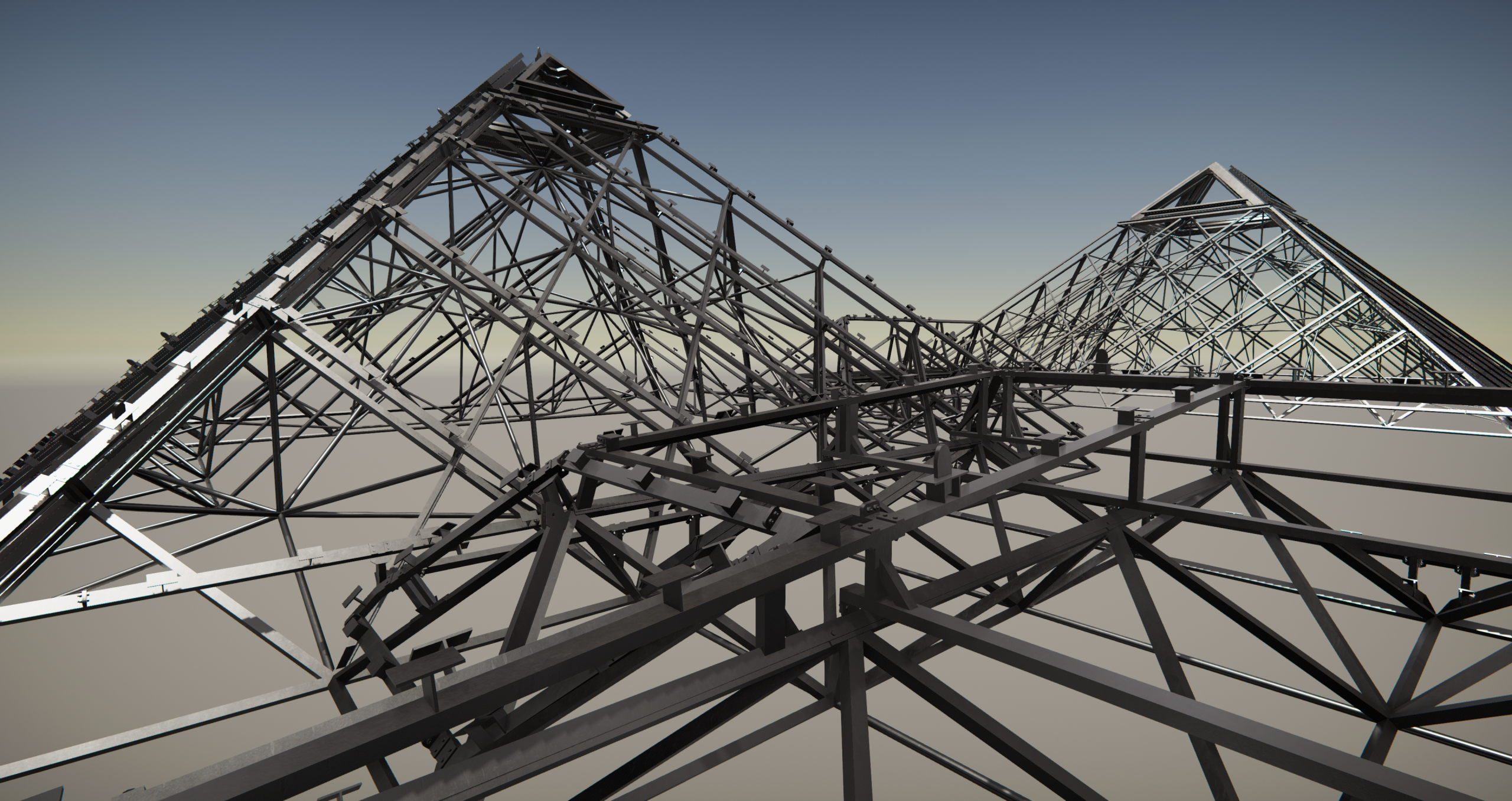
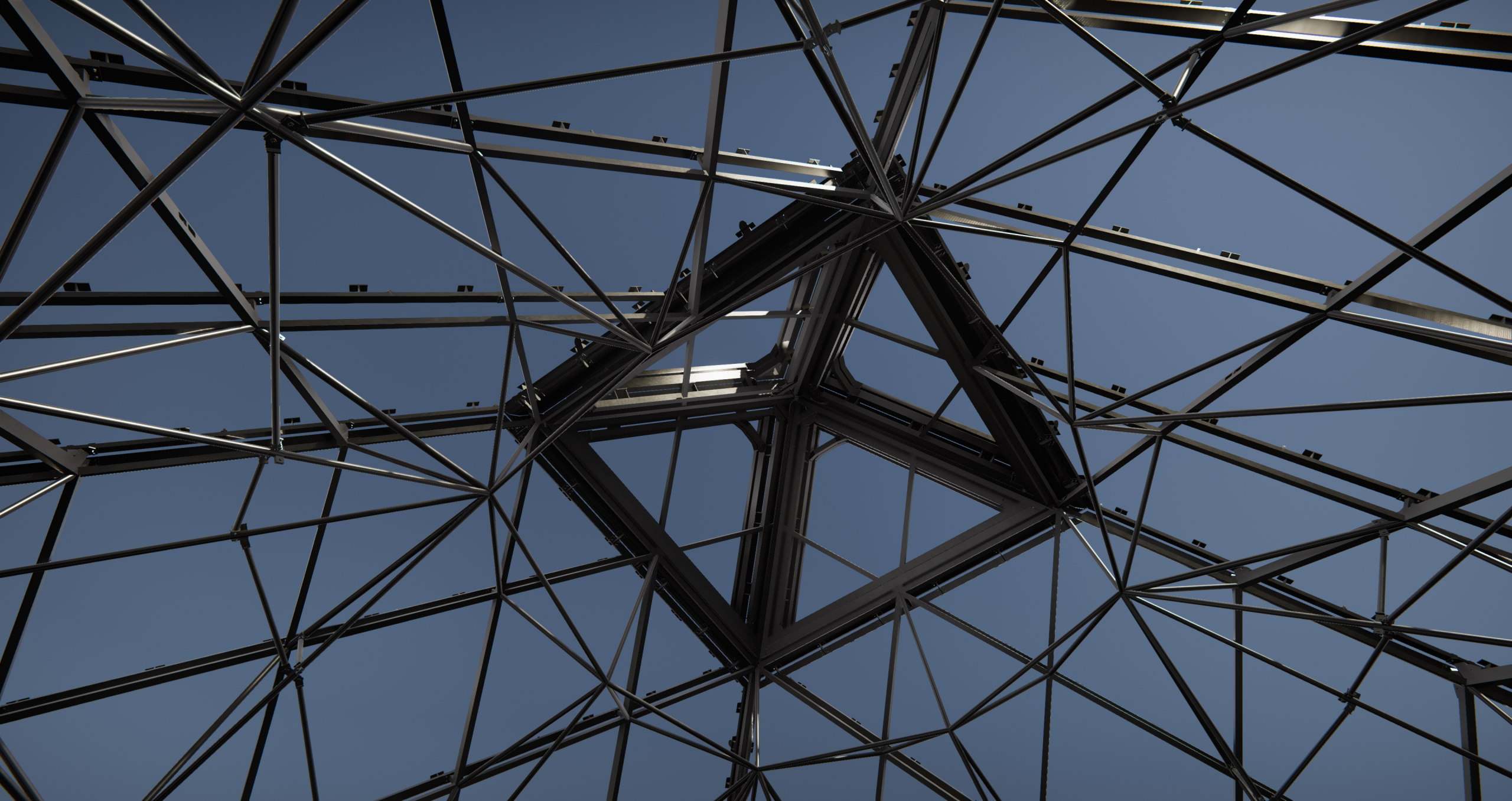
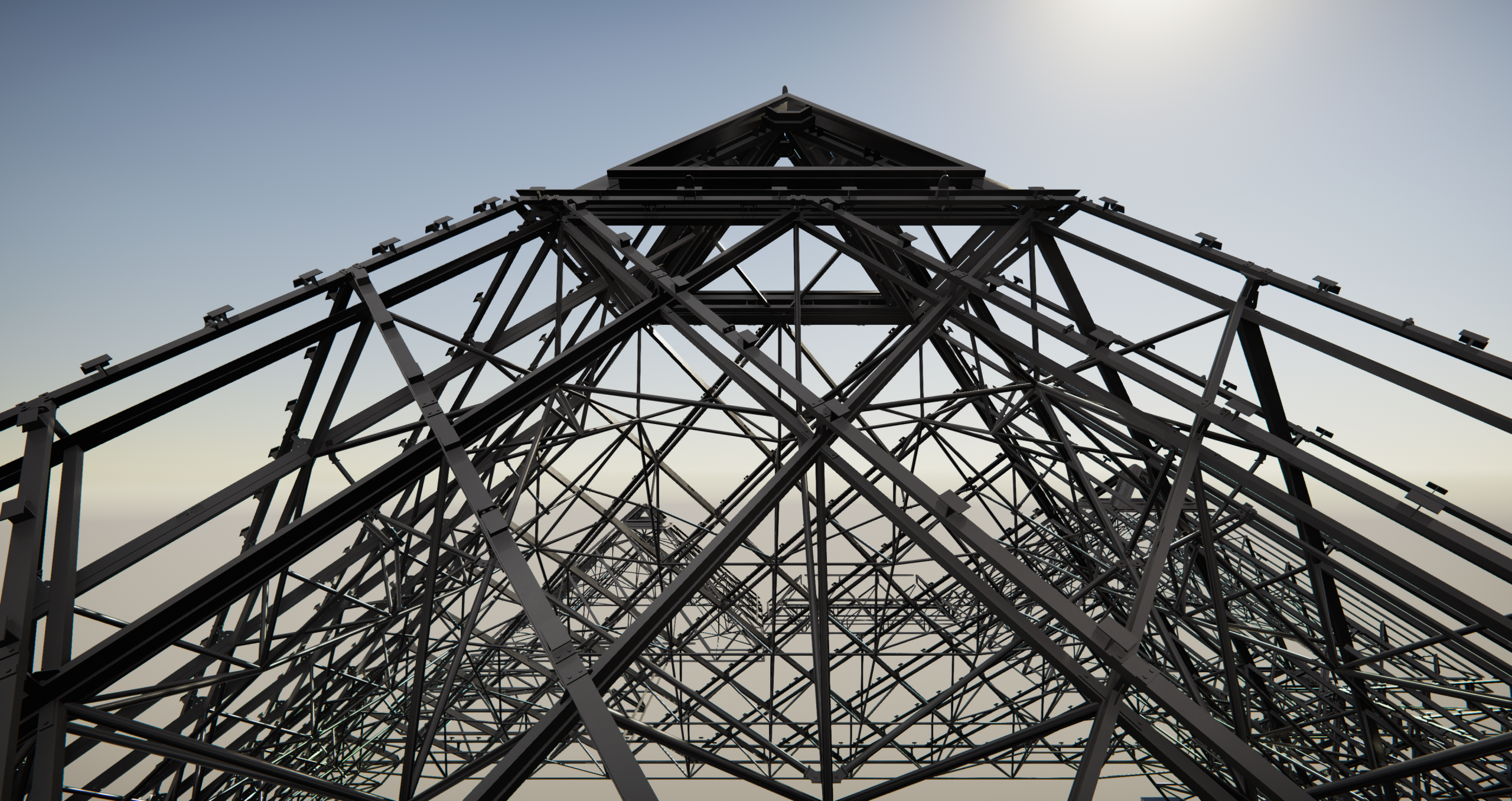
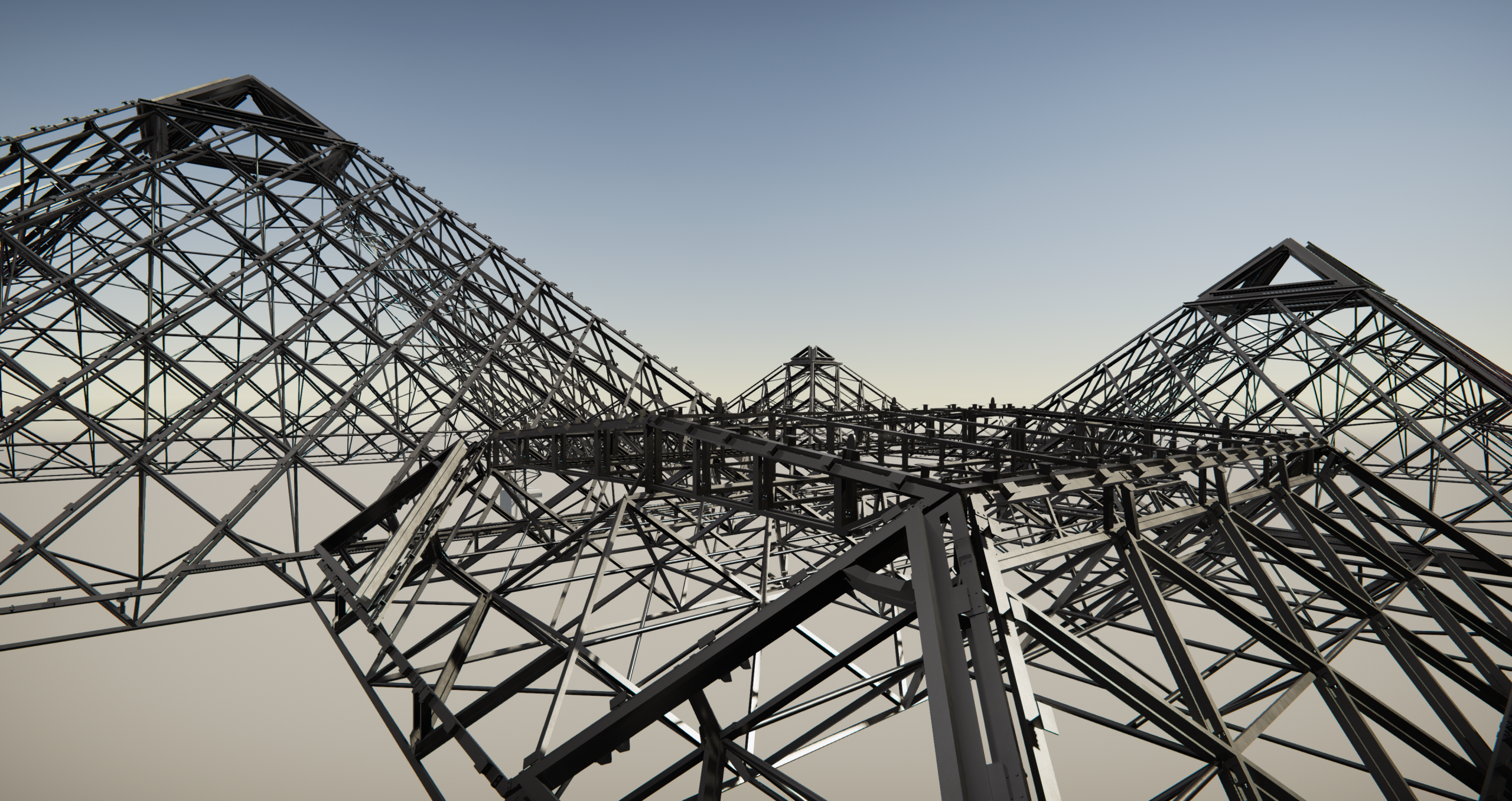
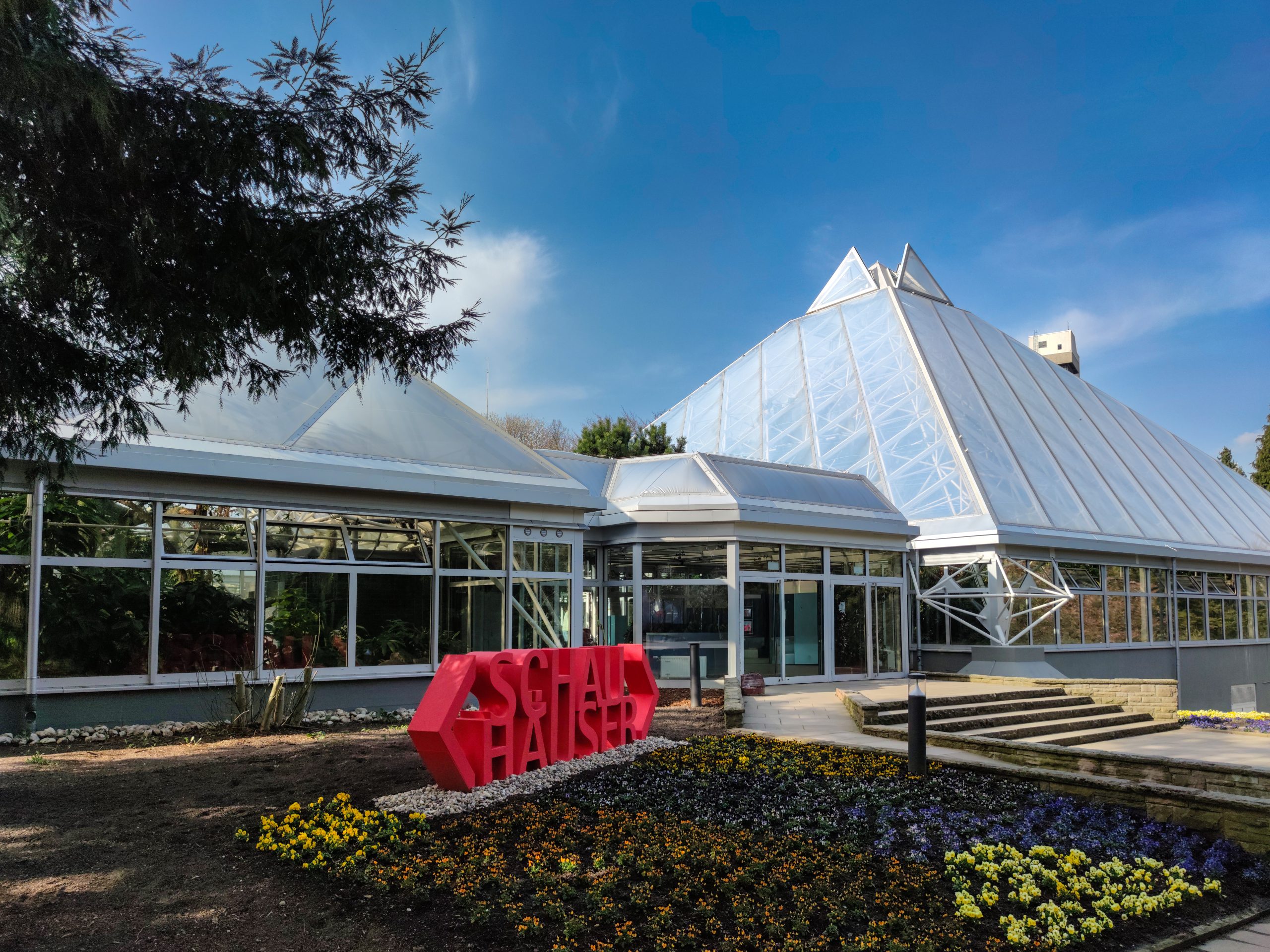
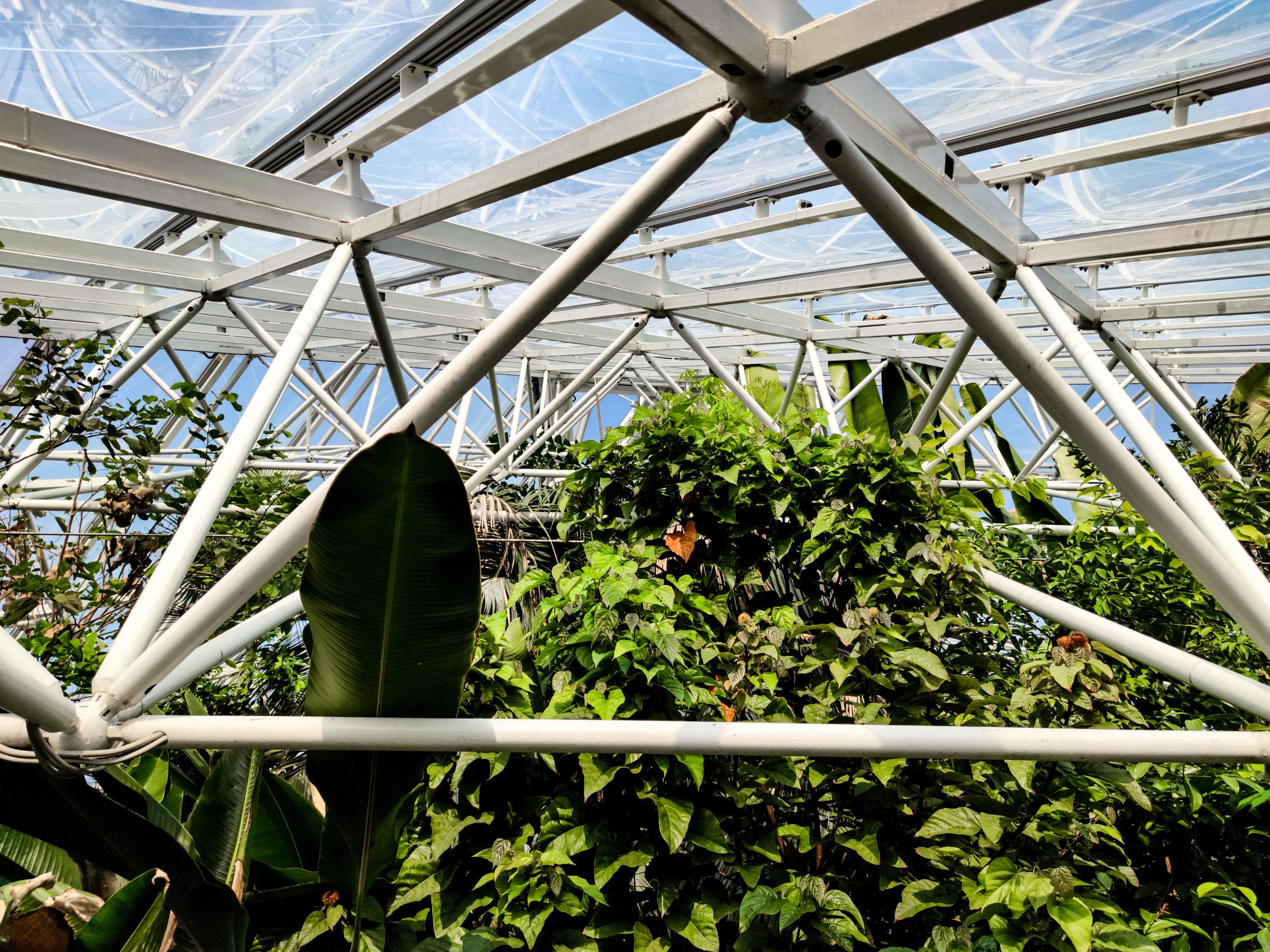
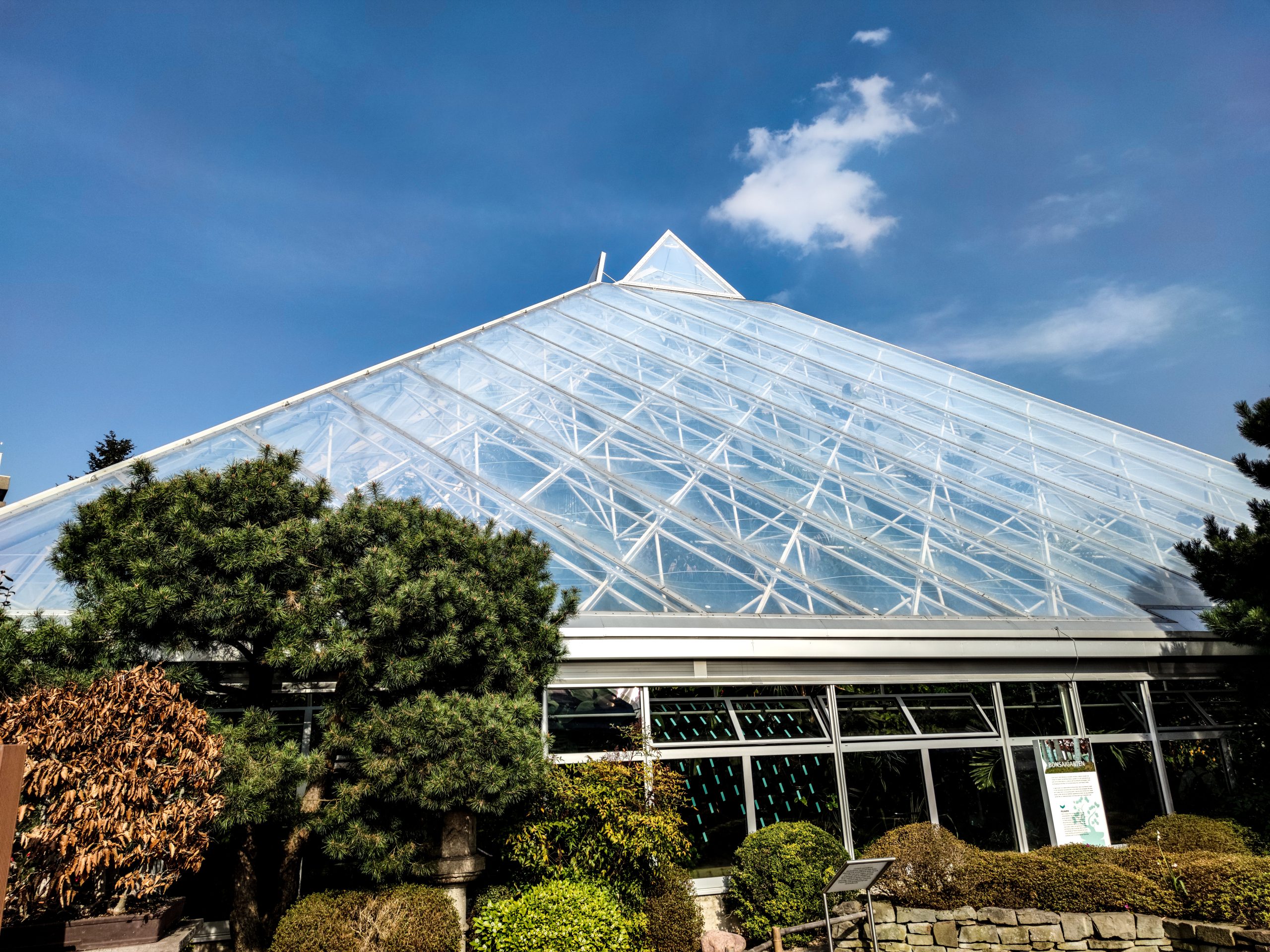
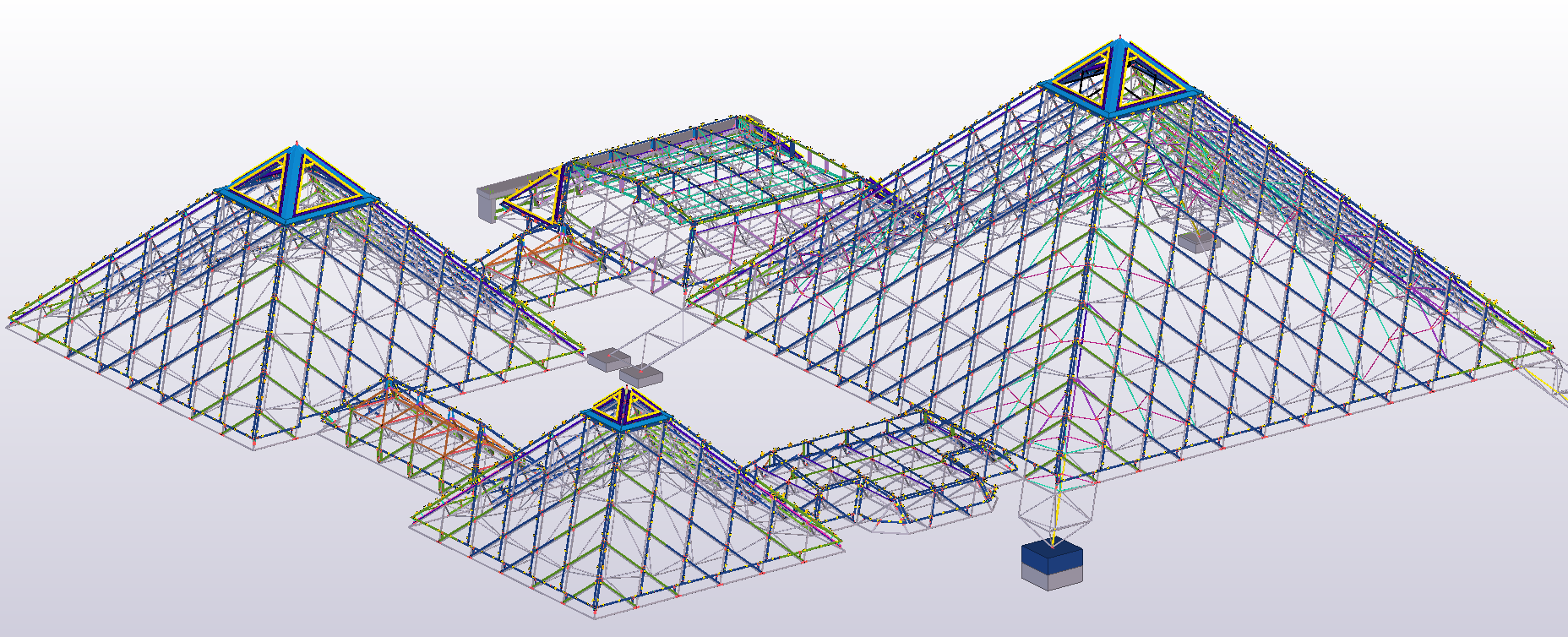
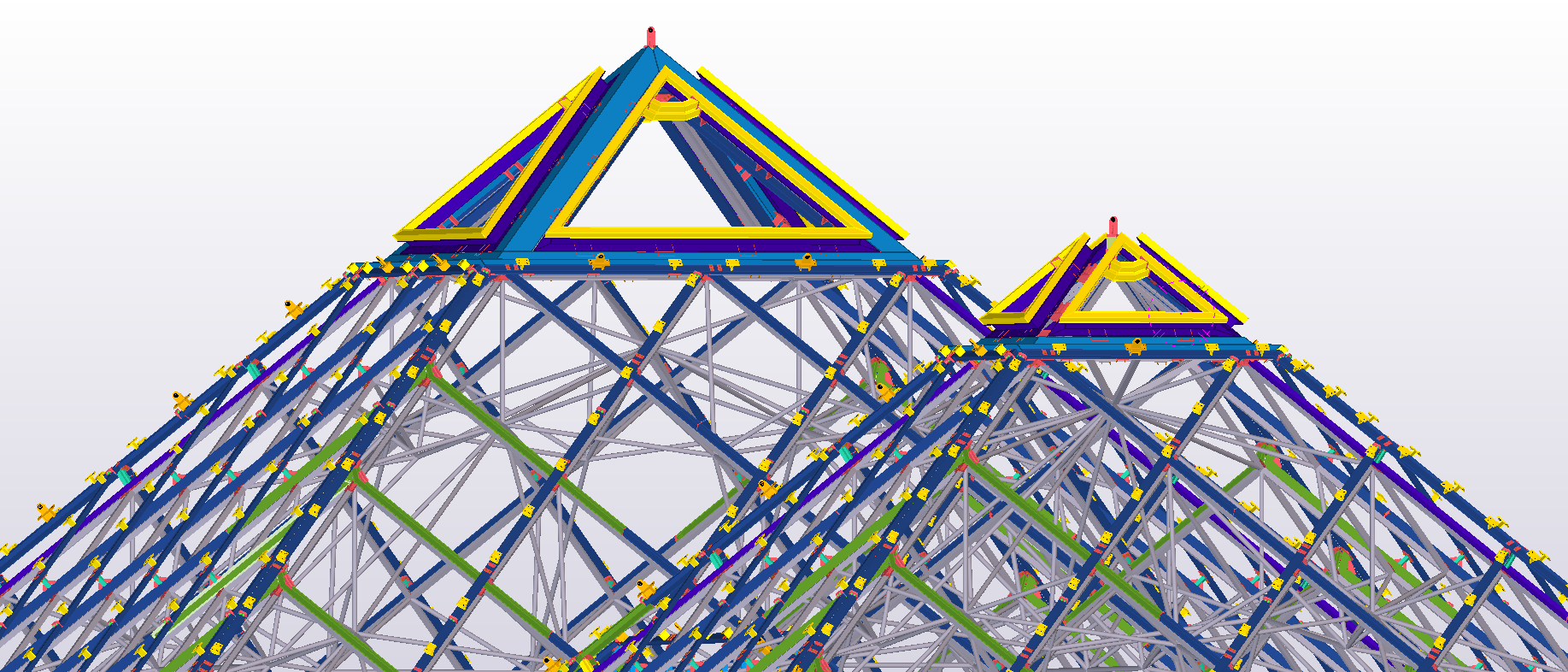
Projekt renowacji dachu szklarni tropikalnych w Grugapark w Essen stanowi przykład kompleksowego podejścia do modernizacji obiektów o wysokiej wartości architektonicznej i użytkowej, z wykorzystaniem zaawansowanych narzędzi BIM oraz innowacyjnych technologii materiałowych. Inwestycja objęła pełną renowację konstrukcji trzech charakterystycznych piramid oraz przyległych obiektów, tworzących spójny kompleks szklarni ogrodu botanicznego.
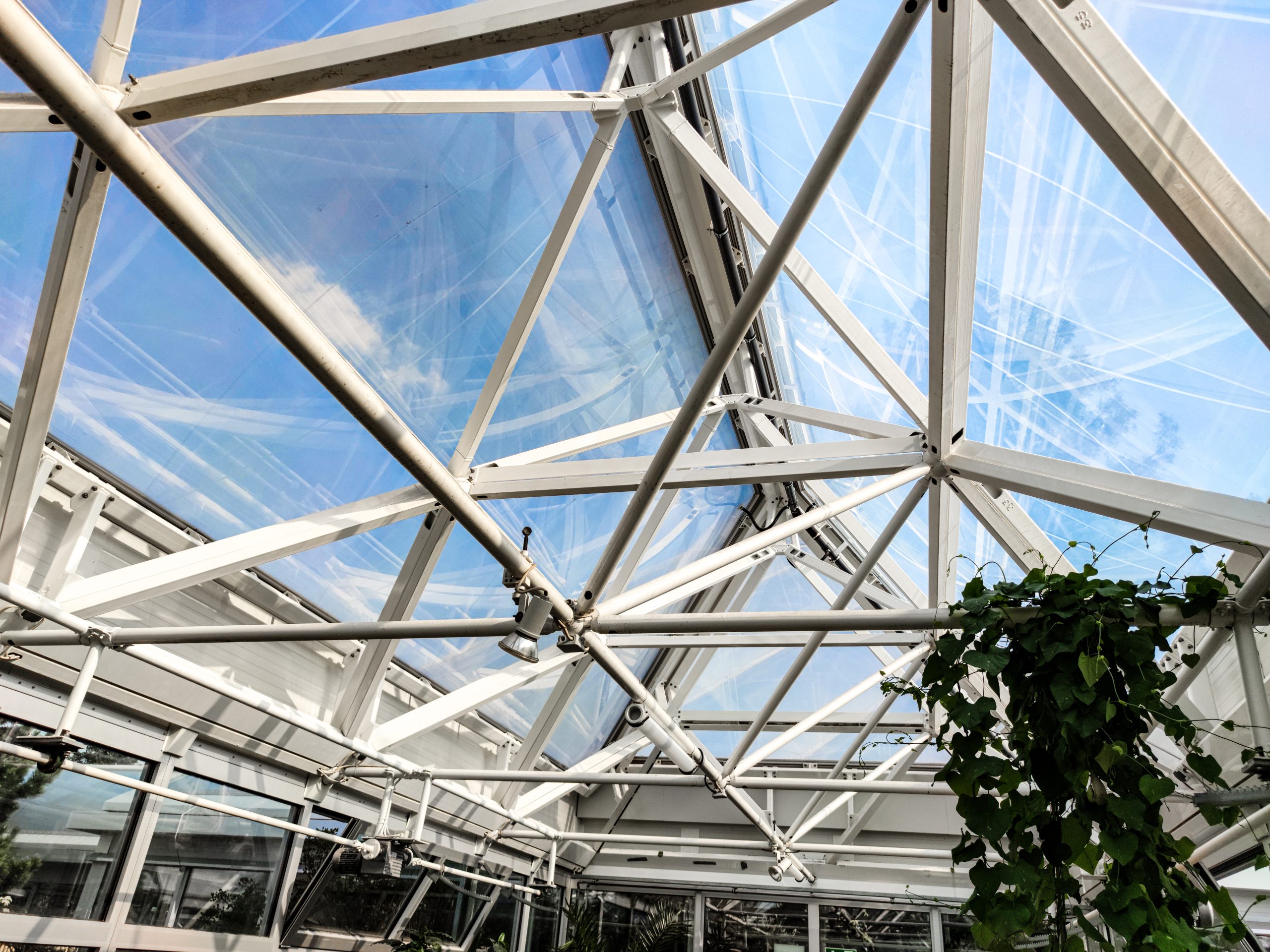
Kluczowym elementem projektu była wymiana istniejącej, wyeksploatowanej elewacji wykonanej z płyt plexi na nowoczesne poduszki ETFE. Zastosowanie tej technologii znacząco poprawiło parametry użytkowe obiektu. Poduszki ETFE charakteryzują się bardzo wysoką przepuszczalnością światła naturalnego, co ma bezpośredni wpływ na warunki wzrostu roślin oraz umożliwia uzyskanie stabilnego, tropikalnego mikroklimatu wewnątrz szklarni. Dzięki możliwości regulacji ciśnienia powietrza w komorach poduszek możliwe jest dostosowanie ich sztywności oraz parametrów izolacyjnych do aktualnych warunków atmosferycznych, co przekłada się na efektywność energetyczną całego obiektu. Dodatkowo system ten cechuje się niskim ciężarem własnym, wysoką trwałością oraz łatwością utrzymania. Podobne rozwiązania zostały z powodzeniem zastosowane m.in. w Allianz Arena, co potwierdza ich niezawodność i skalowalność.
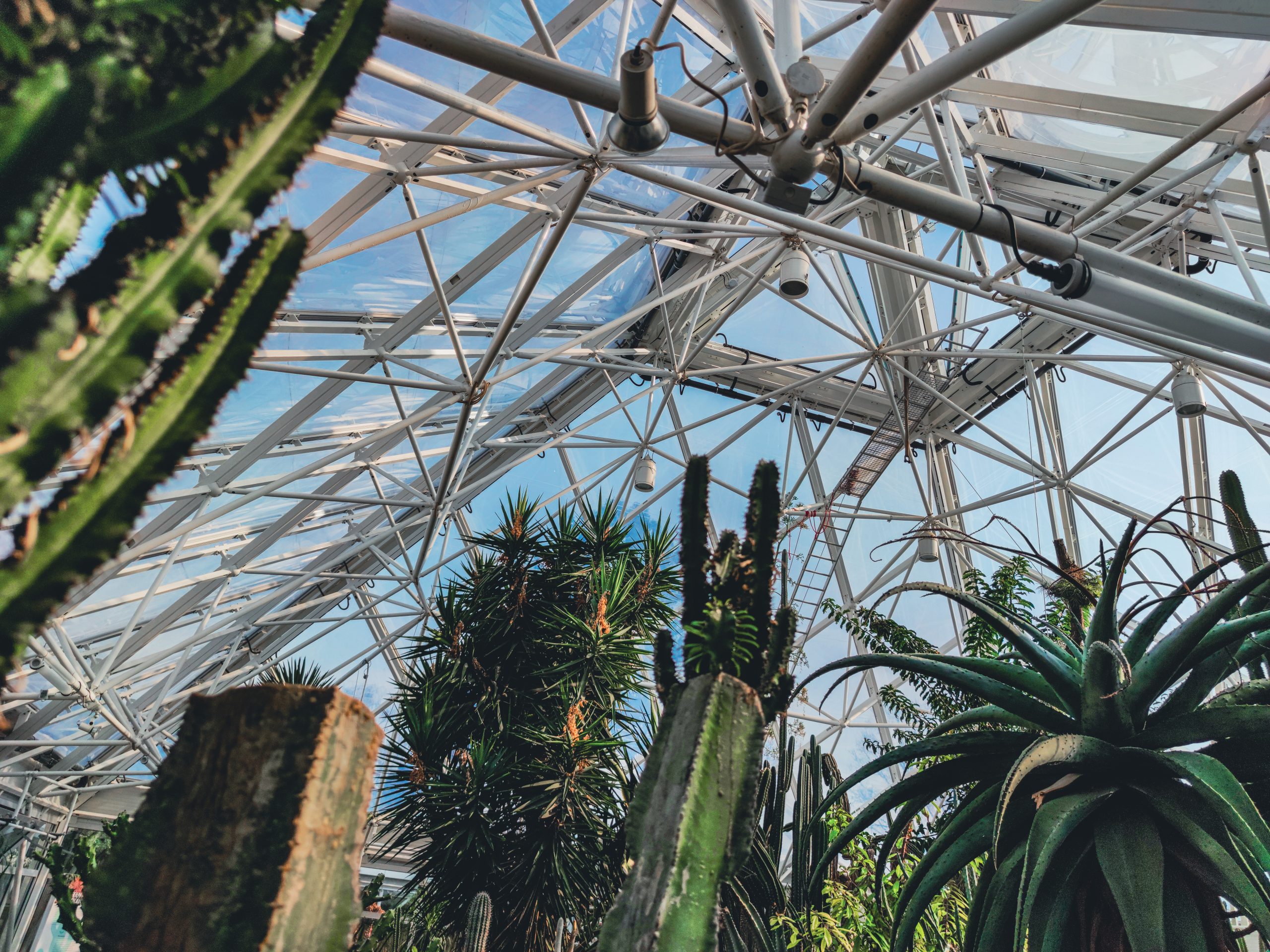
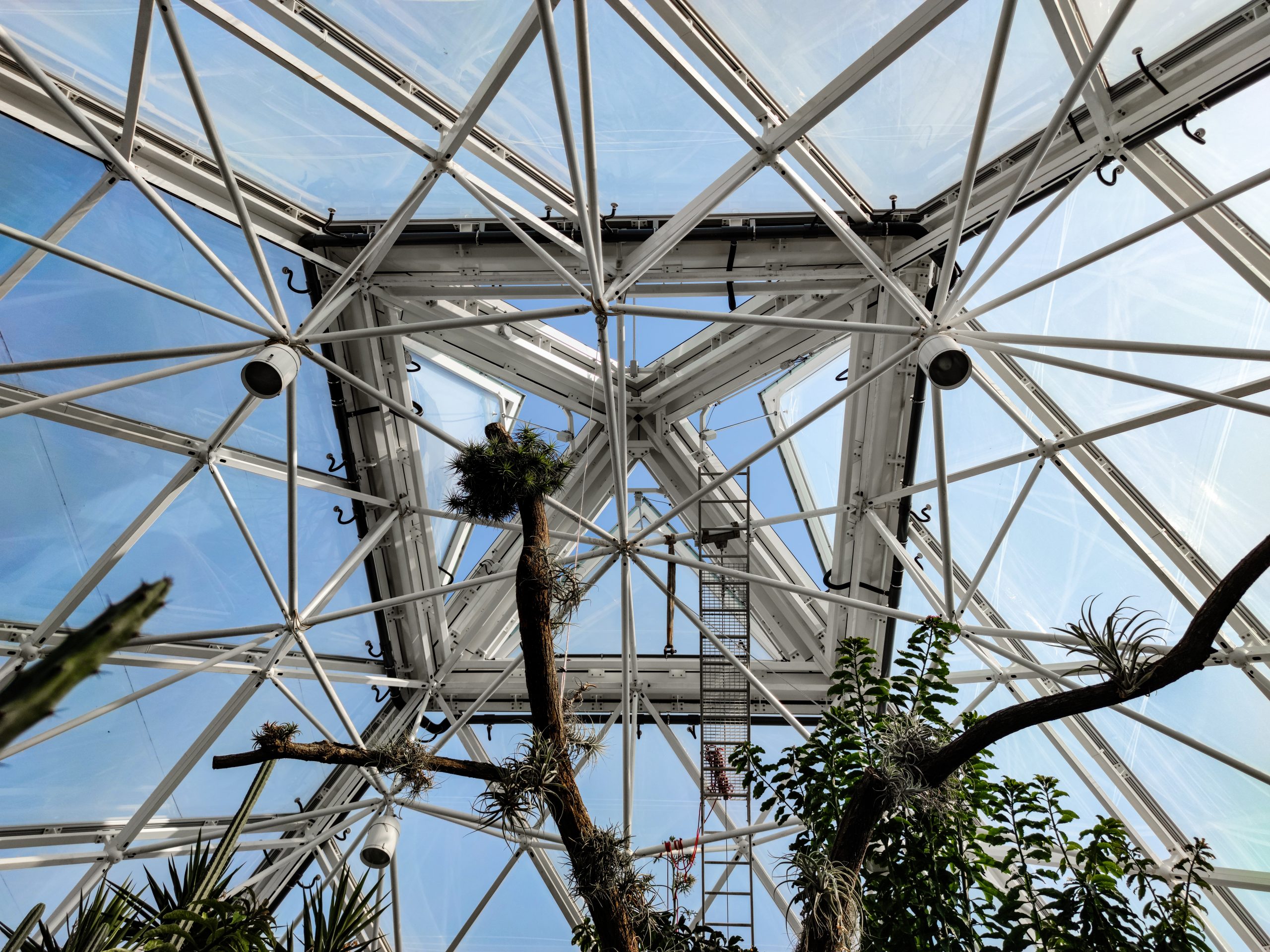
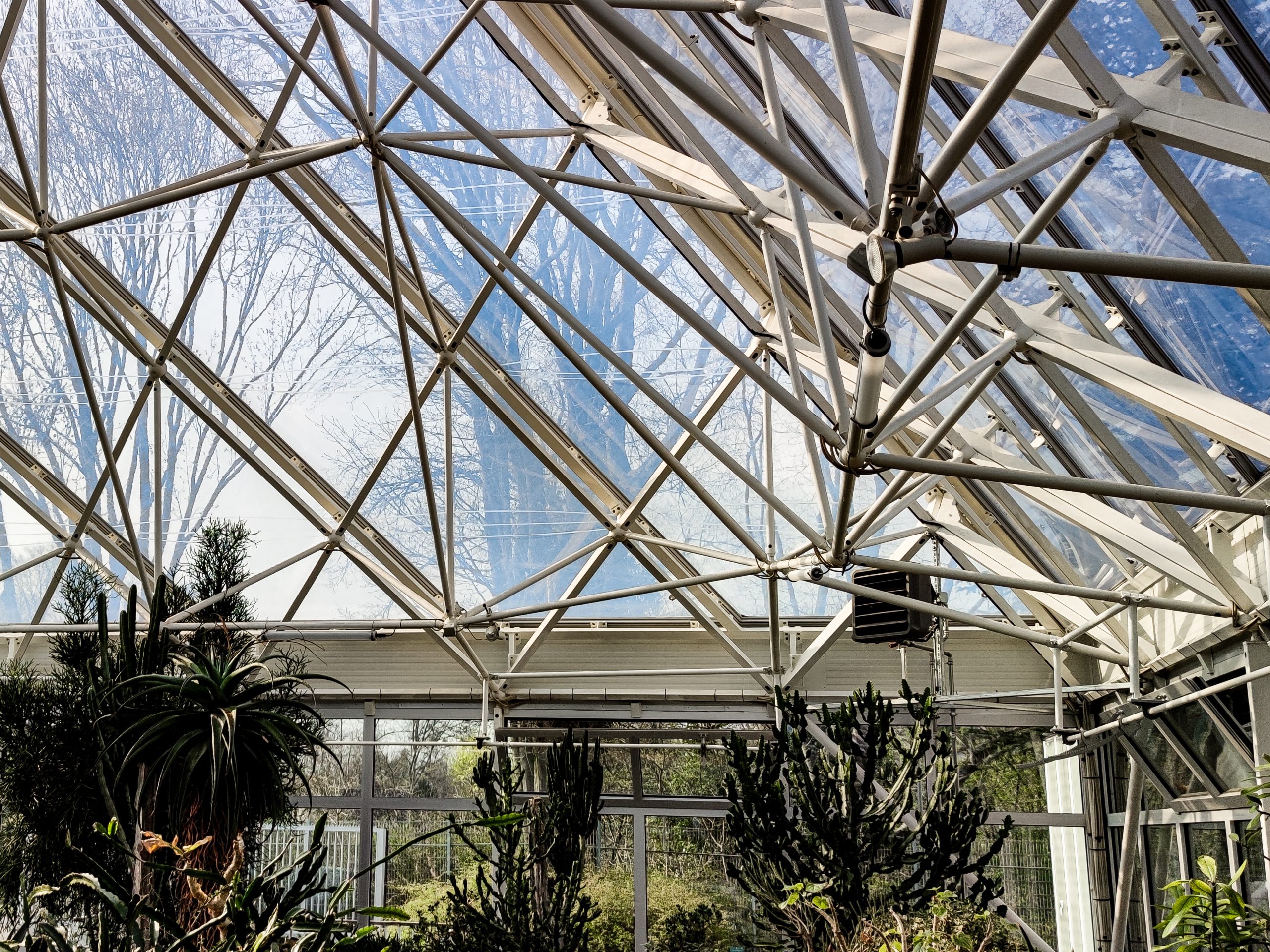
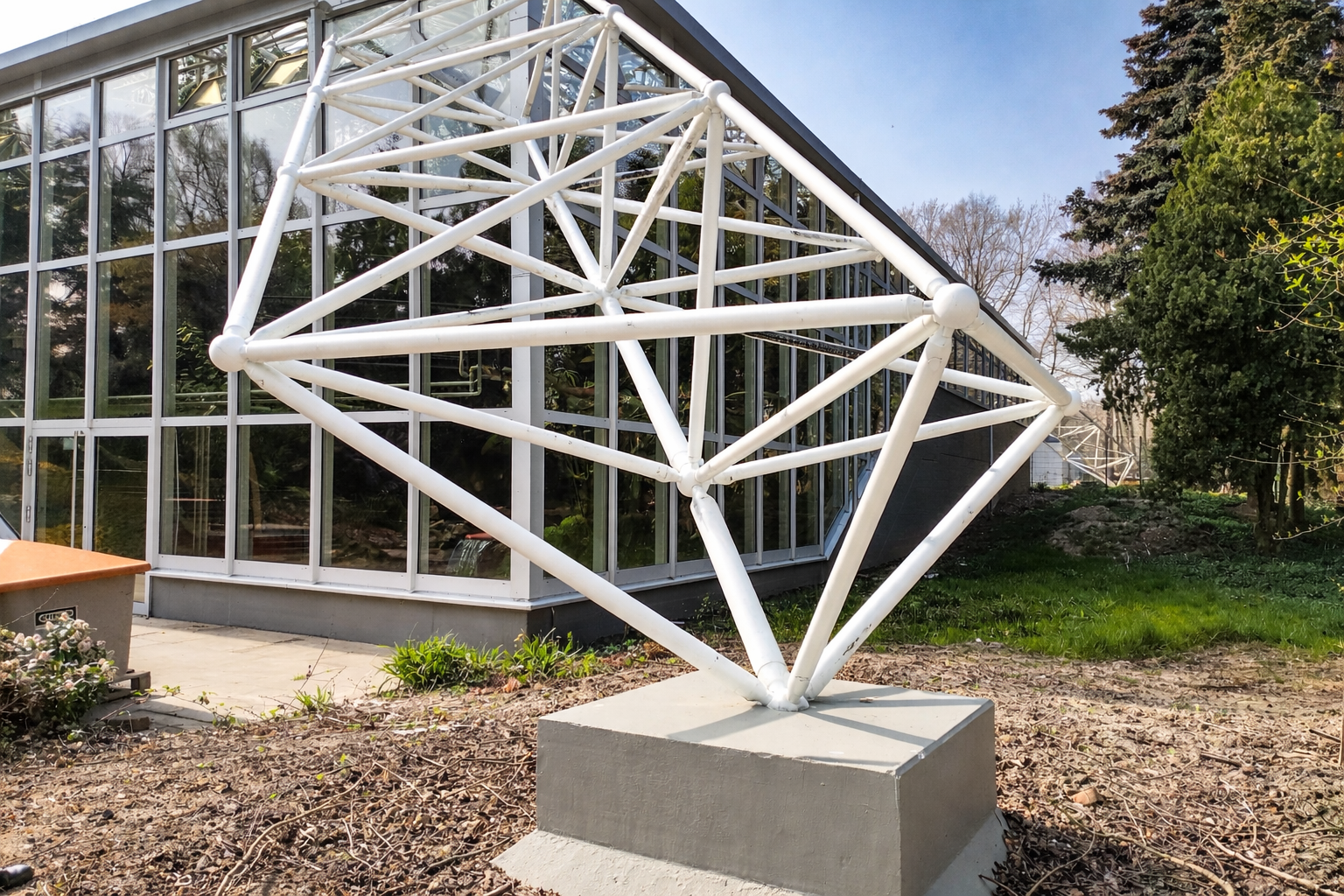
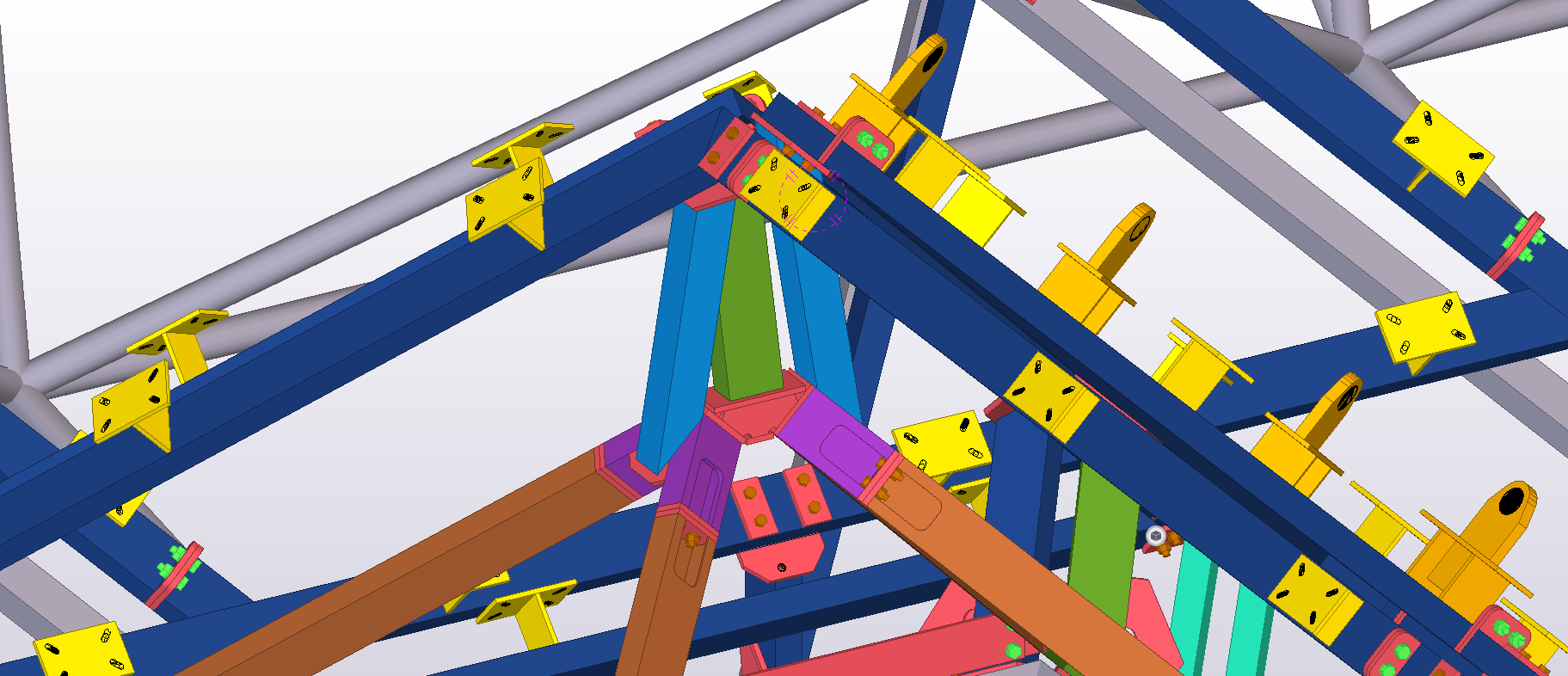
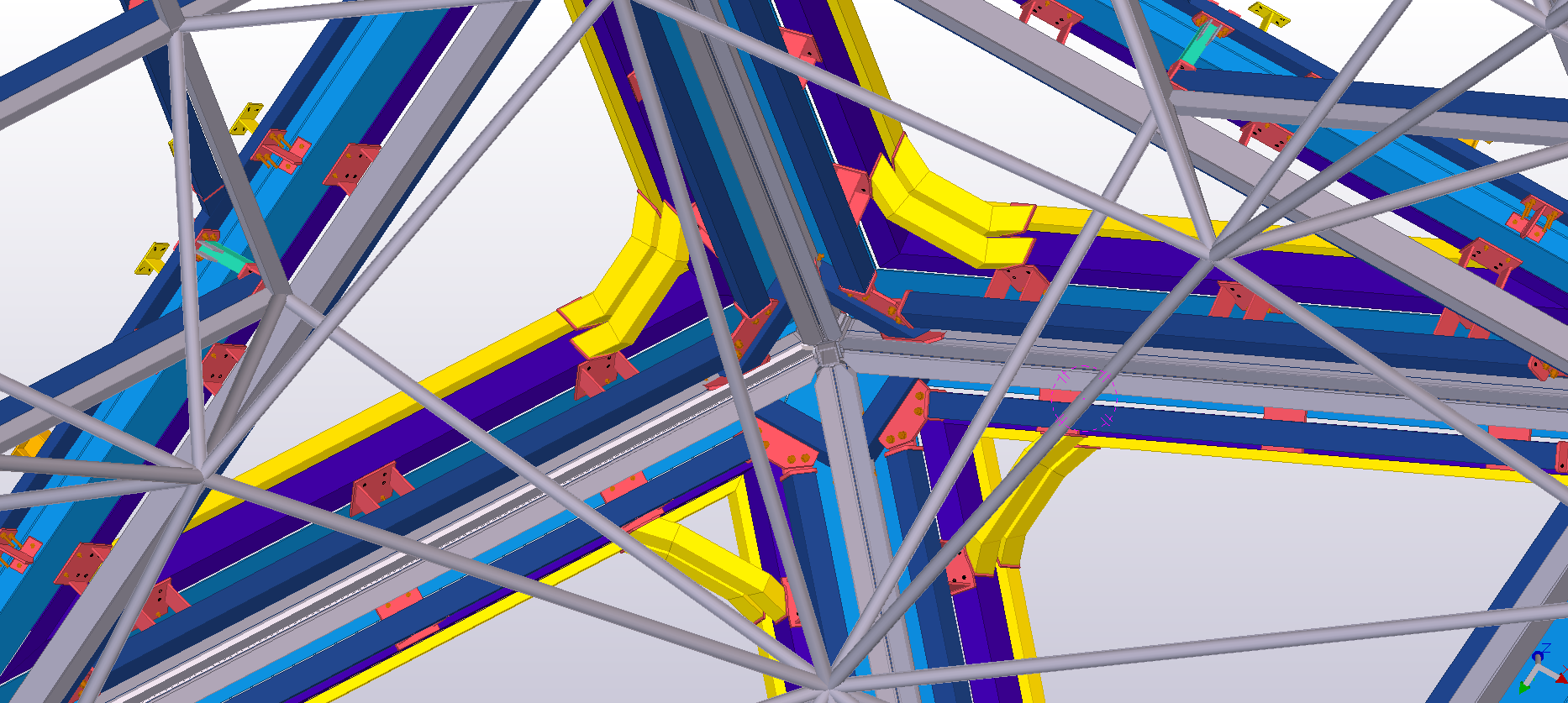
Nowa elewacja została oparta na zaprojektowanej konstrukcji stalowej, stanowiącej główny układ nośny dla systemu poduszek ETFE. Jednym z największych wyzwań projektowych była integracja nowej konstrukcji z istniejącą, wieloletnią strukturą piramid. Z uwagi na znaczne odkształcenia, zużycie materiałowe oraz lokalne ubytki w istniejących elementach, konieczne było precyzyjne odwzorowanie geometrii obiektów. W tym celu wykonano szczegółowy skan 3D, który posłużył do stworzenia chmury punktów stanowiącej podstawę procesu projektowego w środowisku Tekla Structures. Takie podejście umożliwiło eliminację potencjalnych kolizji, zapewniło wysoką dokładność dopasowania nowych elementów oraz znacząco ograniczyło ryzyko błędów wykonawczych.
Ze względu na stan techniczny istniejącej infrastruktury, projekt obejmował również kompleksowe wzmocnienia zarówno konstrukcji stalowej, jak i fundamentów. Prace te zostały poprzedzone szczegółowymi analizami statycznymi, które pozwoliły określić zakres niezbędnych interwencji oraz zapewnić bezpieczeństwo i trwałość całego układu konstrukcyjnego.
Zakres opracowania obejmował przygotowanie kompletnego projektu wykonawczego, w tym obliczeń statycznych dla nowej konstrukcji, projektów wzmocnień istniejących elementów oraz szczegółowej dokumentacji warsztatowej. Dzięki wykorzystaniu technologii BIM oraz precyzyjnych danych pomiarowych możliwe było osiągnięcie wysokiej jakości koordynacji międzybranżowej oraz optymalizacja procesu realizacji.
The renovation project of the tropical greenhouse roof at Grugapark represents a comprehensive approach to upgrading facilities of high architectural and functional value, utilizing advanced BIM tools and innovative material technologies. The investment included the complete refurbishment of the structures of three distinctive pyramids and adjacent buildings, forming a cohesive botanical garden greenhouse complex.
A key element of the project was the replacement of the existing, worn-out façade made of plexiglass panels with modern ETFE cushions. The application of this technology significantly improved the building’s performance. ETFE cushions are characterized by exceptionally high light transmission, which directly enhances plant growth conditions and enables the creation of a stable tropical microclimate inside the greenhouse. Moreover, the ability to regulate air pressure within the cushion chambers allows adjustment of their stiffness and thermal performance to current weather conditions, contributing to the overall energy efficiency of the facility. Additionally, the system offers low self-weight, high durability, and ease of maintenance. Similar solutions have been successfully implemented in projects such as Allianz Arena, confirming their reliability and scalability.
The new façade is supported by a purpose-designed steel structure, which serves as the primary load-bearing system for the ETFE cushions. One of the main design challenges was the integration of the new structure with the existing, decades-old pyramid framework. Due to significant deformations, material degradation, and local damage in the original elements, precise mapping of the existing geometry was required. To achieve this, a detailed 3D scan was carried out, resulting in a point cloud that formed the basis for the design process in Tekla Structures. This approach enabled the elimination of potential clashes, ensured a high level of accuracy in fitting new elements, and significantly reduced the risk of execution errors.
Given the technical condition of the existing infrastructure, the project also included comprehensive strengthening of both the steel structure and the foundations. These works were preceded by detailed structural analyses, which made it possible to define the necessary scope of interventions and ensure the safety and durability of the entire structural system.
The scope of work included the preparation of a complete detailed design, including structural calculations for the new elements, strengthening designs for the existing structure, and detailed fabrication documentation. Thanks to the use of BIM technology and precise survey data, a high level of interdisciplinary coordination was achieved, along with optimization of the overall construction process.
Komentuj


Construsoft jest autoryzowanym dystrybutorem oprogramowania Tekla Structures i oferuje swoim klientom szkolenia, wsparcie techniczne i inne usługi.
Aby uzyskać więcej informacji, odwiedź naszą stronę internetową:
construsoft.plTekla is a Trimble Company © Copyright 2026 Tekla