Gigadome
| Kategorie | Kleine Projekte |
|---|---|
| Jahr | 2026 |
| Land | Poland |
| Organisation | Emson Mateusz Sondej |
| Verfasser | Mateusz Sondej |
| Mitverfasser | Michał Gołębiewski |
| Auftraggeber | Polidomes |
| Ort des Bauwerkes | Budapeszt, Węgry |
| Tags | Parametric designTekla StructuresSteel |
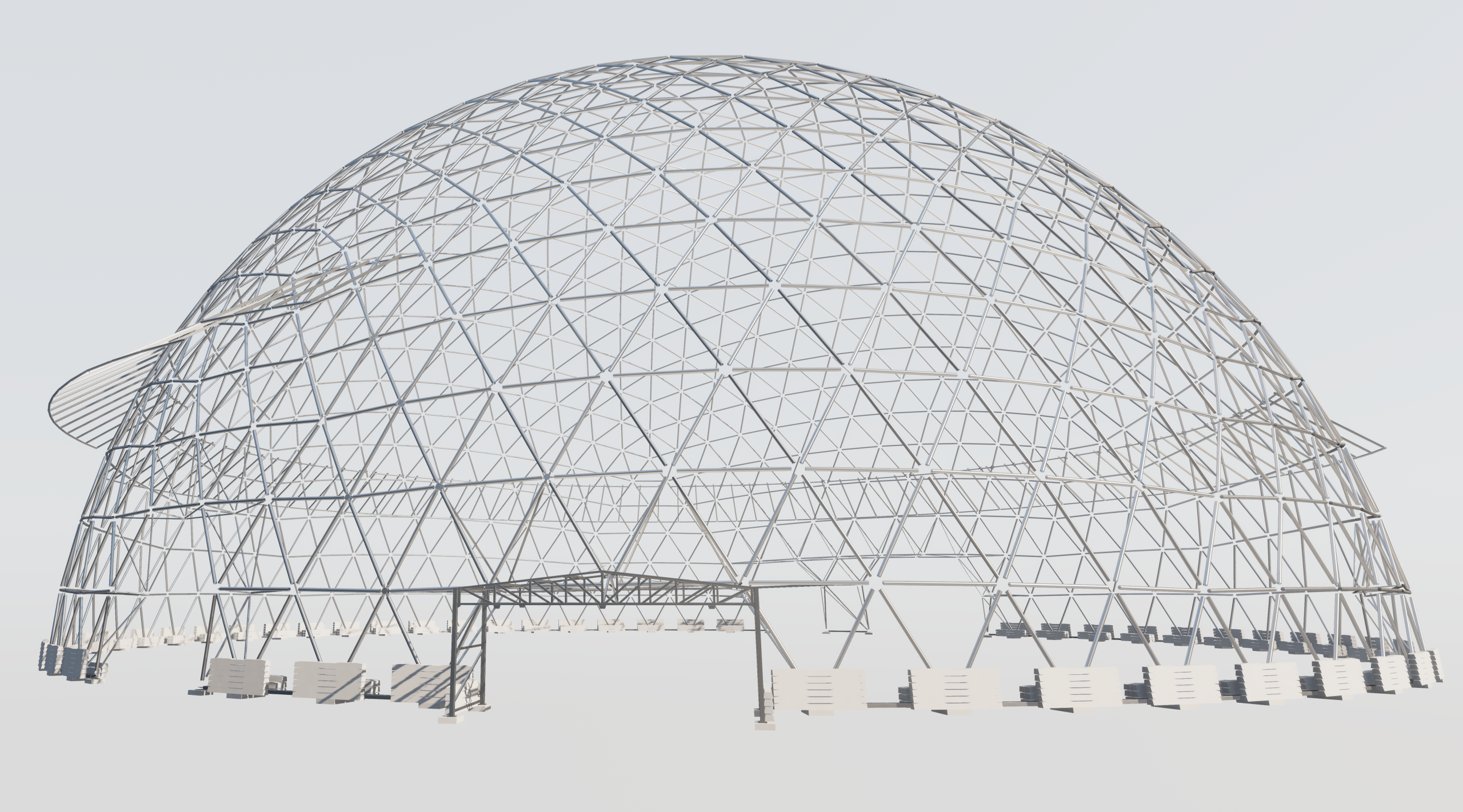
Kopuła geodezyjna „Gigadome” została zaprojektowana jako obiekt tymczasowy na potrzeby wydarzenia Planet Budapest 2026 – europejskiej wystawy poświęconej zrównoważonemu rozwojowi. Inwestycję zrealizowano w wymagającym, postindustrialnym otoczeniu, na terenie dawnej infrastruktury kolejowej w Budapeszcie.
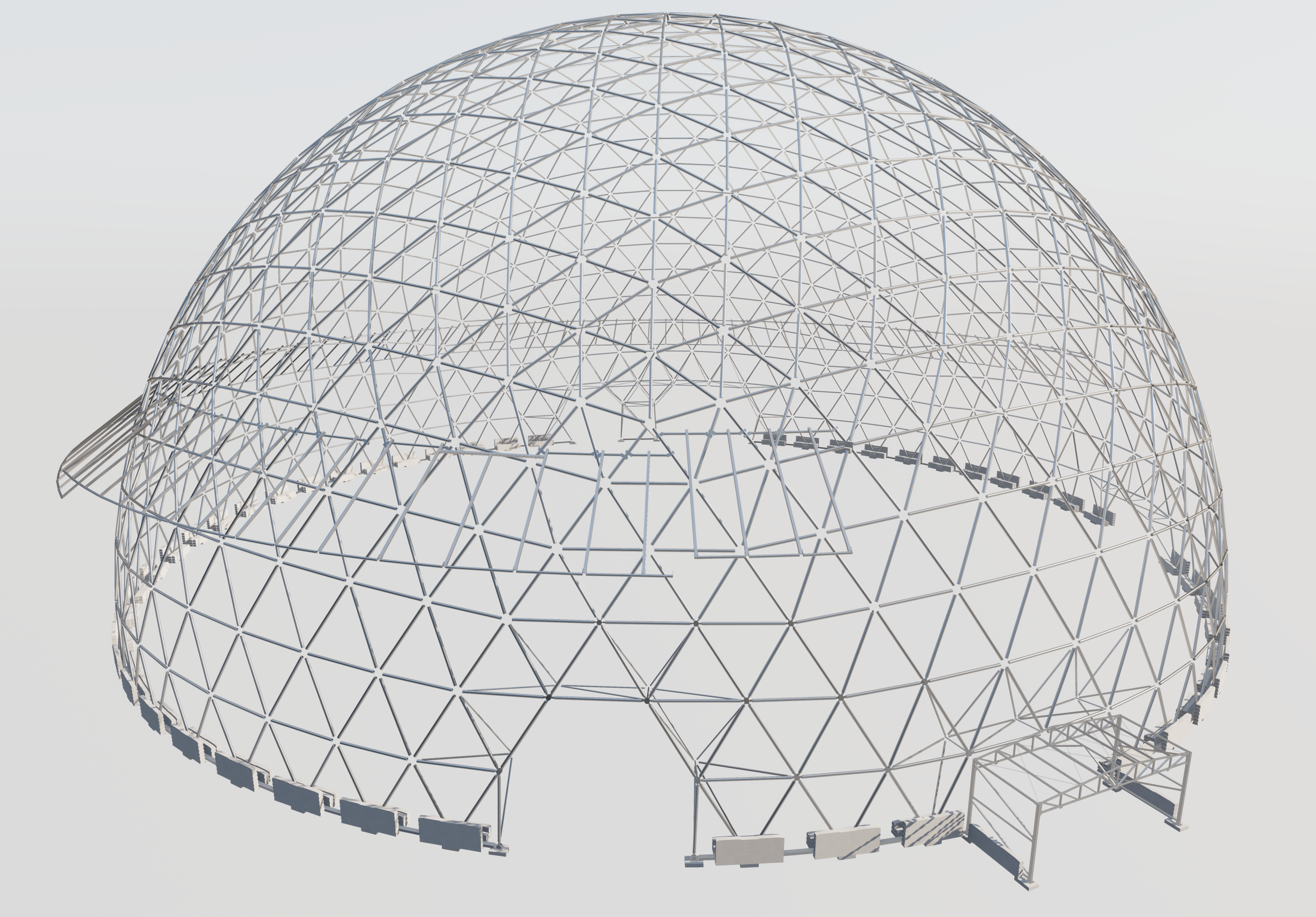
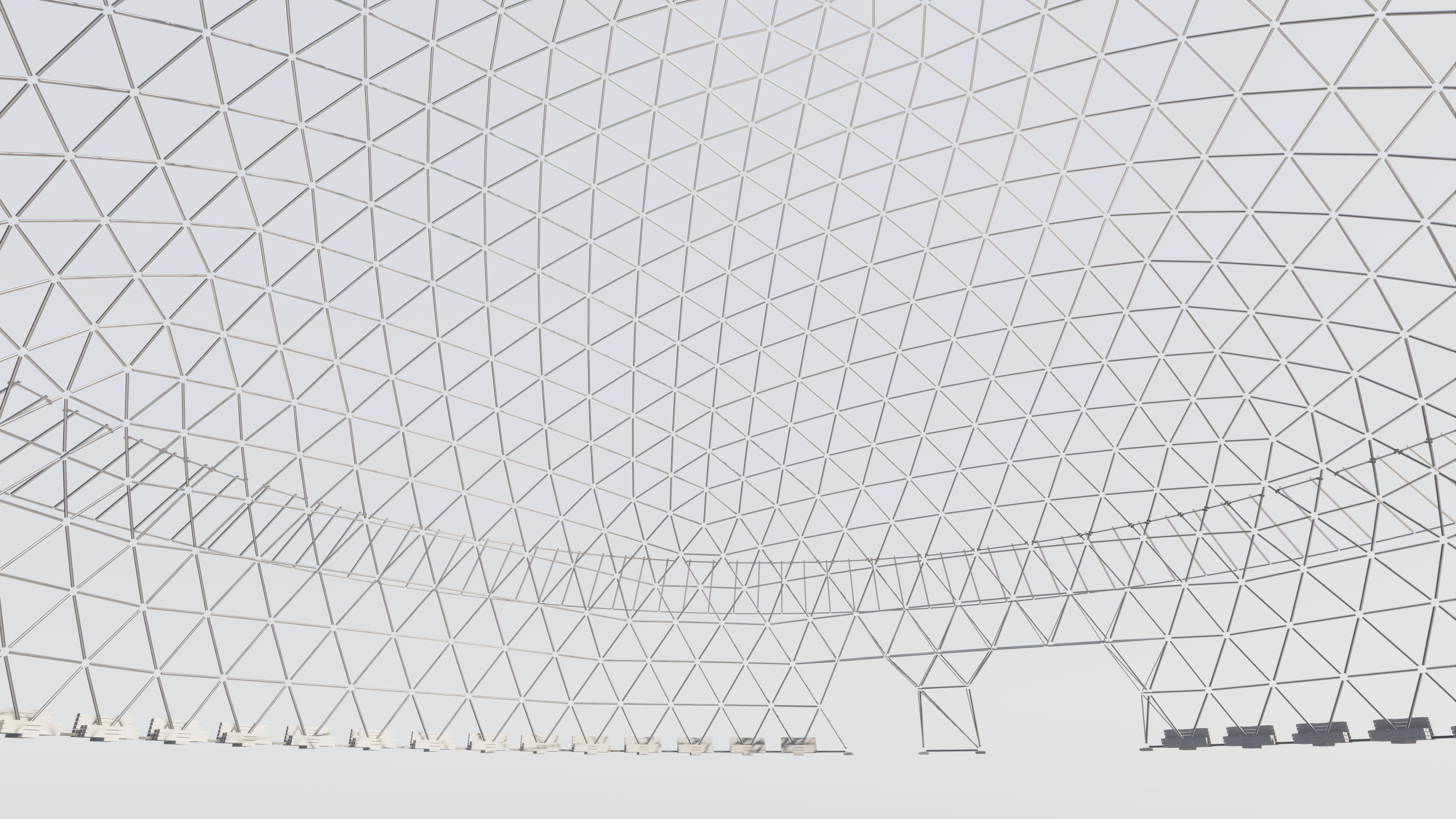
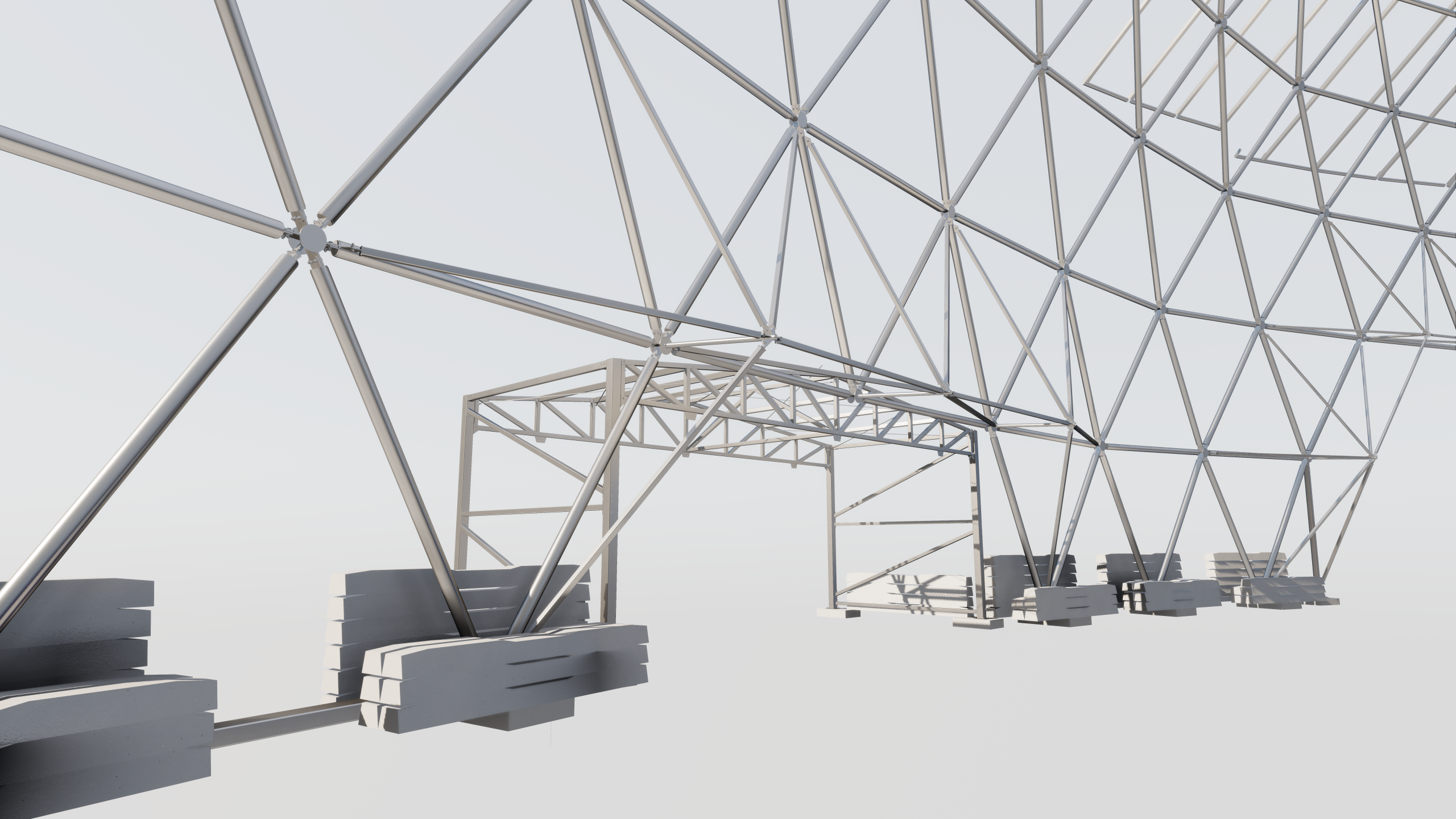
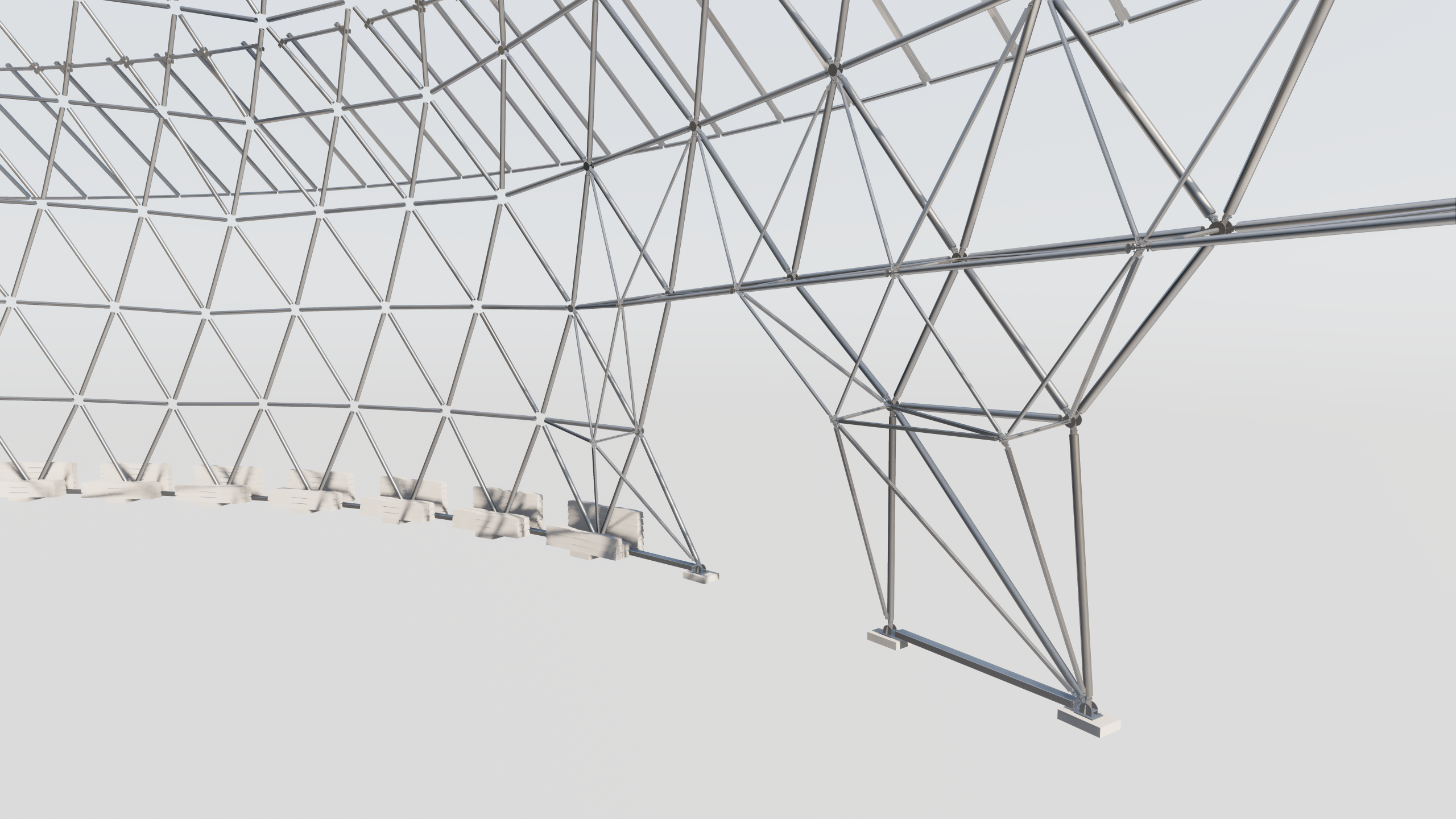
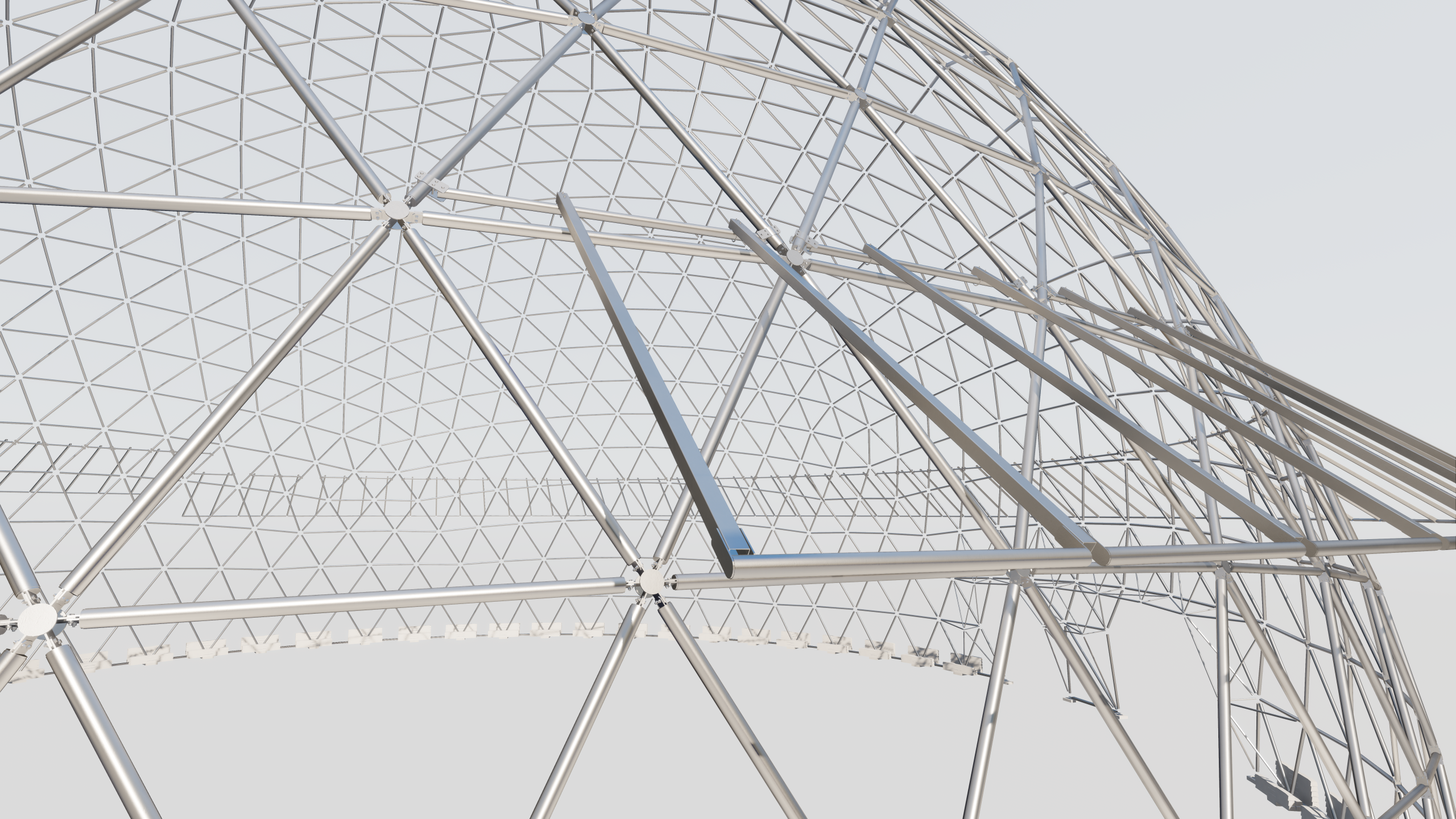
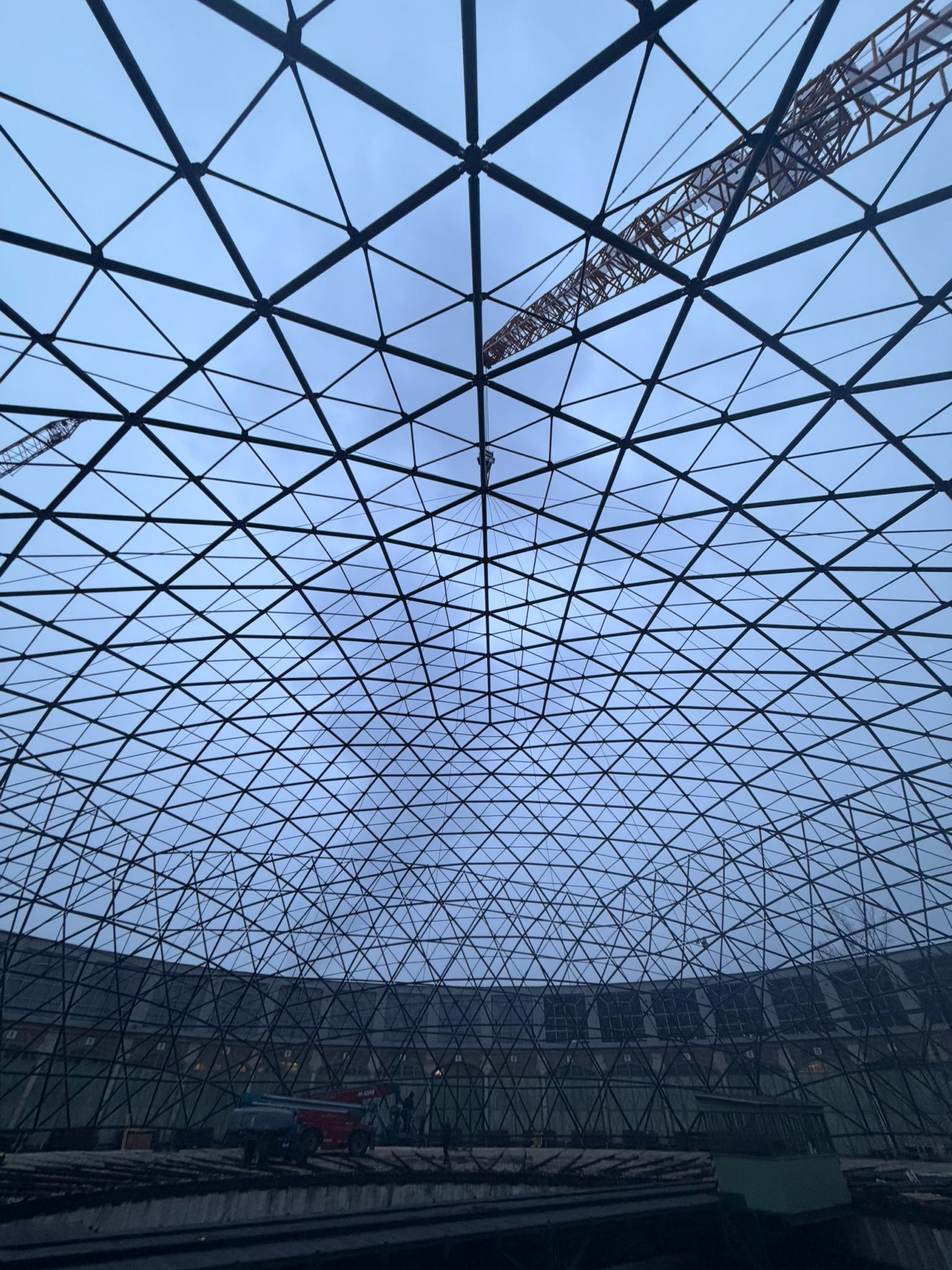
Obiekt zaprojektowano w formie półkuli o rozpiętości 72 m i powierzchni przekraczającej 4 000 m², co czyni go obecnie największą tego typu konstrukcją w Europie. Konstrukcja kopuły składa się z około 2000 prętów oraz blisko 1000 przestrzennych węzłów.
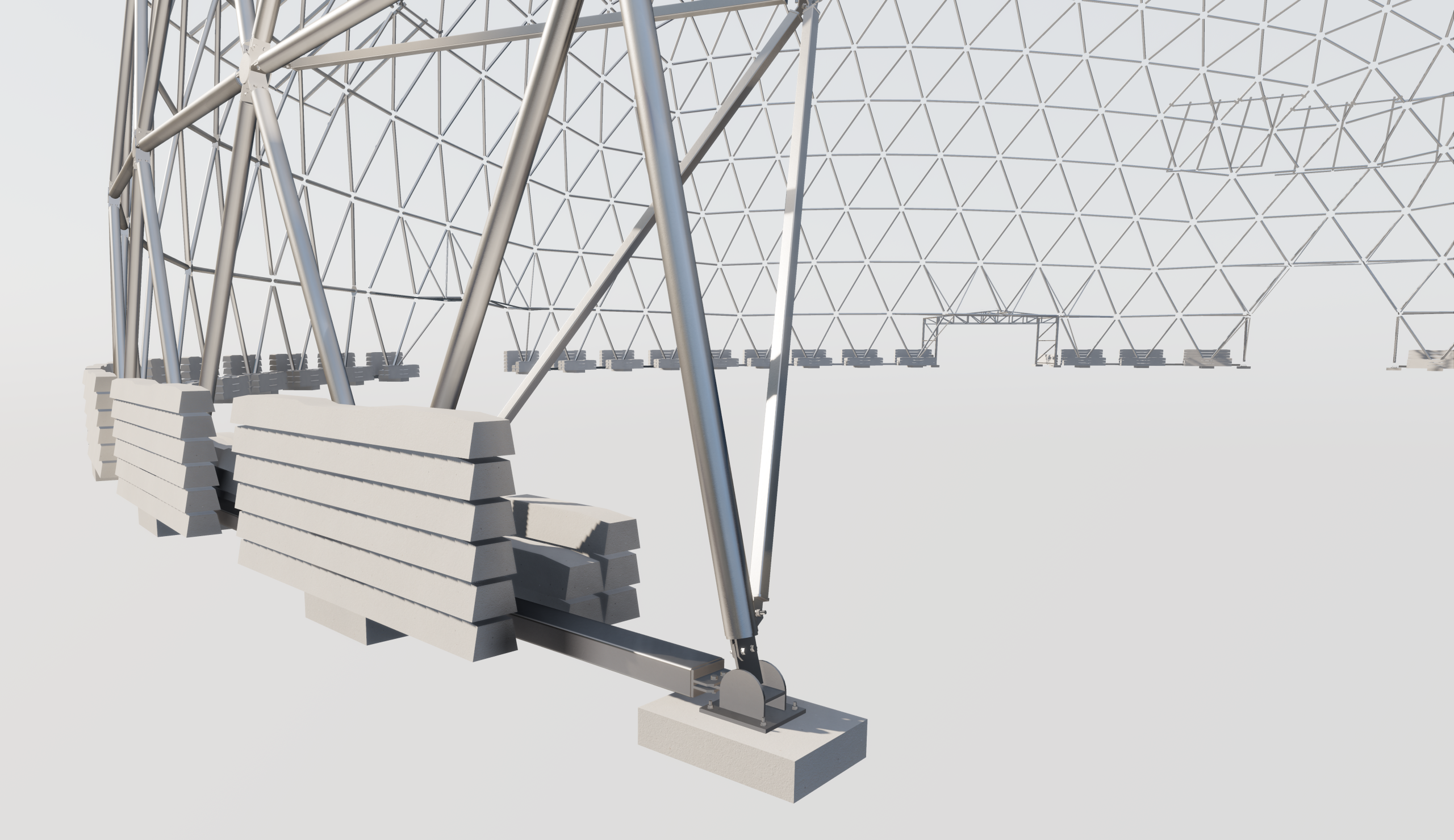
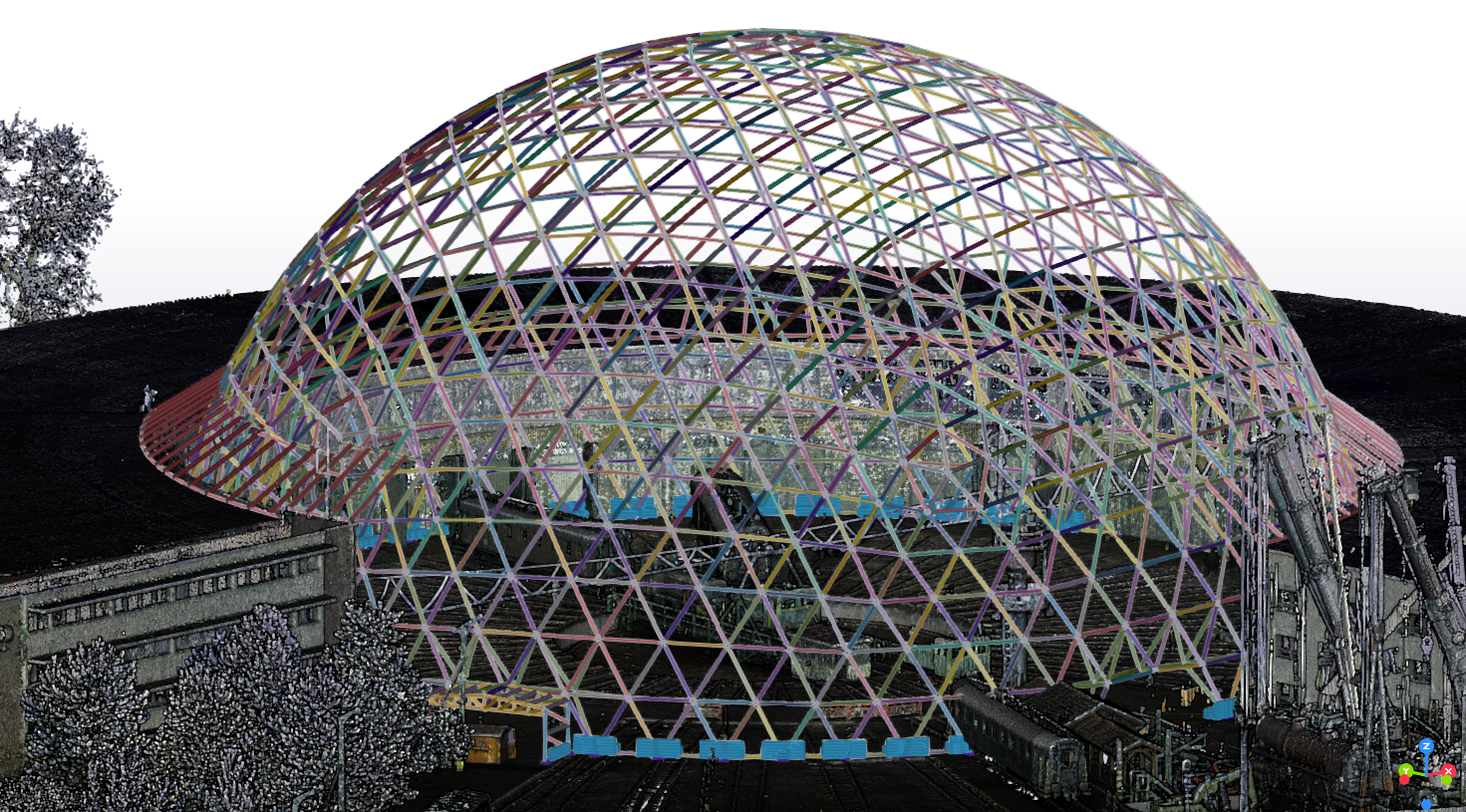
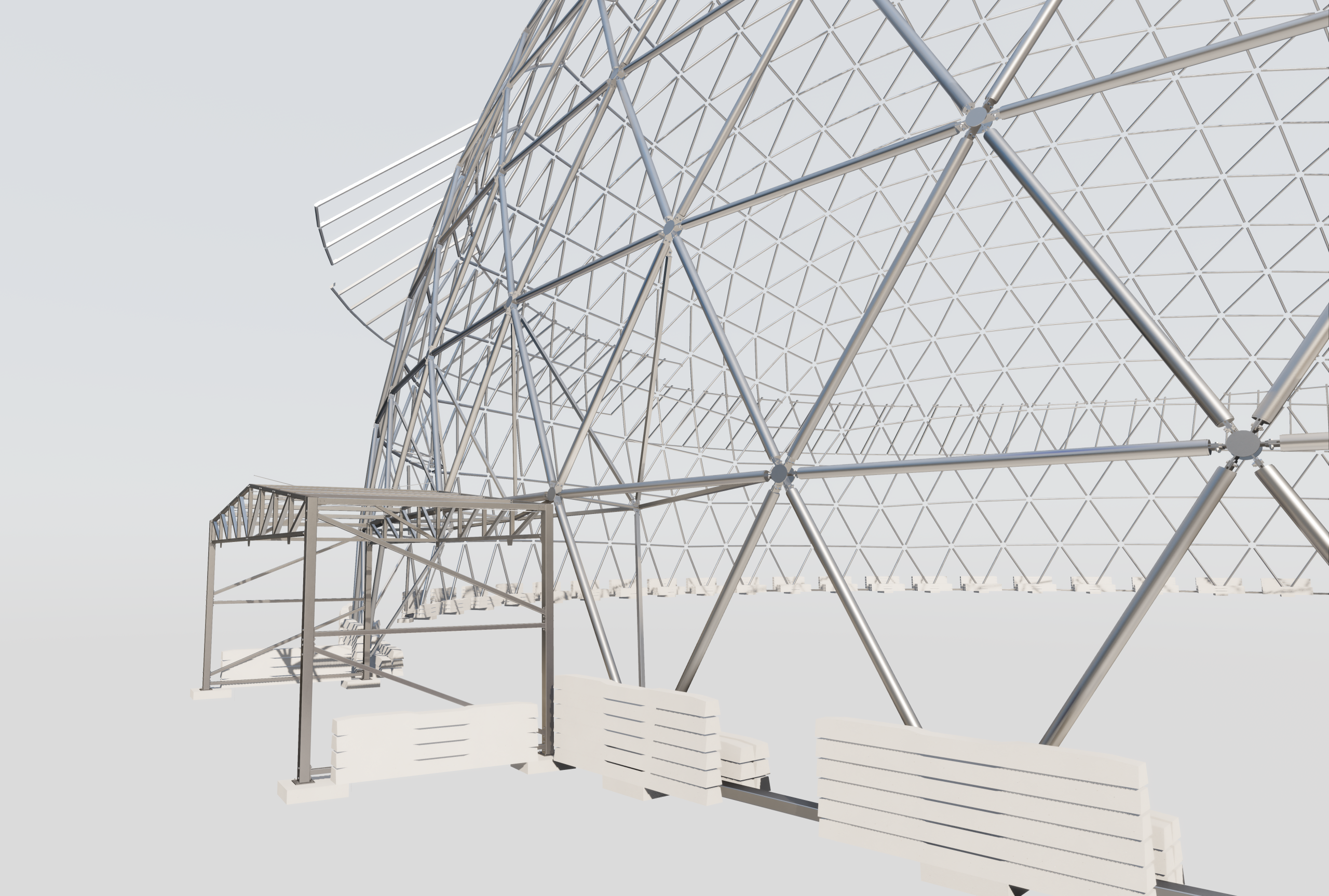
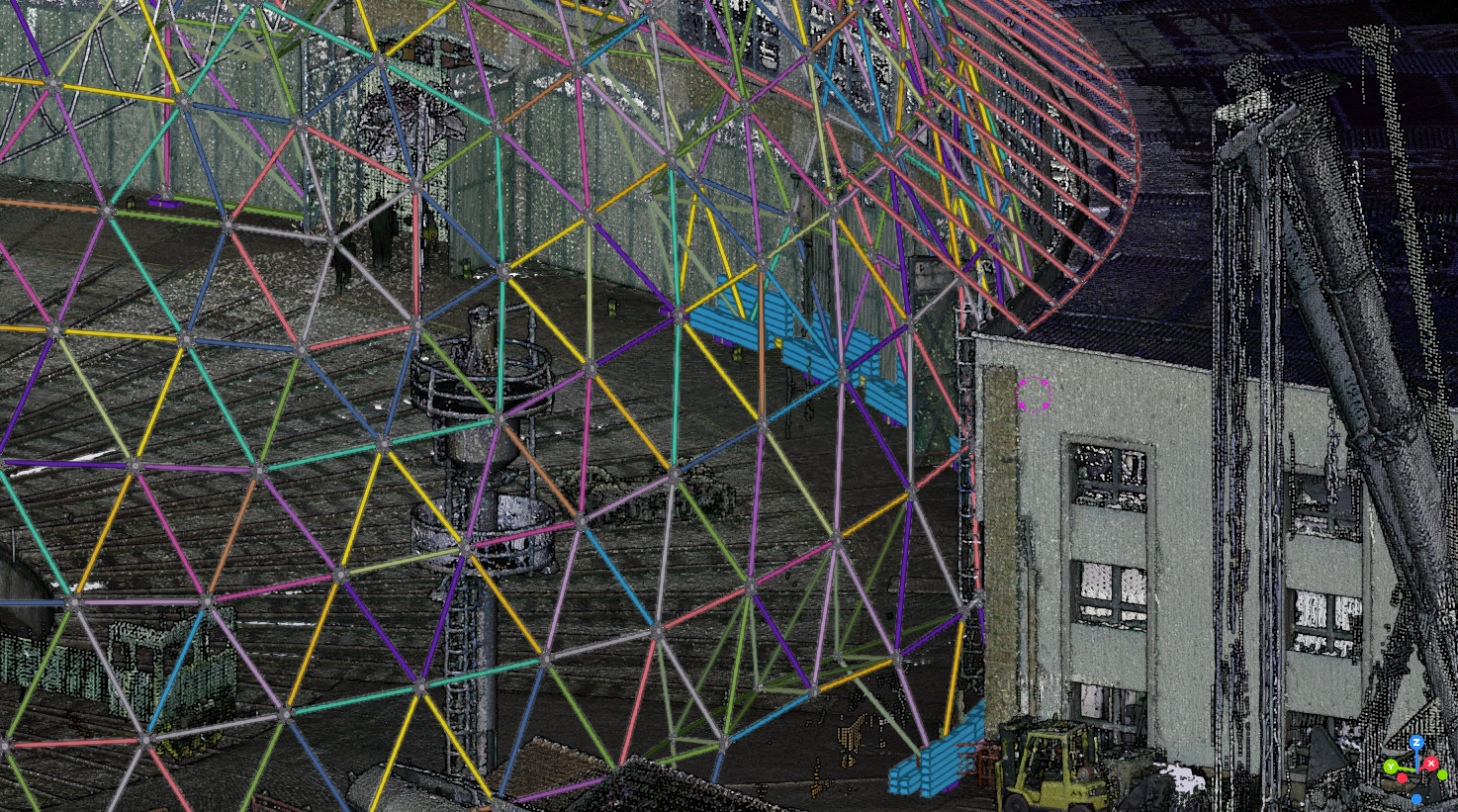
Konstrukcję posadowiono na prefabrykowanych fundamentach, na których umieszczono balast w postaci betonowych podkładów kolejowych. Adaptację obiektu do istniejącej zabudowy oraz ukształtowania terenu przeprowadzono w oparciu o dane ze skaningu 3D (chmurę punktów).
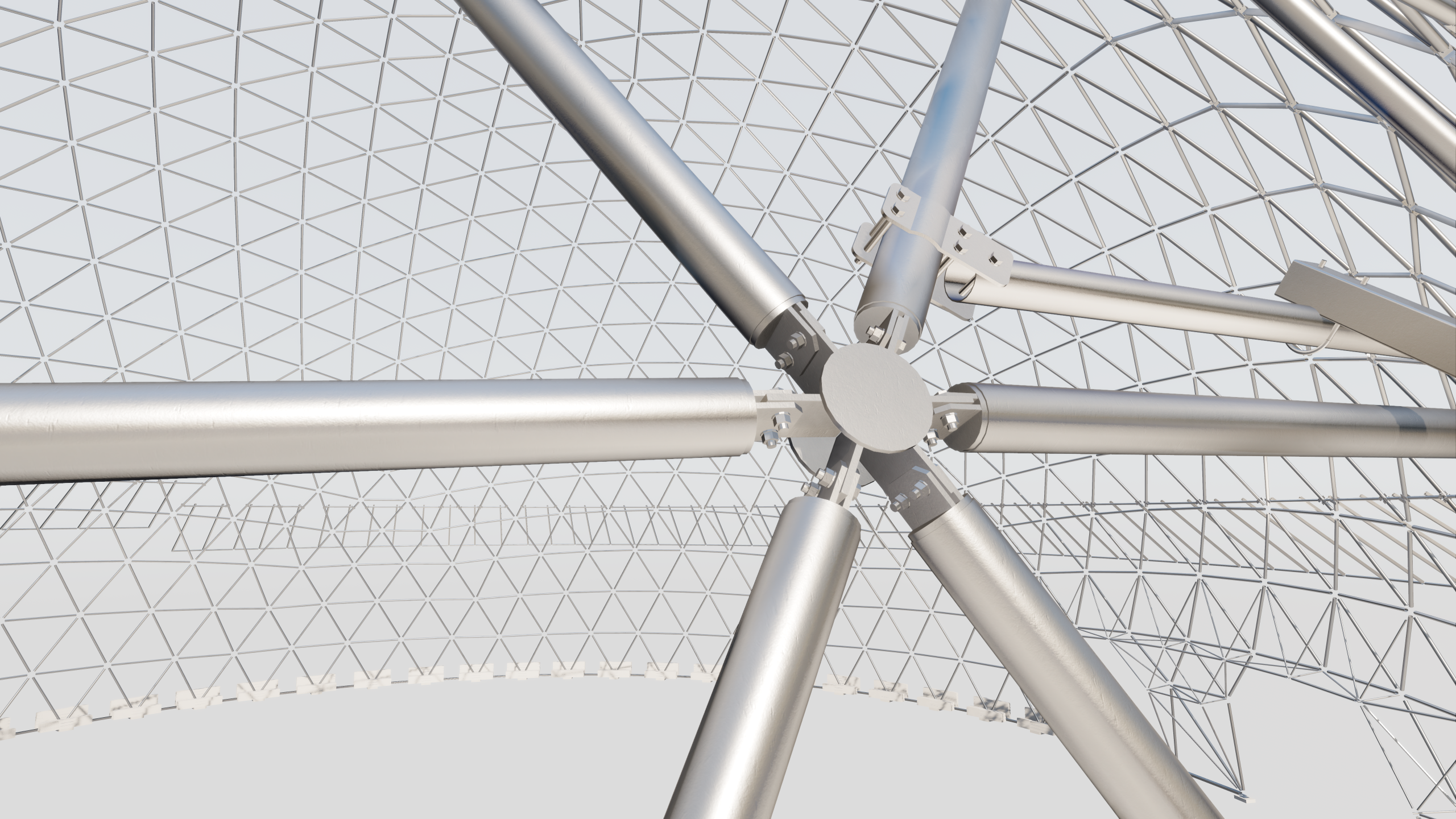
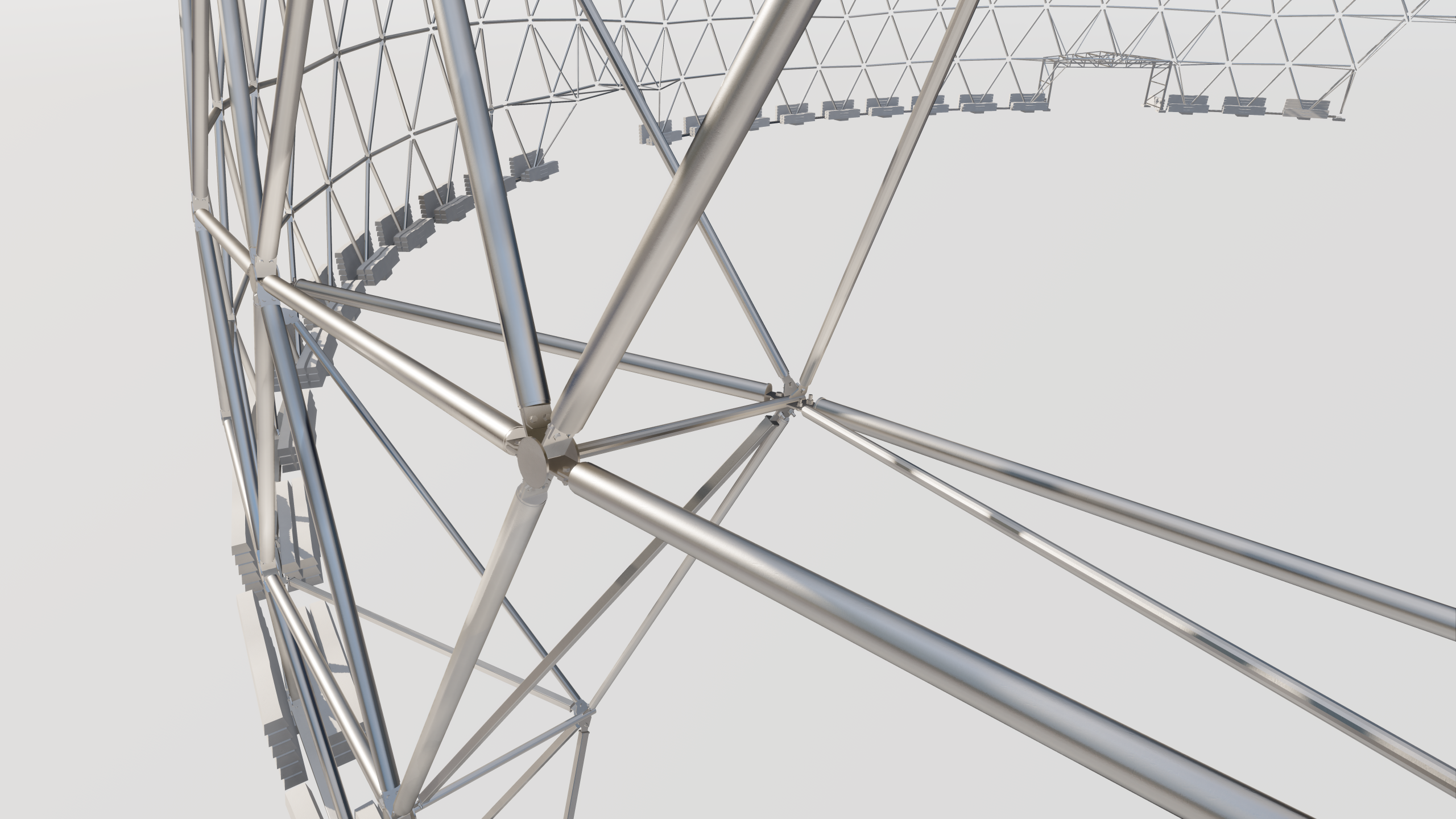
Podstawową geometrię siatki geodezyjnej opracowano z wykorzystaniem oprogramowania Rhino 3D oraz Grasshopper. Węzły główne zaprojektowano przy użyciu narzędzia Tekla AutoConnection, które zostało odpowiednio sparametryzowane. Analizy statyczno-wytrzymałościowe wykonano w oprogramowaniu AxisVM.
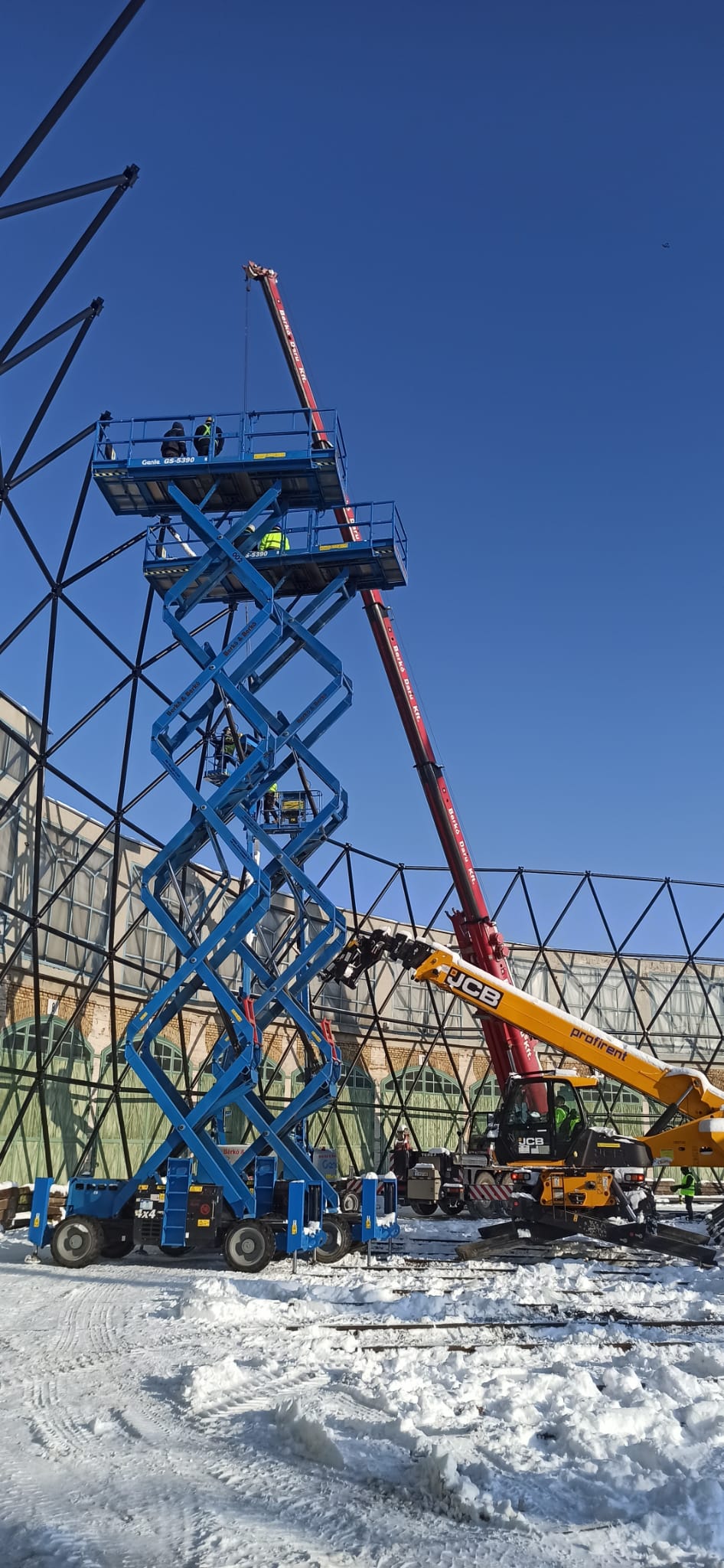
Istotnym wyzwaniem była również realizacja montażu konstrukcji. W procesie tym wykorzystano największy dostępny na Węgrzech dźwig. Montaż prowadzono równolegle z dwóch kierunków tj. od podstawy oraz od części szczytowej. Końcowym etapem było połączenie obu sekcji konstrukcji.
The “Gigadome” geodesic dome was developed as a temporary, large-span spatial structure for Planet Budapest 2026. The structure was realized within a constrained, post-industrial site located on former railway infrastructure in Budapest, imposing significant geometric and logistical boundary conditions.
The dome was designed as a hemispherical grid structure with a span of 72 m and a total surface area exceeding 4,000 m², currently representing the largest geodesic dome of this type constructed in Europe. The primary load-bearing system consists of approximately 2,000 linear members interconnected through nearly 1,000 spatial nodes, forming a triangulated network ensuring global stiffness and efficient load redistribution.
The structural system is supported on prefabricated foundation units, stabilized by ballast in the form of concrete railway sleepers. Due to irregular terrain conditions and the presence of existing infrastructure, the geometric integration of the structure was based on high-resolution 3D laser scanning data (point cloud), enabling precise positioning and minimization of geometric deviations during installation.
The geodesic grid geometry was generated using parametric modeling tools, specifically Rhino 3D in conjunction with Grasshopper, allowing for algorithmic control of node distribution and member optimization. Connection detailing, including the definition of primary node typologies, was developed using Tekla AutoConnection with customized parametric configurations to accommodate variable member orientations and force transfer mechanisms. Global structural analysis and verification were performed using AxisVM.
The erection methodology constituted a critical aspect of the project. Due to the scale and geometry of the structure, assembly was executed using the largest available crane in Hungary. A dual-directional erection strategy was adopted, with concurrent assembly progressing from the base ring and the crown. The final construction phase involved the closure of the structural system through the alignment and connection of two independently assembled segments, requiring high geometric precision and controlled load transfer during the final joining operation.


Hinterlasse ein Kommentar


Construsoft is an authorized Tekla Structures vendor and provides training, technical support, and other services to its customers.
For more information, please visit our website:
construsoft.comTekla is a Trimble Company © Copyright 2026 Tekla