Tuikabelbrug Lanklaar
| Category | Infrastructure Projects |
|---|---|
| Year | 2026 |
| Country | Benelux |
| Organization | Kreantis |
| Project partners | Willemen INFRA |
| Author | Kreantis |
| Client | Willemen INFRA |
| Place of construction | 2650 Lanklaar (Dilsen-Stokkem) |
| Tags | Parametric designPrefabPointcloudsConcreteTekla StructuresTrimble Connect |
Projectomschrijving
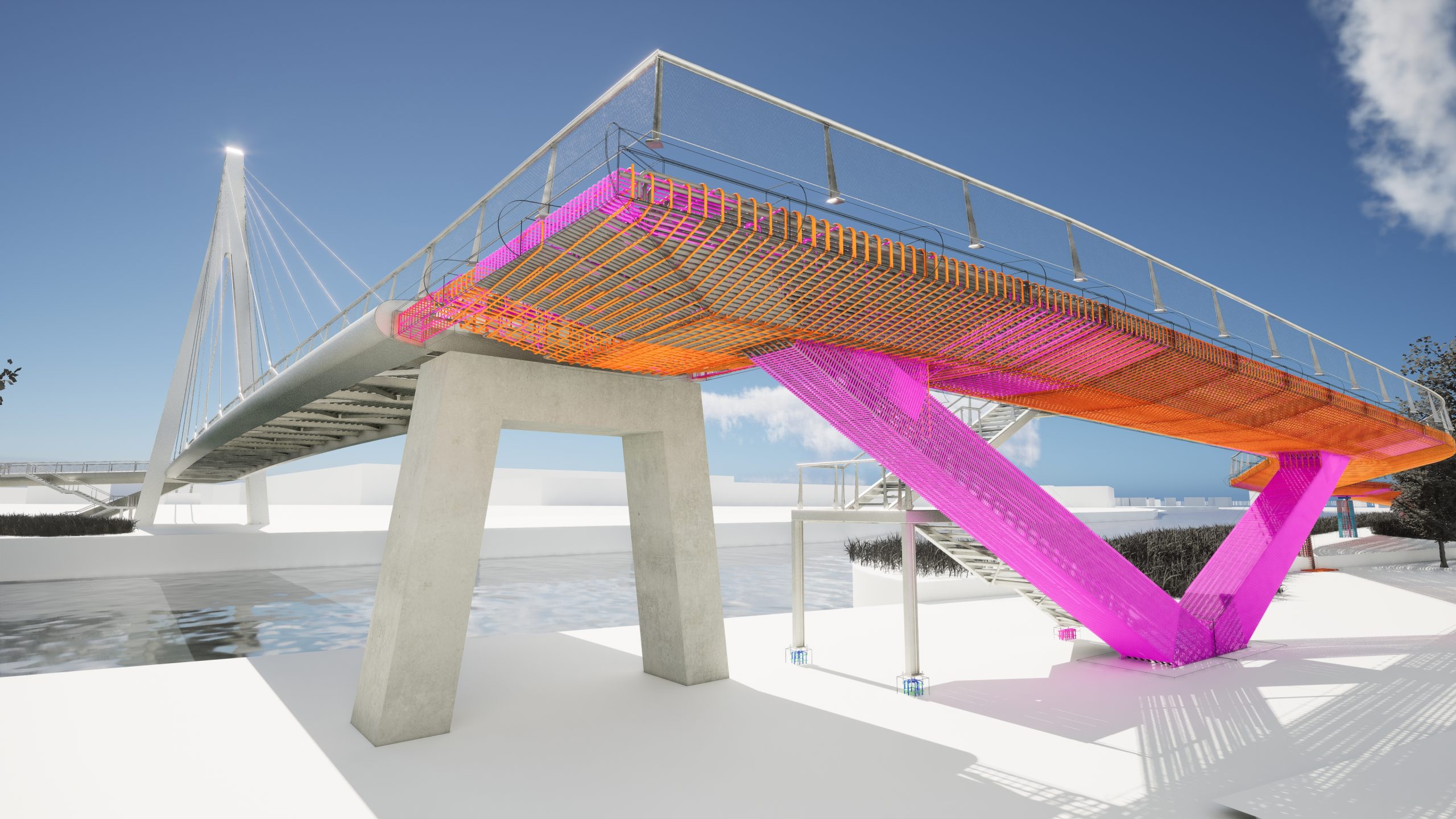
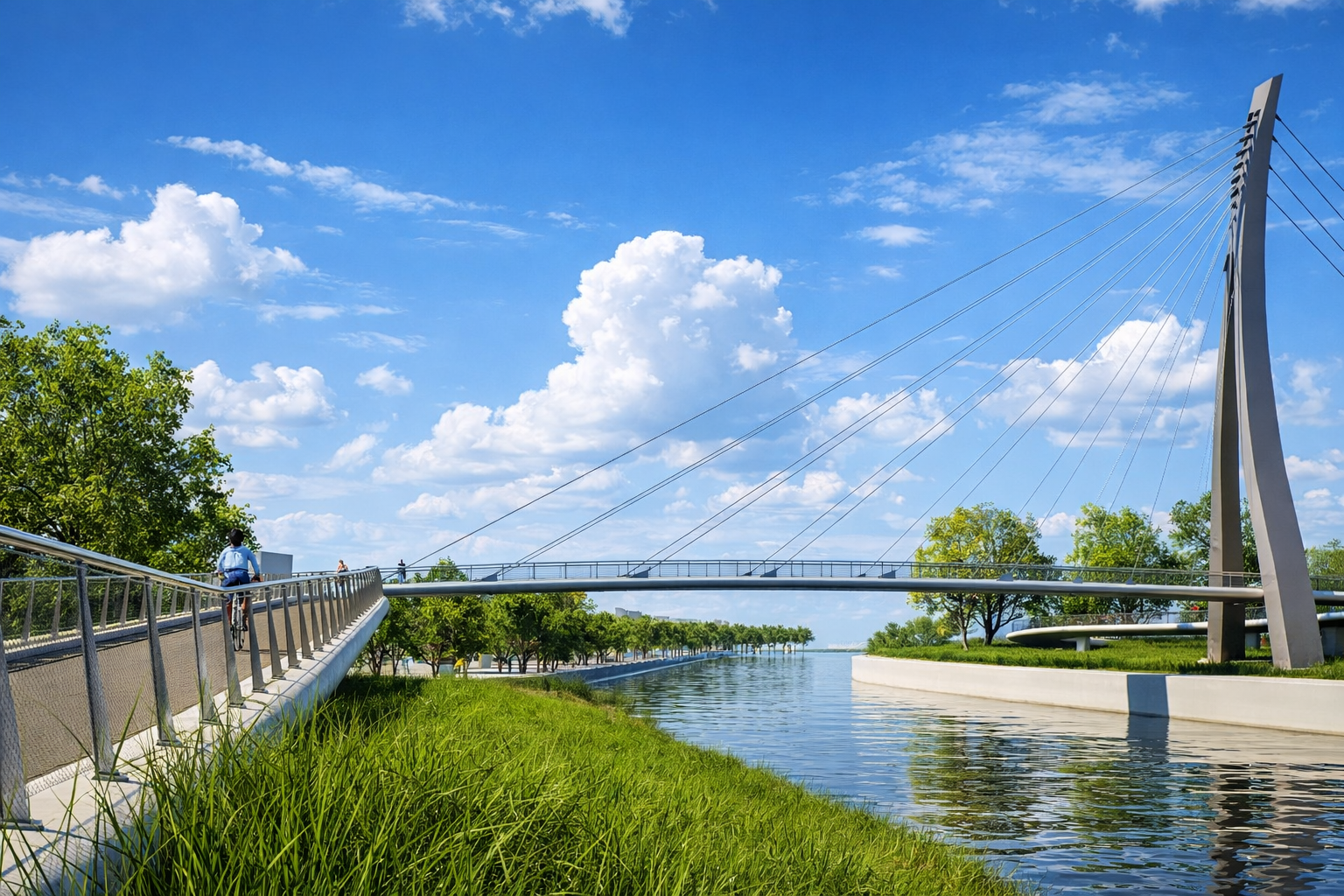
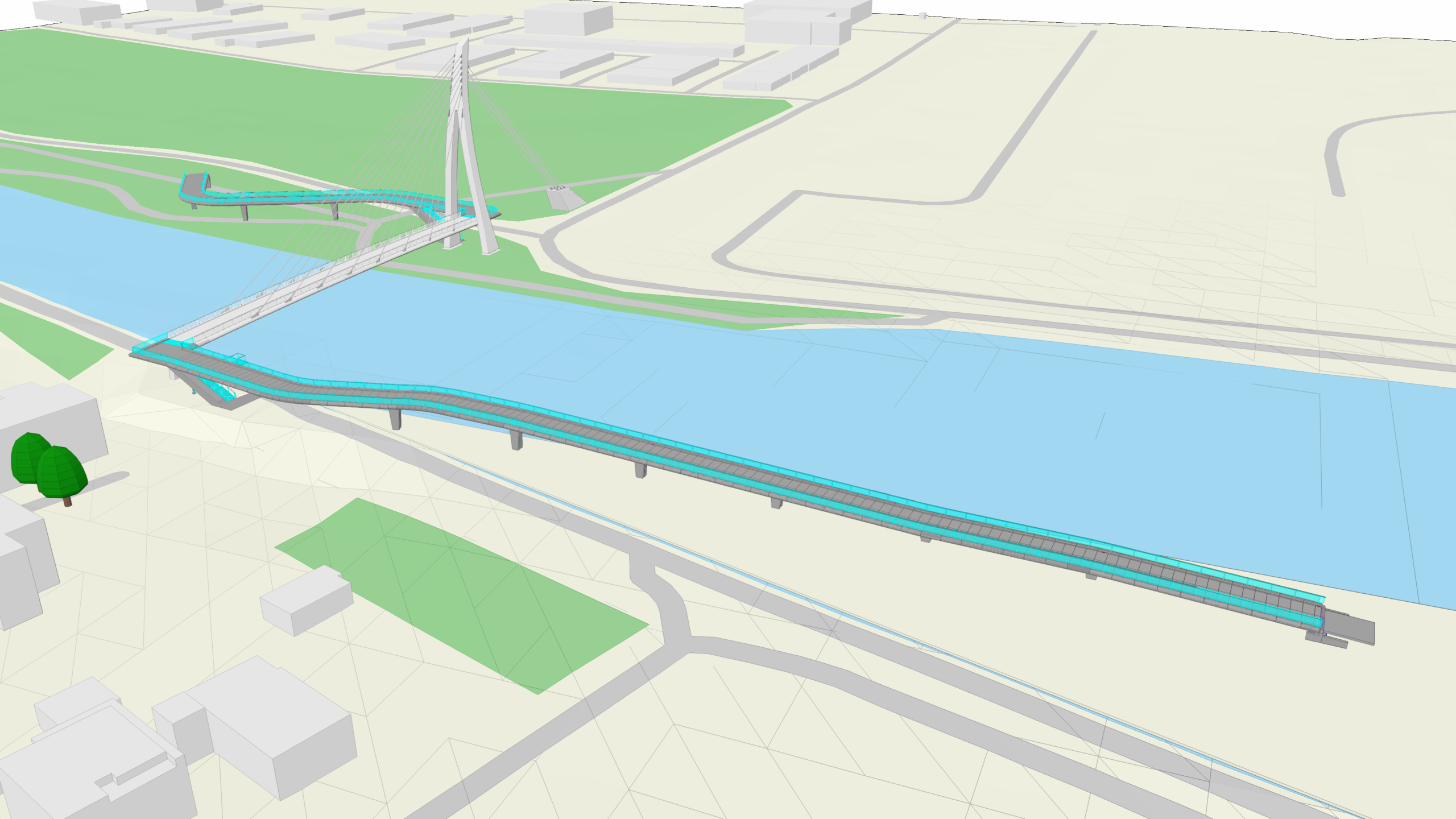
De iconische tuikabelbrug over de Zuid-Willemsvaart vormt een cruciale schakel in de fietssnelweg F78 tussen Genk en Lanaken. Voorheen was de brug echter een fysieke uitdaging voor veel gebruikers: de toegang tot de landhoofden bestond uit steile metalen trappen met fietsgleuven.
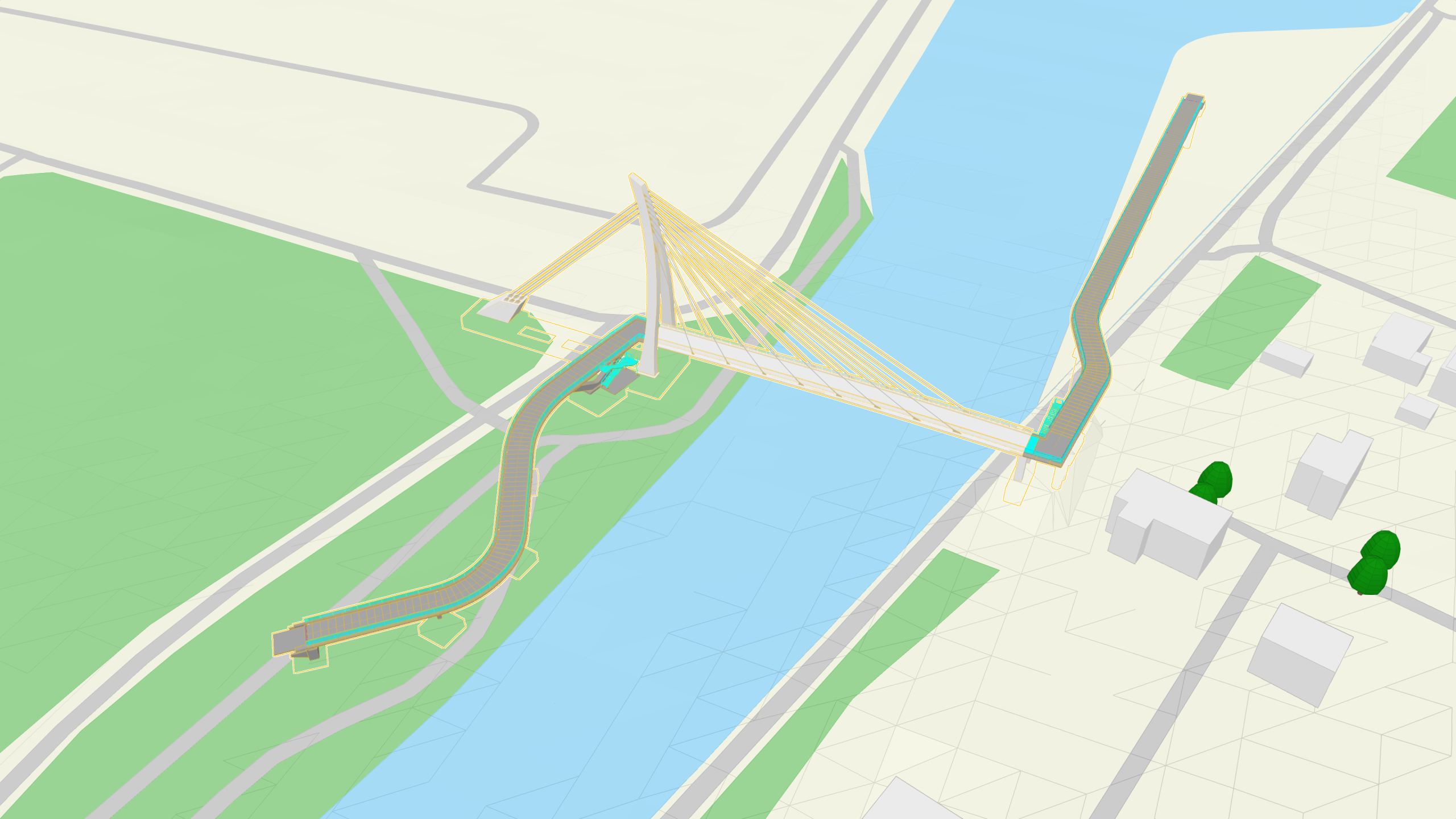
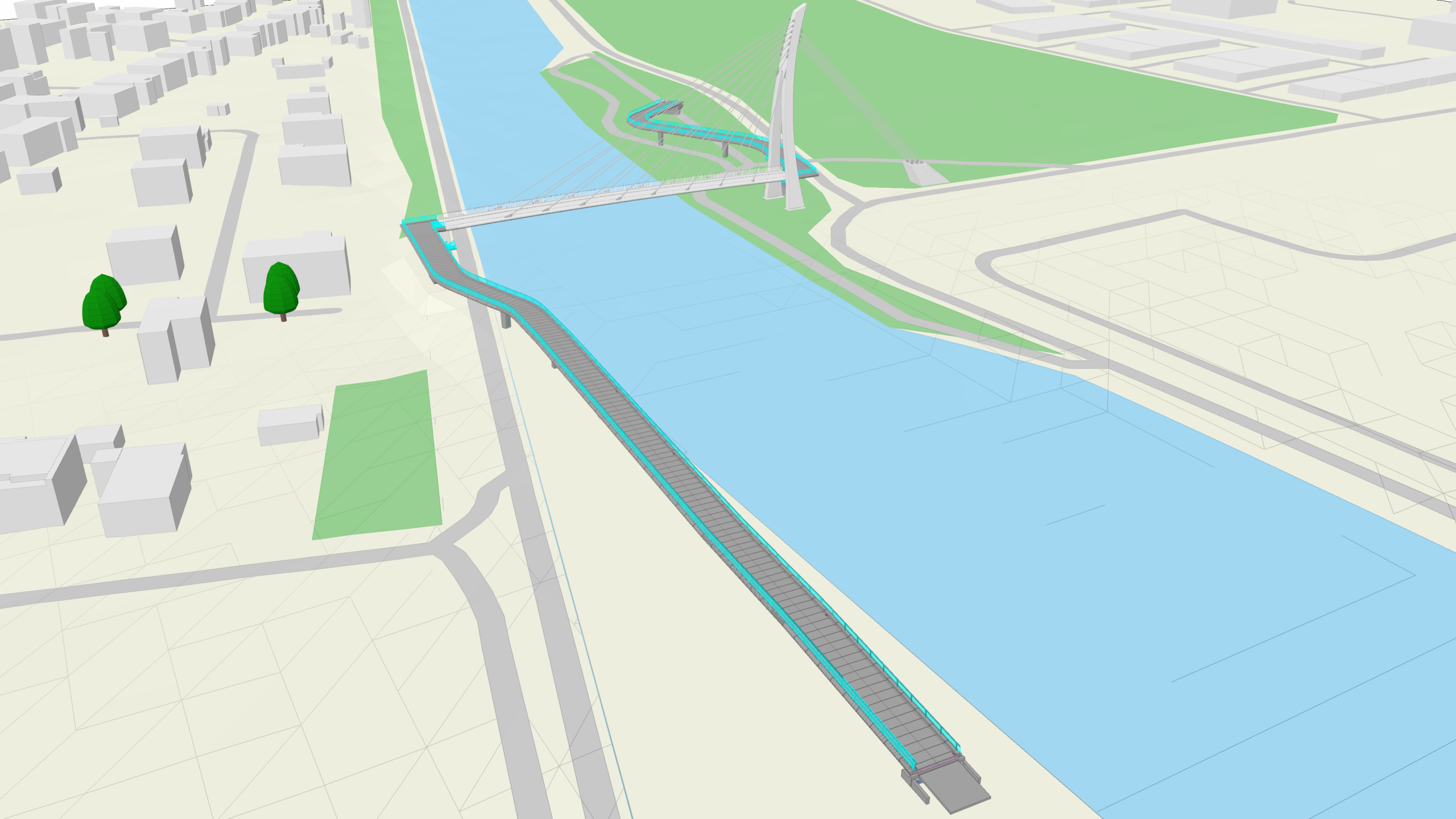
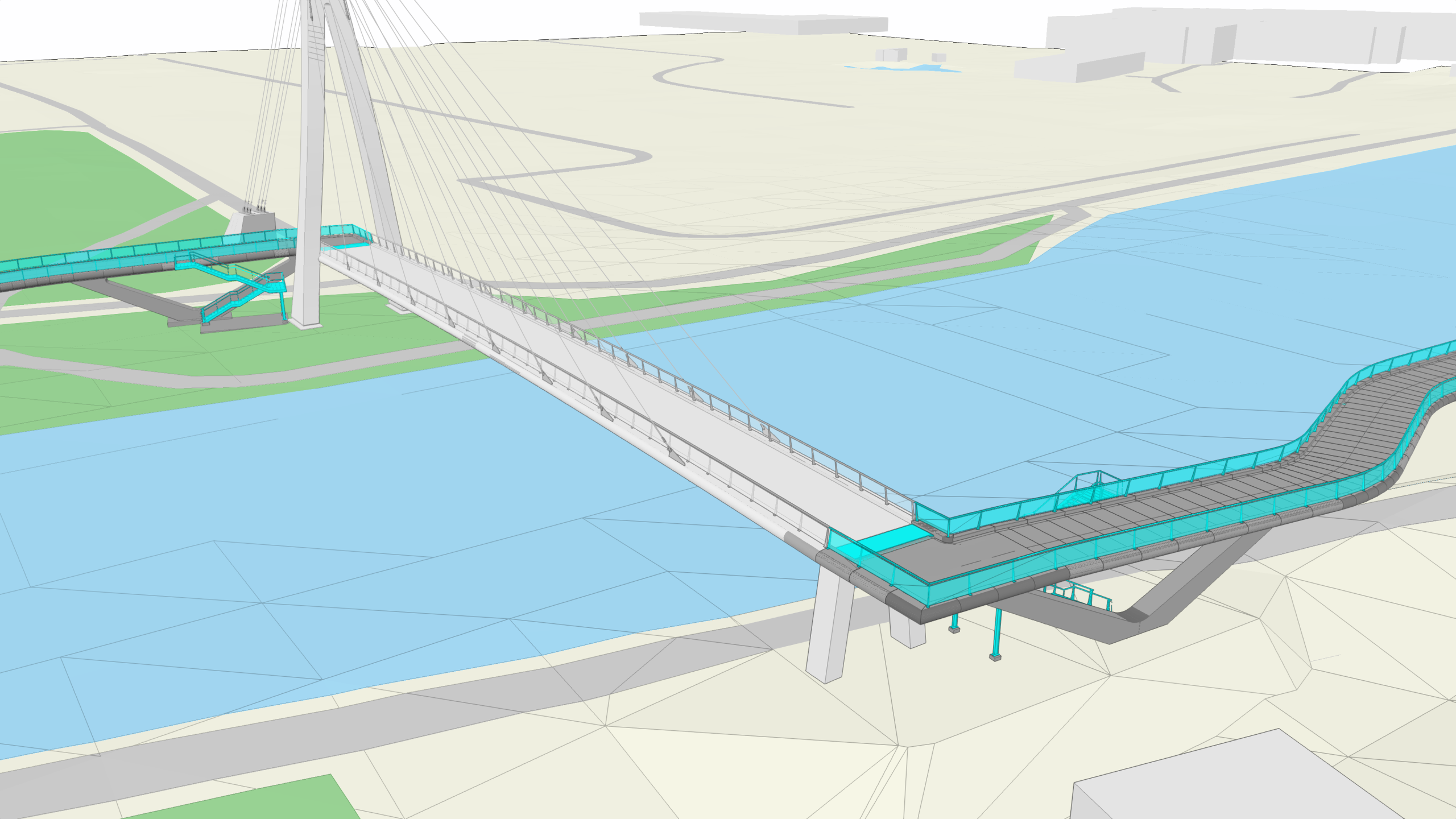
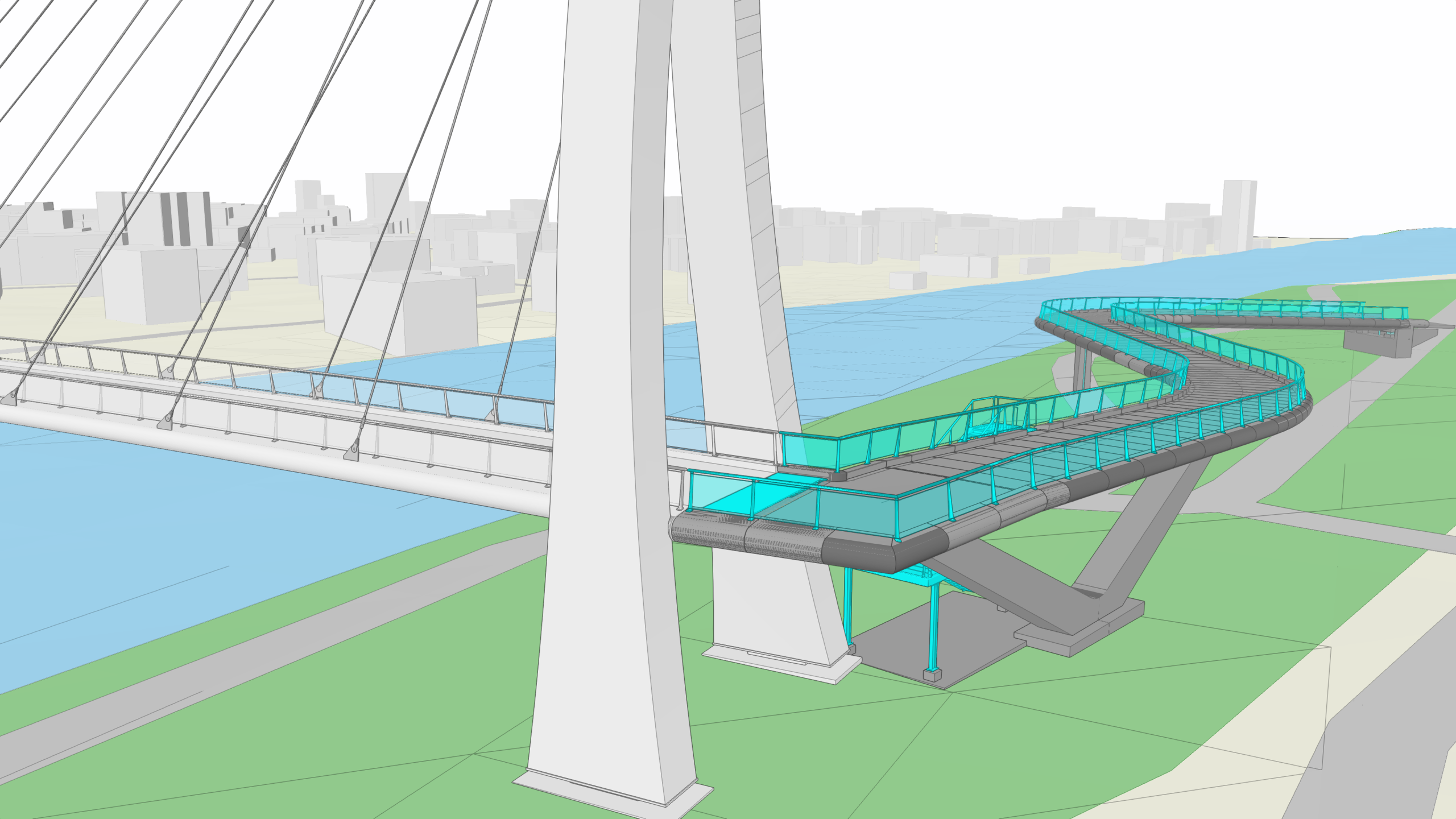
In opdracht van Willemen INFRA heeft KREANTIS bijgedragen aan de transformatie van deze barrière naar een integrale, toegankelijke verbinding. De trappen zijn vervangen door zacht glooiende fiets- en wandelhellingen aan weerszijden van het kanaal. Hierdoor biedt de brug vandaag een comfortabele en veilige passage voor alle weggebruikers.
De complexiteit van het project lag in de combinatie van een iconisch architectonisch ontwerp en de noodzaak voor een uiterst nauwkeurige aansluiting op de bestaande infrastructuur.
Digitale aanpak en modellering
Door de inzet van een integraal 3D-uitvoeringsmodel fungeerde digitalisering als visuele en technische leidraad. Het nieuwe ontwerp werd feilloos afgestemd op de bestaande toestand.
Hiervoor maakten we gebruik van een combinatie van:
– Tekla Structures
– Autodesk Civil 3D
– AutoCAD
BIM‑highlights & technische innovatie
Optimalisatie van in-situ naar prefab
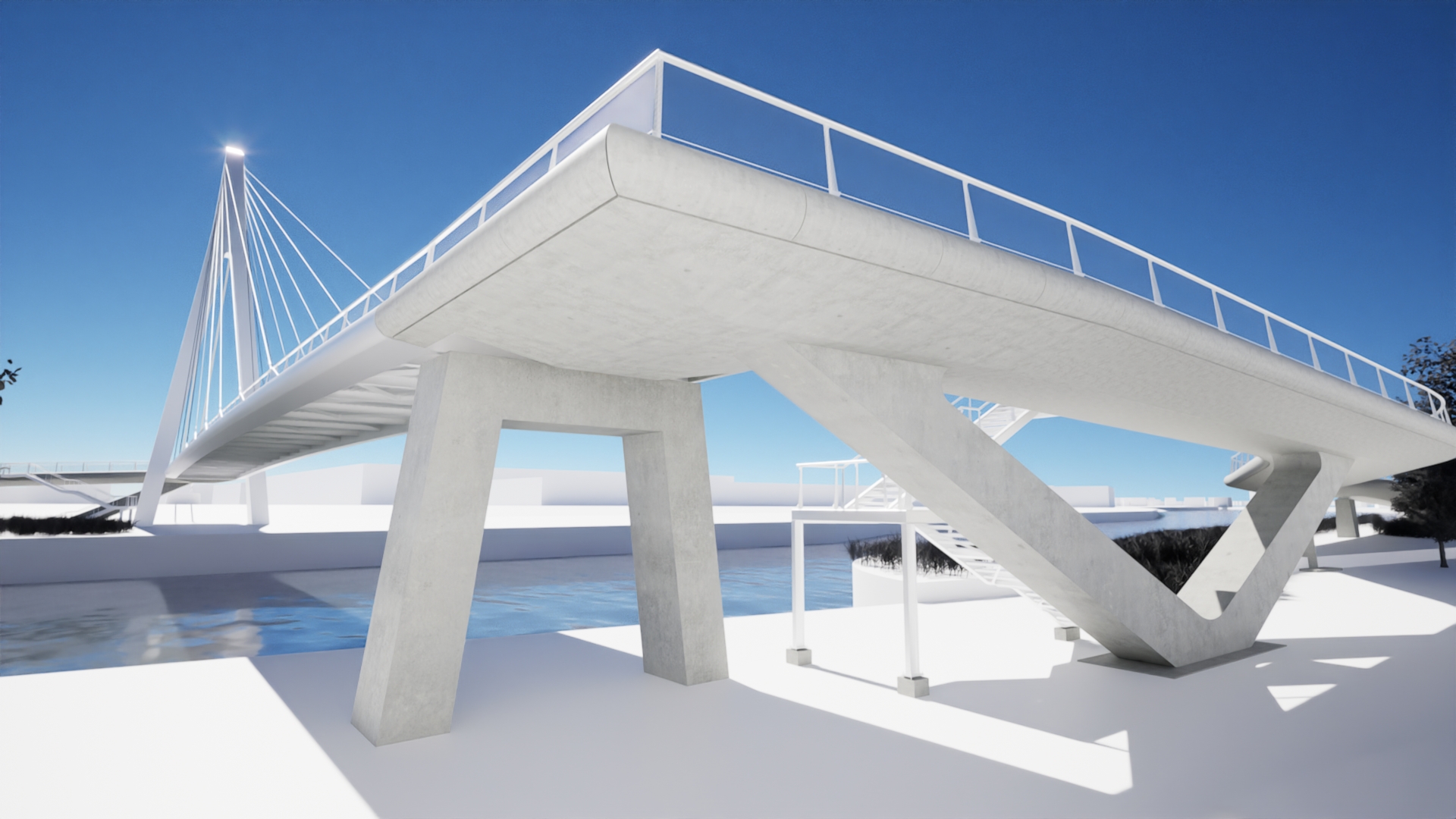
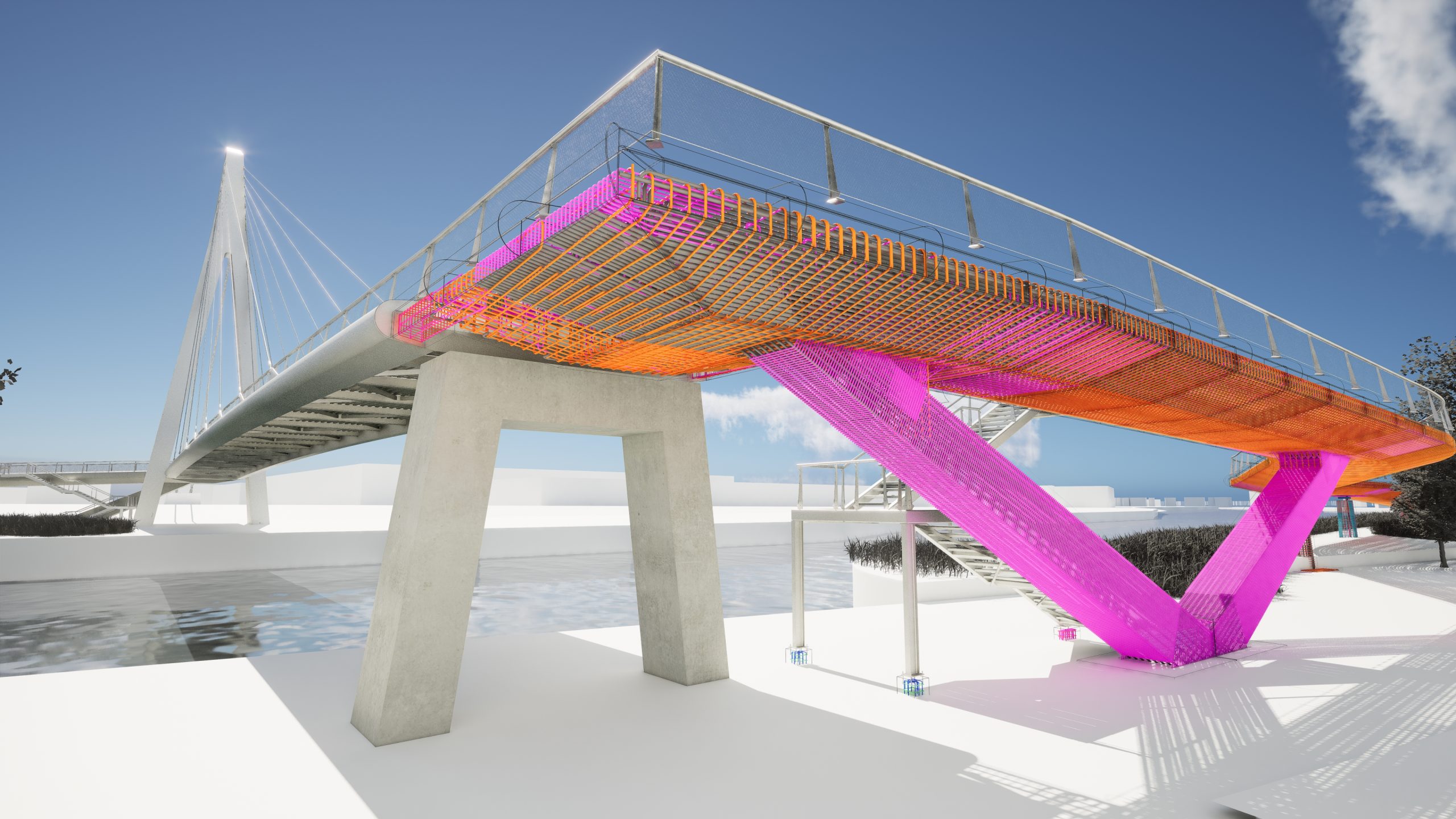
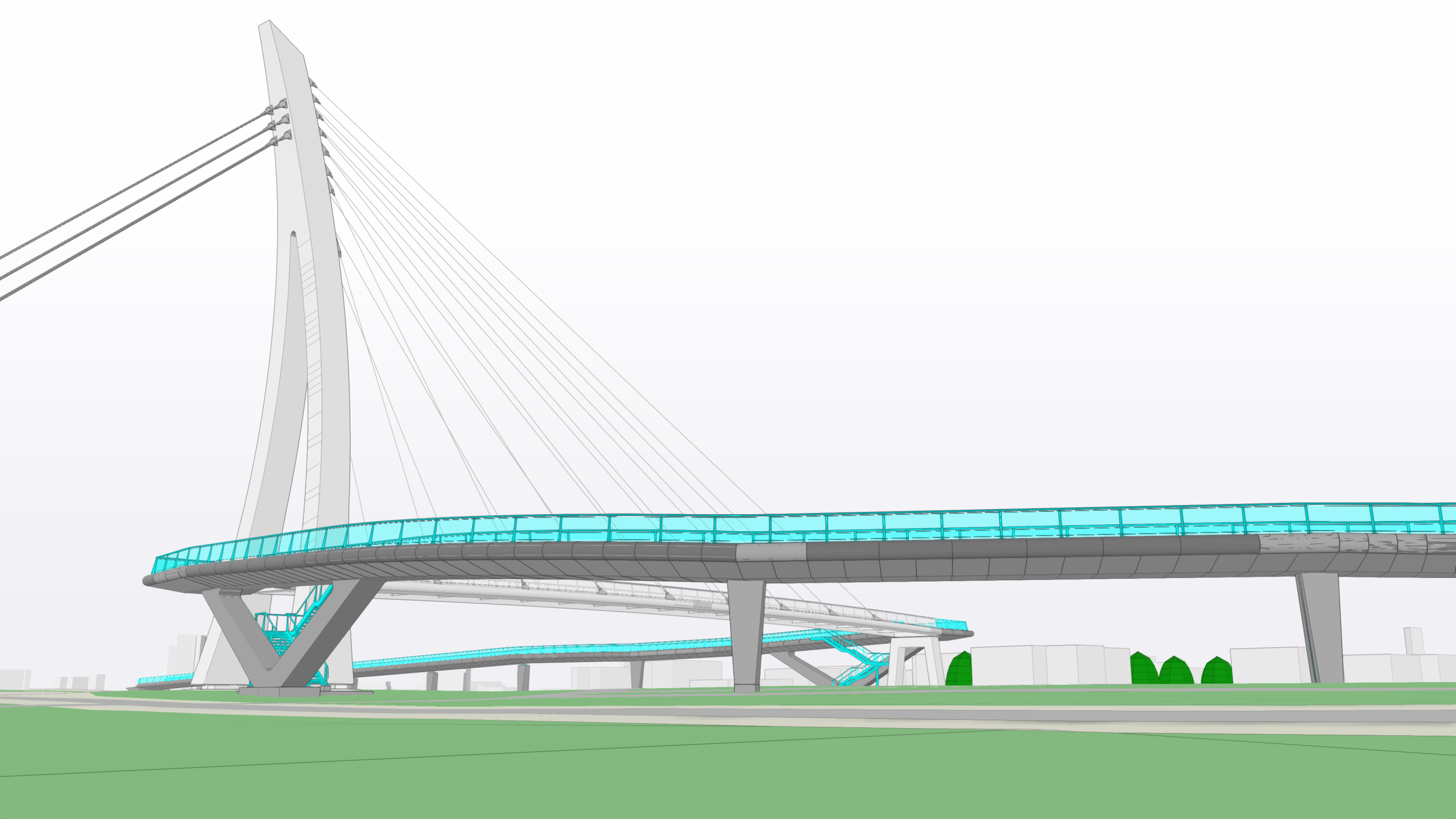
Een van de grootste uitdagingen was de realisatie van de complexe, gebogen randen van het brugdek. Wat oorspronkelijk was ontworpen als ter plaatse gestort architectonisch beton, werd vertaald naar een innovatieve prefaboplossing.
Deze technische vertaalslag resulteerde in elementen die esthetisch trouw bleven aan het ontwerp, maar sneller en met een hogere precisie op de werf konden worden gemonteerd.
3D beton- en wapeningsplannen
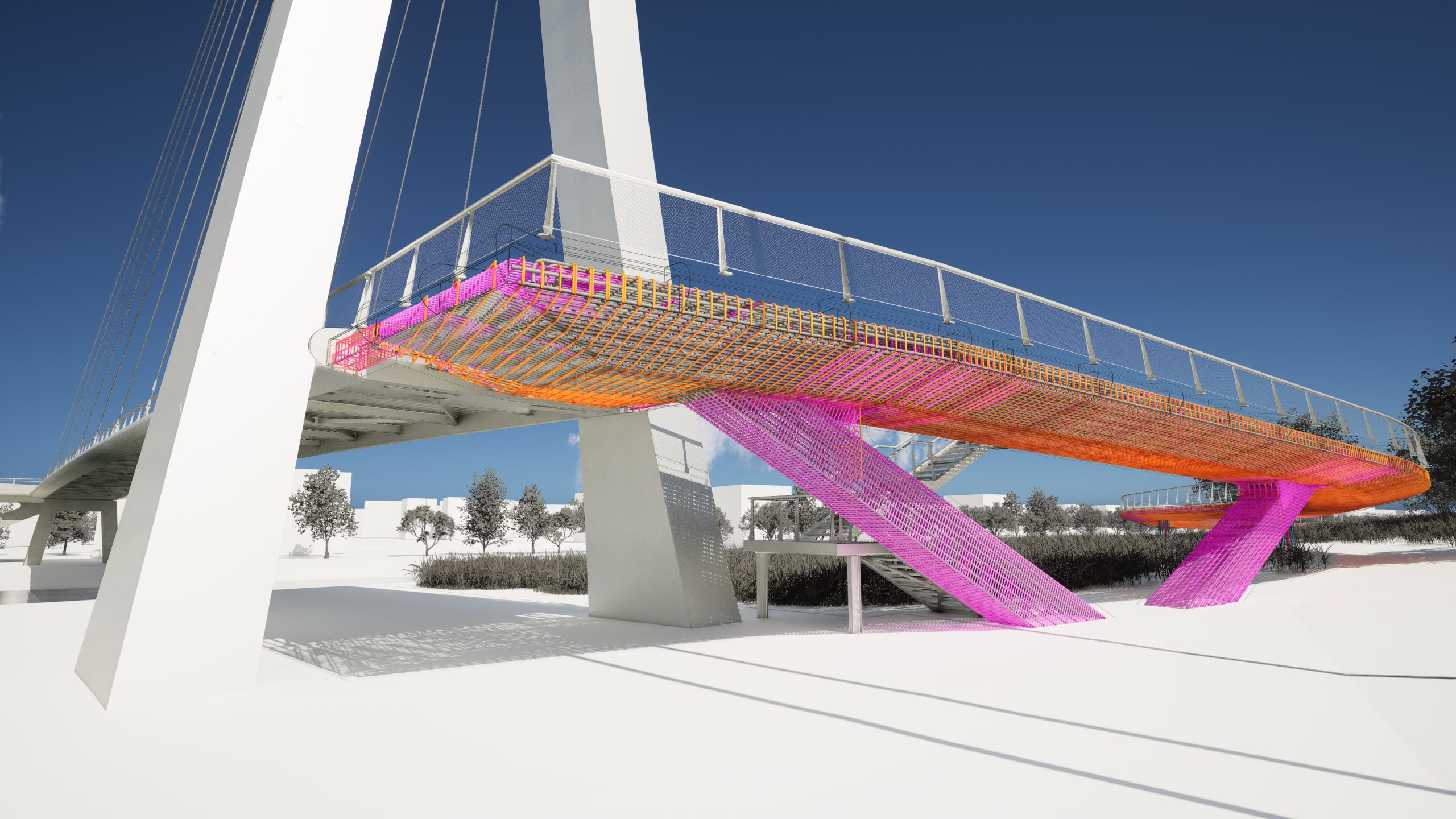
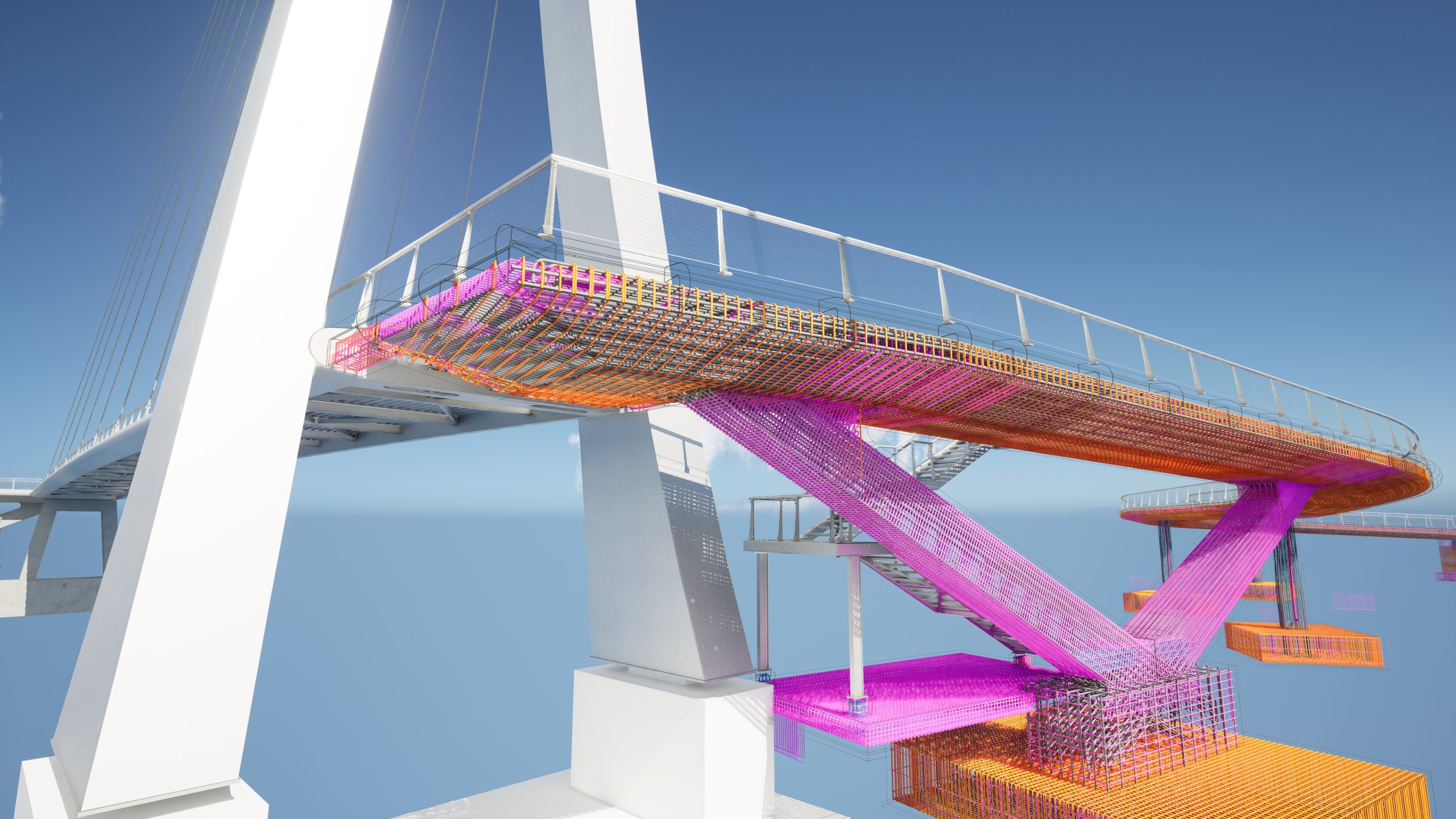
Om faalkosten bij de complexe geometrie van de hellingen te minimaliseren, werd de volledige wapening in 3D uitgewerkt. Dit bood het werfteam maximale visuele duidelijkheid bij de meest uitdagende knooppunten van de constructie.
Directe digitale productie
De buigstaten voor het staalatelier werden rechtstreeks vanuit het model gegenereerd. Deze naadloze digitale keten tussen ontwerp en productie garandeerde een foutloze aanlevering van de wapening, wat essentieel was voor de strakke planning op de werf.
Clash-detectie in een pointcloud-omgeving
Een cruciaal onderdeel van de digitale workflow was het integreren en aftoetsen van het 3D-ontwerp binnen een pointcloud-omgeving. Voorafgaand aan de uitvoering werd de bestaande toestand via laserscanning minutieus in kaart gebracht.
Door het nieuwe ontwerp virtueel over de bestaande situatie te leggen, konden we:
– Maatafwijkingen elimineren: De complexe geometrie van de bestaande landhoofden werd tot op de millimeter nauwkeurig geverifieerd.
– Risico’s minimaliseren: Potentiële conflicten tussen nieuwe funderingen en bestaande infrastructuur werden al in de ontwerpfase opgelost.
– Perfecte aansluiting garanderen: De overgang van de nieuwe, zacht glooiende hellingen naar het bestaande brugdek werd digitaal geperfectioneerd, nog vóór de productie van de prefab elementen.
Volledig uitgewerkt in Tekla Structures
Bij Kreantis kiezen we er bewust voor om civiele constructies volledig uit te werken in Tekla Structures. Dankzij de kracht van 3D‑modellering beschikken onze modelleurs, werfleiders en projectleiders over een helder inzicht in vaak complexe wapeningsstructuren.
Eigen tools en workflows
Om deze aanpak optimaal te ondersteunen, ontwikkelden we eigen tools en workflows, waaronder:
– Een op maat gemaakte buigstaat met samenvattingen per diameter, buigvorm, aantallen en gewichten per onderdeel.
– Automatische verwerking van segmentlengtes voor correcte lengte‑ en gewichtsberekeningen, waarbij de standaard staafvormmanager werd omzeild om manueel werk te beperken.
– Extra eigenschappen voor het nauwkeurig weergeven van gebogen of variabele staven, met bijlagen voor detailcontrole.
– Slim gebruik van filters bij het opmaken van plannen om wapeningslagen visueel te scheiden of onderdelen snel te verbergen of tonen.
– Centrale bedrijfsinstellingen (TS‑map) opgeslagen op Trimble Connect, die via de Trimble Connect Sync Tool automatisch worden gesynchroniseerd naar alle modelleurs.
Dit garandeert dat iedereen steeds werkt met de meest actuele en uniforme instellingen.
Resultaat
Deze aanpak resulteerde in een model dat niet alleen volledig en correct is, maar ook bijzonder geschikt voor uitvoering en communicatie op de werf.
Project Description
The iconic cable‑stayed bridge over the Zuid‑Willemsvaart is a crucial link in the F78 cycling highway between Genk and Lanaken. Previously, however, the bridge posed a physical challenge for many users, as access to the abutments consisted of steep metal staircases with bicycle gutters.
Commissioned by Willemen INFRA, KREANTIS contributed to transforming this barrier into an integrated, fully accessible connection. The staircases were replaced by gently sloping cycling and pedestrian ramps on both sides of the canal, allowing the bridge to offer a comfortable and safe passage for all users.
The complexity of the project lay in combining an iconic architectural design with the need for an extremely accurate connection to the existing infrastructure.
Digital Approach and Modelling
By deploying an integrated 3D execution model, digitalisation served as both a visual and technical guideline. The new design was seamlessly aligned with the existing conditions.
For this, we used a combination of:
– Tekla Structures
– Autodesk Civil 3D
– AutoCAD
BIM Highlights & Technical Innovation
Optimisation from in‑situ to prefab
One of the main challenges was the realisation of the complex, curved edges of the bridge deck. Originally designed as cast‑in‑place architectural concrete, the team translated this into an innovative prefab solution.
This technical conversion resulted in elements that remained aesthetically faithful to the design, while enabling faster installation on site with greater precision.
3D concrete and reinforcement detailing
To minimise failure costs associated with the complex geometry of the ramps, the complete reinforcement was developed in 3D. This provided the site team with maximum visual clarity at the most challenging nodes of the structure.
Direct digital production
Bending schedules for the steel workshop were generated directly from the model. This seamless digital chain between design and production ensured error‑free delivery of reinforcement, which was essential for the tight construction schedule on site.
Clash detection in a point cloud environment
A critical component of the digital workflow was the integration and validation of the 3D design within a point cloud environment. Prior to execution, the existing situation was meticulously captured through laser scanning.
By virtually overlaying the new design onto the existing conditions, we were able to:
– Eliminate dimensional deviations: The complex geometry of the existing abutments was verified with millimetre accuracy.
– Minimise risks: Potential conflicts between new foundations and existing infrastructure were resolved during the design phase.
– Guarantee a perfect connection: The transition between the new, gently sloping ramps and the existing bridge deck was digitally perfected before the prefab elements were produced.
Fully Engineered in Tekla Structures
At Kreantis, we deliberately choose to fully develop civil structures in Tekla Structures. Thanks to the power of 3D modelling, our modellers, site managers and project managers gain clear insight into often highly complex reinforcement structures.
Proprietary Tools and Workflows
To support this approach, we developed our own tools and workflows, including:
– A customised bending schedule with summaries per diameter, bending shape, quantities and weights per component.
– Automated processing of segment lengths to calculate correct lengths and weights, bypassing the standard bar shape manager to reduce manual work.
– Additional properties to accurately represent curved or variable reinforcement bars, including attachments for detailed checks.
– Smart use of filters when creating drawings, allowing different reinforcement layers to be visually separated with customised line types or components to be quickly hidden or shown.
– Central company settings (TS folder) stored on Trimble Connect and automatically synchronised to all modellers via the Trimble Connect Sync Tool.
This ensures that everyone always works with the most up‑to‑date and uniform settings.
Result
This approach resulted in a model that is not only complete and accurate, but also highly usable for execution and on‑site communication.
Leave your comment


Construsoft is an authorized Tekla Structures vendor and provides training, technical support, and other services to its customers.
For more information, please visit our website:
construsoft.comTekla is a Trimble Company © Copyright 2026 Tekla